Dreaming of fresh, homegrown vegetables but have limited garden space? Container gardening is your perfect solution! Whether you have a tiny balcony, a sunny patio, or just a small corner, you can cultivate a thriving edible oasis. However, success in containers isn’t just about choosing the right plant; it’s crucially about providing enough room for its roots to flourish. Give roots happy homes, and your plants will reward you with bountiful harvests.
Understanding the specific depth requirements for different vegetables can transform your container gardening experience from good to absolutely fantastic. Get it right, and you’ll prevent stunted growth, encourage robust development, and unlock the full potential of your potted produce. Let’s dive into the ideal container depths for a variety of popular edibles, ensuring your garden thrives from the root up.
Why Container Depth Matters So Much
Imagine trying to run a marathon in shoes that are two sizes too small. That’s how a plant feels when its roots are confined to an inadequate container. Roots are the anchor and nutrient highway for any plant. They absorb water, nutrients, and oxygen, and a deep, extensive root system means a healthier, more productive plant.
Different vegetables have different rooting habits. Shallow-rooted plants like lettuce can thrive in less soil, while deep-rooted plants like tomatoes or sweet potatoes need significant vertical space to spread out and access all the resources they need. Providing the correct depth prevents root binding, allows for consistent moisture levels, and ensures proper aeration, all vital for robust growth and a generous yield.
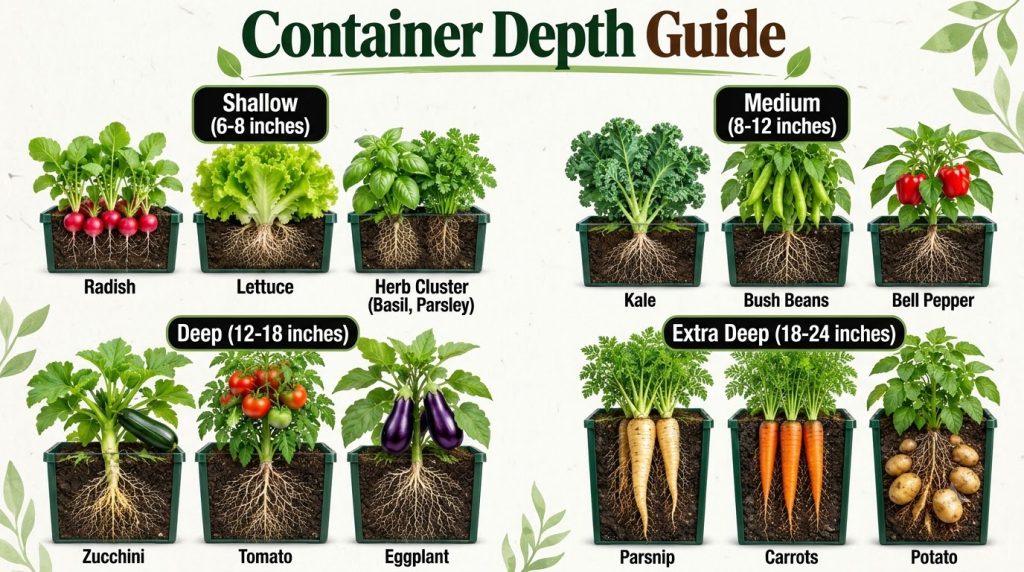
Shallow Growers: 6-8 Inches Deep
These speedy growers are perfect for quick harvests and smaller containers. They don’t need much vertical space for their roots, making them ideal for windowsills, balcony boxes, and even repurposed household items.
Lettuce (Lactuca sativa)
Hardiness: Grown as an annual in most zones (2-11).
Plant type: Leafy green annual.
Exposure: Full sun to partial shade (prefers partial shade in hot climates).
Height: 6-12 inches.
Spread: 6-12 inches.
Lettuce varieties, especially loose-leaf types, are shallow-rooted and thrive in containers 6-8 inches deep. Ensure good drainage and consistent moisture for crisp leaves. Harvest outer leaves regularly to prolong production.
Radishes (Raphanus sativus)
Hardiness: Grown as an annual in most zones (2-11).
Plant type: Root vegetable annual.
Exposure: Full sun.
Height: 4-8 inches.
Spread: 2-4 inches.
These fast-growing root crops mature quickly and are perfect for a shallow container, about 6 inches deep. Plant seeds about 1/2 inch deep and 1 inch apart. Consistent moisture is key to prevent them from becoming woody or overly spicy.
Green Onions (Allium fistulosum)
Hardiness: Perennial in zones 6-9; often grown as an annual.
Plant type: Herbaceous perennial.
Exposure: Full sun.
Height: 12-18 inches.
Spread: 6-12 inches.
Also known as scallions, these are excellent for shallow containers (6-8 inches deep). You can even regrow them from grocery store scraps! Place the white ends with roots in a pot with good potting mix, and they’ll sprout new green tops.
Spinach (Spinacia oleracea)
Hardiness: Grown as an annual in most zones (2-10).
Plant type: Leafy green annual.
Exposure: Full sun to partial shade.
Height: 6-12 inches.
Spread: 6-9 inches.
Spinach, like lettuce, is a cool-season crop that appreciates 6-8 inch deep containers. It bolts (goes to seed) in warm weather, so plan for spring or fall planting. Keep the soil consistently moist to encourage lush leaf growth.
Herbs
Hardiness: Varies greatly by species (e.g., Basil annual, Rosemary perennial in 8-11).
Plant type: Aromatic plants (annual, perennial, shrub).
Exposure: Full sun for most (e.g., Basil, Rosemary, Thyme).
Height: Varies.
Spread: Varies.
Many popular culinary herbs like basil, cilantro, mint, thyme, and chives are content in 6-8 inch deep pots. Mint, however, is an aggressive spreader and is best grown alone in a container to prevent it from overtaking other plants.
Bush Beans (Phaseolus vulgaris)
Hardiness: Grown as an annual in all zones.
Plant type: Leguminous annual.
Exposure: Full sun.
Height: 12-24 inches.
Spread: 12-18 inches.
Bush bean varieties are ideal for containers, requiring 6-8 inches of depth. Unlike pole beans, they don’t need trellising and grow compactly. Plant seeds 1 inch deep and 3-4 inches apart. Ensure consistent watering as beans are sensitive to drought.
Medium Growers: 10-12 Inches Deep
These vegetables need a bit more room to stretch their roots, making them suitable for larger pots and grow bags. They offer a rewarding harvest and are staples in many home gardens.
Carrots (Daucus carota subsp. sativus)
Hardiness: Grown as an annual in all zones.
Plant type: Root vegetable biennial (grown as annual).
Exposure: Full sun.
Height: 6-12 inches (foliage).
Spread: 2-4 inches.
For straight, well-formed carrots, a minimum of 10-12 inches of depth is essential. Choose shorter, ‘Danvers’ or ‘Nantes’ varieties for container success. Fill pots with light, loose, sandy potting mix free of obstructions. Sow seeds thinly and thin seedlings to 2-3 inches apart.
Chard (Beta vulgaris subsp. cicla)
Hardiness: Biennial often grown as an annual (zones 2-11).
Plant type: Leafy green biennial.
Exposure: Full sun to partial shade.
Height: 12-24 inches.
Spread: 9-18 inches.
Swiss chard is a beautiful and productive leafy green that tolerates a range of conditions. Containers 10-12 inches deep are perfect for its moderately deep taproot. Harvest outer leaves regularly to encourage continuous production, and enjoy its vibrant stems.
Peas (Pisum sativum)
Hardiness: Grown as an annual in all zones.
Plant type: Leguminous annual.
Exposure: Full sun.
Height: 18-36 inches (bush), 4-6 feet (vining).
Spread: 6-12 inches.
Bush pea varieties are best for containers of 10-12 inches deep, though vining types can also work with proper support. Peas thrive in cool weather and require consistent moisture. Provide a small trellis or stakes for bush varieties, and a substantial support system for vining types.
Peppers (Capsicum annuum)
Hardiness: Tender perennial (zones 9-11), grown as annual.
Plant type: Fruiting perennial (grown as annual).
Exposure: Full sun.
Height: 18-36 inches.
Spread: 12-24 inches.
Sweet bell peppers and hot peppers alike need containers at least 10-12 inches deep to support their robust root systems and fruit production. They love heat and full sun. Stake taller varieties to prevent them from toppling over once laden with fruit. Ensure thorough, consistent watering, especially during flowering and fruiting.
Deep Growers: 12-18 Inches Deep
These plants are heavy feeders and require ample space for extensive root systems to anchor large plants and support significant harvests. Think large pots, half-whiskey barrels, or very large grow bags.
Tomatoes (Solanum lycopersicum)
Hardiness: Tender perennial (zones 10-11), grown as annual.
Plant type: Fruiting perennial (grown as annual).
Exposure: Full sun.
Height: 2-8 feet (determinate vs. indeterminate).
Spread: 2-4 feet.
Tomatoes are famously deep-rooted and hungry plants. For success in containers, choose determinate or ‘bush’ varieties and use pots at least 12-18 inches deep and wide. Provide strong staking or a sturdy cage from the start to support heavy fruit. Consistent, deep watering is crucial to prevent blossom end rot and cracking.
Potatoes (Solanum tuberosum)
Hardiness: Perennial (zones 3-10), grown as annual.
Plant type: Root tuber perennial.
Exposure: Full sun.
Height: 18-30 inches.
Spread: 12-24 inches.
Potatoes are fascinating container crops, producing tubers along their underground stems (stolons). For a good harvest, use containers 12-18 inches deep and at least 15 inches wide, such as grow bags or specialized potato towers. Plant seed potatoes about 6 inches deep, and as the plant grows, ‘hill’ up more soil around the stems to encourage more tuber formation.
Extra Deep Growers: 18-24 Inches Deep
For these heavyweights, maximum depth is key. They produce large, delicious underground storage roots that require substantial vertical real estate to develop fully.
Sweet Potatoes (Ipomoea batatas)
Hardiness: Tender perennial (zones 9-11), grown as annual.
Plant type: Root tuber perennial.
Exposure: Full sun.
Height: 6-12 inches (foliage can vine 6-10 feet).
Spread: 2-4 feet.
Sweet potatoes develop large storage roots deep within the soil. They need containers a minimum of 18-24 inches deep and equally wide. Start with ‘slips’ (sprouted shoots) and plant them about 6 inches deep. These plants are heat-lovers and their vigorous vines can sprawl, so give them plenty of room or provide a trellis. Harvest before frost, typically when leaves start to yellow.
Common Mistakes and How to Avoid Them
- Underestimating Depth: The most common mistake is using pots that are too shallow. Always err on the side of a deeper container if you’re unsure.
- Poor Drainage: No matter the depth, containers must have drainage holes. Root rot is a swift killer of container plants.
- Inconsistent Watering: Container plants dry out faster than in-ground plants. Check soil moisture daily, especially during hot, windy weather. Water until it drains from the bottom.
- Neglecting Nutrients: Potting mix eventually runs out of nutrients. Incorporate slow-release fertilizer at planting or use liquid feed every 2-4 weeks during the growing season.
- Overcrowding: Give each plant adequate space according to its mature spread, not just its initial size. Good air circulation prevents disease.
Regional & Seasonal Considerations for Container Gardens
While USDA zones primarily indicate winter cold tolerance, container gardening offers unique flexibility. In colder zones (3-7), starting seeds indoors earlier extends the growing season, and many containers can be moved to sheltered locations or even indoors as temperatures drop.
In warmer zones (8-11), heat can be an issue. Choose lighter-colored pots to reflect heat, provide afternoon shade for heat-sensitive plants like lettuce or spinach, and remember to water more frequently. No matter where you are, always consult your local extension office for specific planting dates based on average last and first frost dates. This will help you time your planting for optimal growth and harvest.
Start Growing Your Own Today!
Container gardening is an incredibly rewarding endeavor, bringing the joy of fresh produce right to your doorstep. By paying close attention to these vital container depth guidelines, you’re setting your plants up for success. Remember, a little planning goes a long way in ensuring healthy roots, vigorous growth, and an abundant harvest from your very own pots.
So, choose your favorite vegetables, select the perfect containers, and get ready to enjoy the freshest flavors you’ve ever tasted. Happy gardening!