When you’re focused on building a healthy plate, protein often takes center stage—and for good reason! Protein is crucial for muscle repair, satiety, and countless bodily functions. We often hear the recommendation to aim for a certain amount of protein per meal, like 30 grams. But what if we told you that 30 grams of protein in one meal isn’t always created equal?
It’s true! While the protein content might be similar, the overall nutritional impact of your meal can vary dramatically. This isn’t just about calories; it’s about the bigger picture: how your meal affects your energy levels, blood sugar balance, and long-term metabolic health. Let’s dive into why making smarter protein choices goes beyond just counting grams.
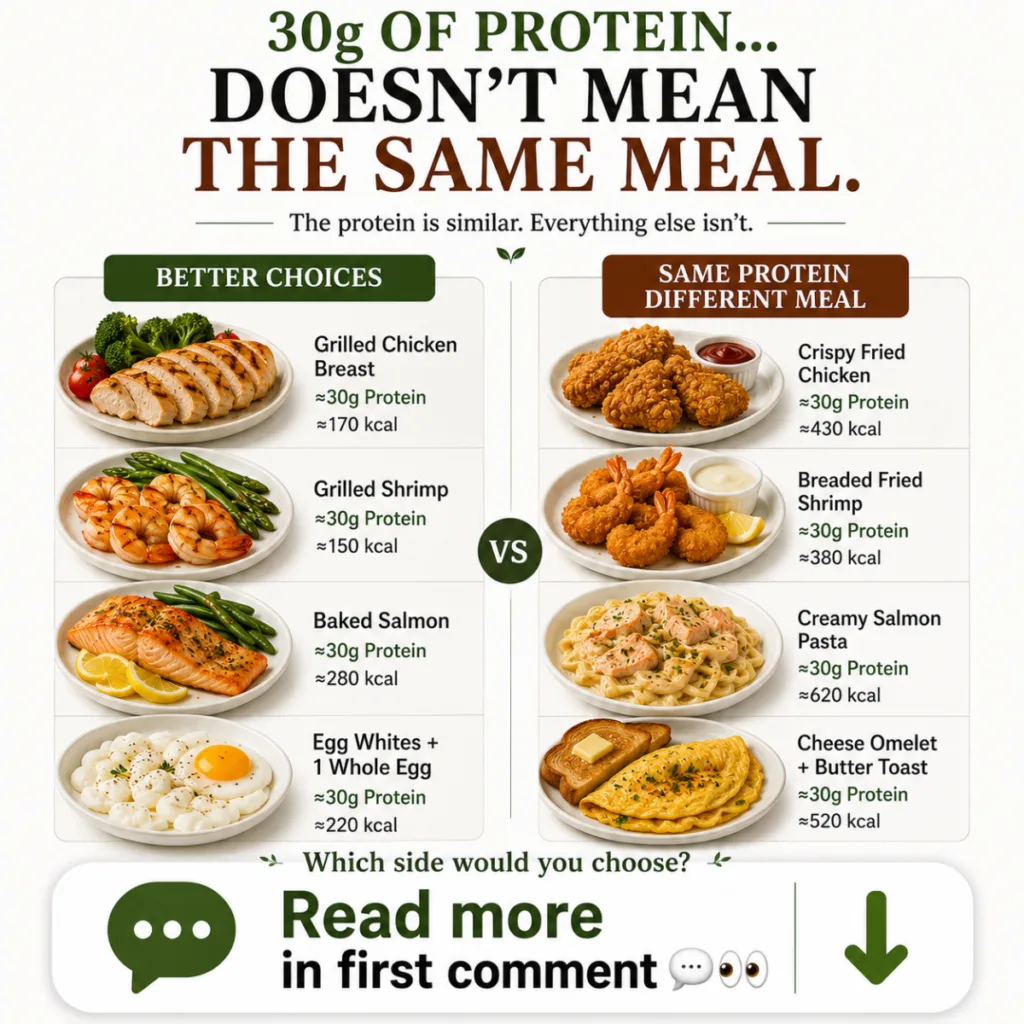 The visual truth: Same protein, vastly different nutritional outcomes.
The “Same Protein, Different Meal” Trap
Imagine two meals, both providing roughly 30 grams of protein. On one side, you have a simple grilled chicken breast with steamed vegetables. On the other, you might find crispy fried chicken with a creamy sauce. Both offer protein, but their overall composition and impact on your body are worlds apart.
- Grilled Chicken vs. Crispy Fried Chicken: While both give you that essential protein, the grilled version is lean and minimally processed. The fried chicken, however, is often breaded and deep-fried, adding significant amounts of unhealthy fats and extra carbohydrates, skyrocketing the calorie count without adding much nutritional value beyond the protein itself.
- Baked Salmon vs. Creamy Salmon Pasta: Baked salmon is a fantastic source of omega-3 fatty acids and lean protein. Pair it with creamy pasta, and you’re adding refined carbohydrates, saturated fats from cream, and often less fiber, leading to a higher glycemic load and a heavier meal.
- Egg Whites + 1 Whole Egg vs. Cheese Omelet + Butter Toast: Eggs are a complete protein powerhouse. Opting for egg whites with a whole egg is a lighter choice. A cheese omelet with buttered toast, while delicious, introduces more saturated fat, simple carbohydrates, and can lead to a quicker blood sugar spike followed by a crash.
The key takeaway here is that calories aren’t the only factor, but they are a strong indicator of the density of other components like fats and refined carbohydrates that come along for the ride with your protein.
Beyond Calories: What Else Matters for Metabolic Health?
It’s not just about the calorie count. Your body reacts differently to various food combinations. Here’s why the “better choices” truly excel:
Blood Sugar Regulation
- Meals rich in lean protein, fiber, and healthy fats, with fewer refined carbohydrates, help stabilize blood sugar levels. This prevents dramatic spikes and crashes, keeping your energy steady and reducing cravings. The “better choices” typically have a lower glycemic load, meaning they release glucose into your bloodstream more slowly.
Nutrient Density
- Whole, unprocessed foods are packed with vitamins, minerals, and antioxidants that are vital for overall health. Fried foods or those loaded with creamy sauces often displace these essential nutrients with empty calories.
Satiety and Digestion
- Lean proteins combined with fiber-rich vegetables promote sustained fullness, helping you feel satisfied longer. This can naturally lead to healthier portion control and less snacking between meals.
Practical Tips for Making Better Protein Choices
Empowering yourself to make healthier choices is simpler than you think. Here are actionable strategies to elevate your meals:
Prioritize Cooking Methods
- Opt for grilling, baking, roasting, steaming, or stir-frying instead of deep-frying. These methods minimize added fats and help retain the natural flavors and nutrients of your ingredients.
Embrace Whole, Unprocessed Ingredients
- Choose lean protein sources like chicken breast, turkey, fish, eggs, lentils, and beans. Pair them with a generous serving of colorful vegetables and complex carbohydrates like quinoa, brown rice, or sweet potatoes.
Be Mindful of Sauces and Dressings
- Creamy, sugary, or oil-heavy sauces can quickly add unwanted calories and unhealthy fats. Opt for lighter alternatives like lemon juice, herbs, spices, vinegar-based dressings, or homemade pestos.
Balance Your Plate
- Aim for a plate that’s roughly 50% non-starchy vegetables, 25% lean protein, and 25% complex carbohydrates. This balance supports stable blood sugar and provides a spectrum of nutrients.
Read Labels (When Applicable)
- When choosing pre-packaged foods, check the ingredient list and nutritional panel for hidden sugars, unhealthy fats, and excessive sodium. Look for whole food ingredients.
Simple Healthy Recipe Principles to Live By
Crafting delicious, healthy meals doesn’t require gourmet skills. Here are some easy ideas:
- Sheet Pan Dinners: Toss your favorite lean protein (chicken, fish, tofu) with chopped vegetables (broccoli, bell peppers, zucchini) and a drizzle of olive oil, herbs, and spices. Roast until cooked through for an easy, flavorful meal.
- Power Bowls: Combine a base of quinoa or brown rice with roasted or grilled protein, a variety of fresh or roasted veggies, and a light dressing (like a tahini-lemon dressing).
- Stir-Fries: Quickly cook lean meat or shrimp with a medley of colorful vegetables in a wok or large pan. Use a low-sodium soy sauce or tamari and ginger-garlic for flavor. Serve with a small portion of brown rice.
The Benefits of Making Informed Choices
Consistently choosing metabolically healthier protein sources and meal compositions offers a wealth of benefits:
- Sustained Energy: Say goodbye to midday slumps and hello to consistent energy levels.
- Improved Metabolic Health: Support healthy blood sugar, insulin sensitivity, and cholesterol levels.
- Effective Weight Management: Feel fuller longer, reduce unnecessary calorie intake, and support a healthy metabolism.
- Enhanced Overall Well-being: Enjoy better digestion, clearer skin, and an improved mood.
Final Thoughts: Empower Your Plate
Understanding that 30 grams of protein can lead to vastly different outcomes is a powerful step towards taking control of your health. It’s not about strict deprivation but about making informed, delicious choices that nourish your body from the inside out. By focusing on whole, minimally processed ingredients and smart cooking methods, you can build meals that are not only rich in protein but also optimize your energy, metabolic health, and overall vitality. Which side will you choose for your next meal?