Protein is a cornerstone of a healthy, balanced diet, essential for muscle repair, hormone production, and keeping us feeling full and energized throughout the day. For busy, health-conscious individuals, understanding how to incorporate sufficient protein into meals without overdoing calories can be a game-changer for metabolic health and overall well-being.
It’s easy to think of a fixed amount of protein, like 30 grams, as looking the same on every plate. However, the reality is quite different! 30 grams of protein can come in vastly different portion sizes and calorie counts, depending on the food source. This variety offers incredible flexibility in meal planning, whether you’re aiming for a lean protein boost or a more calorie-dense, energy-packed option.
Let’s dive into nine diverse food sources, each delivering approximately 30 grams of protein, and explore how you can effortlessly integrate them into your busy lifestyle.
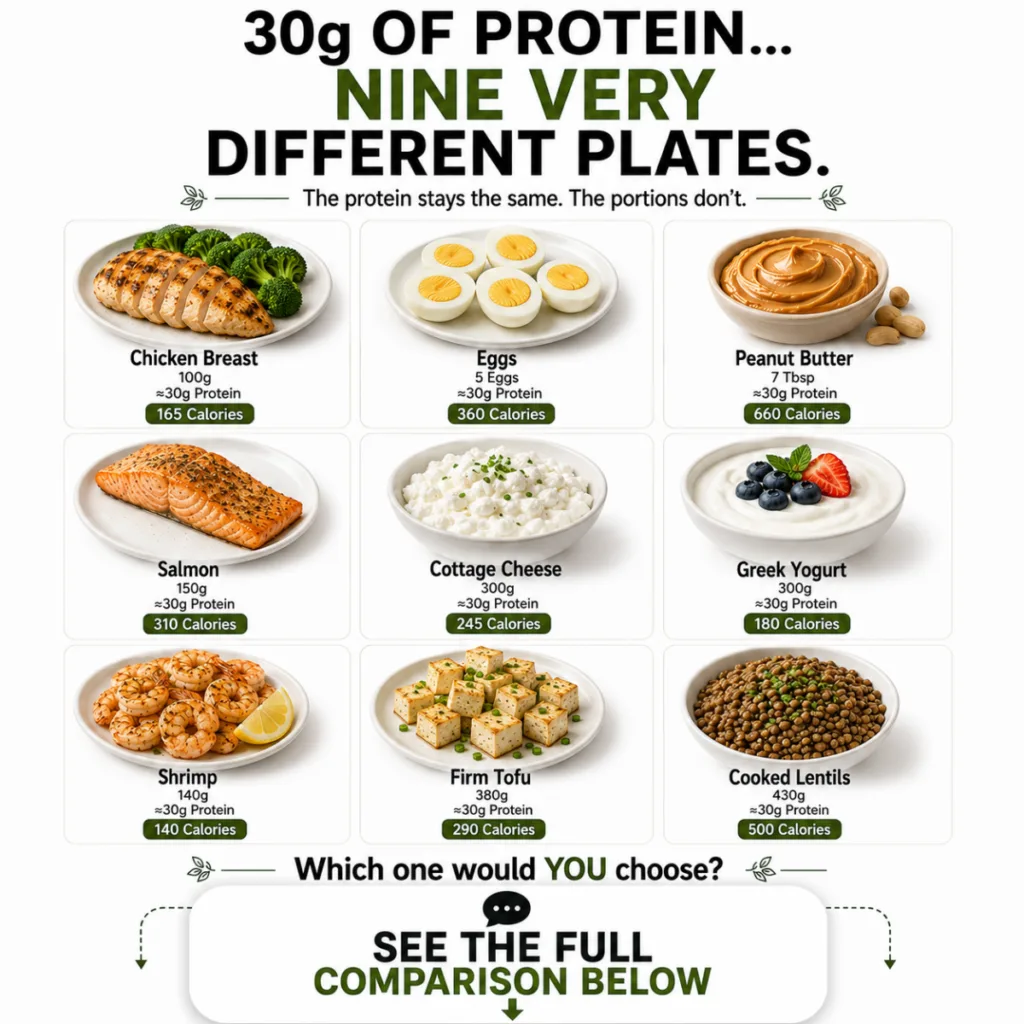 Unlock the visual guide: 30g of protein can look incredibly different!
Exploring Your Protein Plate: Diverse Options for 30g
1. Chicken Breast: The Lean Muscle Builder
- Quantity for 30g Protein: 100 grams (approx. 3.5 ounces)
- Calories: 165
Chicken breast is a classic for a reason. It’s incredibly lean, making it an excellent source of high-quality protein with minimal fat. This makes it ideal for those focused on satiety and muscle support while keeping calorie intake in check.
Practical Tips:
- Quick Meals: Grill, bake, or pan-fry chicken breast for salads, stir-fries, or alongside roasted vegetables.
- Meal Prep Hack: Cook a larger batch of shredded or diced chicken at the beginning of the week to add to various meals.
- Flavor Boost: Marinate with herbs, spices, lemon, or a light vinaigrette for a delicious twist.
2. Eggs: The Versatile Nutritional Powerhouse
- Quantity for 30g Protein: 5 large eggs
- Calories: 350
Eggs are a complete protein source, meaning they contain all nine essential amino acids. They’re also packed with vitamins like B12, D, and choline, important for brain health. While 5 eggs contribute more calories than chicken breast for the same protein, they offer a rich nutrient profile.
Practical Tips:
- Breakfast Bliss: Scramble, poach, or boil eggs for a quick and satisfying start to your day.
- Lunch & Dinner: Add hard-boiled eggs to salads, make an egg drop soup, or create a frittata with your favorite vegetables.
- Snack Savvy: Keep hard-boiled eggs on hand for a convenient, protein-rich snack.
3. Peanut Butter: The Calorie-Dense Protein Treat
- Quantity for 30g Protein: 100 grams (approx. 7 tablespoons)
- Calories: 588
While delicious and a decent source of protein, peanut butter is significantly more calorie-dense due to its fat content. It also provides healthy fats, fiber, and some vitamins and minerals. It’s a great option for adding a calorie boost if you need more energy.
Practical Tips:
- Portion Control: Enjoy peanut butter in moderation. A typical serving is 2 tablespoons (around 8g protein, 190 calories). For 30g protein, you’d need a much larger portion.
- Smart Pairings: Spread a moderate amount on apple slices, celery sticks, or whole-grain toast. Blend into smoothies for added creaminess and nutrients.
- DIY Dressings: Mix with soy sauce, vinegar, and a touch of honey for a delicious salad dressing or sauce.
4. Salmon: The Omega-3 Rich Protein Source
- Quantity for 30g Protein: 140 grams (approx. 5 ounces)
- Calories: 208
Salmon is a fantastic choice, offering not just high-quality protein but also a significant dose of omega-3 fatty acids, known for their anti-inflammatory benefits and support for heart and brain health. It’s a flavorful option that feels indulgent but is incredibly good for you.
Practical Tips:
- Simple Suppers: Bake, grill, or pan-sear salmon with a squeeze of lemon and herbs.
- Quick Lunches: Flake leftover salmon onto salads or mix with Greek yogurt and dill for a healthy salmon salad sandwich.
- Sheet Pan Meals: Roast salmon with colorful vegetables like asparagus and cherry tomatoes for an easy, one-pan dinner.
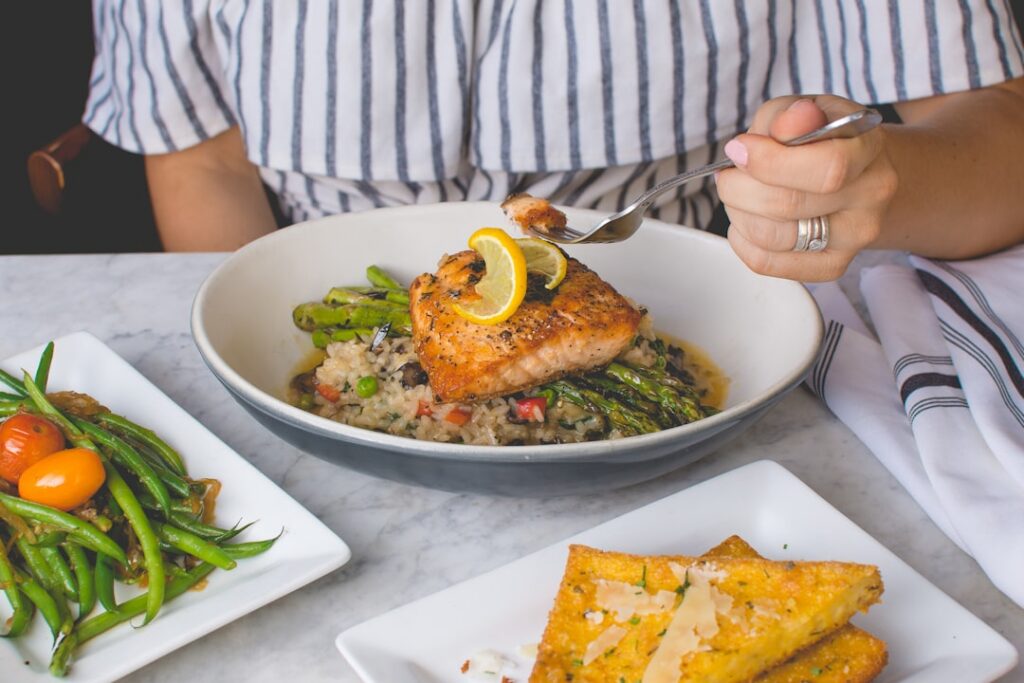 Enjoy the rich flavor and health benefits of salmon in your next meal.
5. Cottage Cheese: The Creamy, Gut-Friendly Protein
- Quantity for 30g Protein: 250 grams (approx. 1 cup)
- Calories: 220
Cottage cheese is an excellent source of casein protein, which is slow-digesting, promoting sustained fullness. It’s also rich in calcium and often contains probiotics beneficial for gut health. Its mild flavor makes it incredibly versatile.
Practical Tips:
- Sweet Treat: Top with berries, a sprinkle of cinnamon, and a few nuts for a satisfying snack or light dessert.
- Savory Spread: Mix with chives, black pepper, and a touch of garlic powder to spread on whole-grain crackers or toast.
- Recipe Booster: Use it as a protein base for dips, or even as a creamy, low-fat alternative in lasagna or pasta sauces.
6. Greek Yogurt: The Probiotic-Packed Protein Boost
- Quantity for 30g Protein: 300 grams (approx. 1.25 cups)
- Calories: 285
Like cottage cheese, Greek yogurt is a fantastic source of protein and beneficial probiotics. It’s thicker and tangier than regular yogurt, offering a creamy texture that’s great for a variety of uses. Opt for plain, unsweetened varieties to avoid added sugars.
Practical Tips:
- Breakfast Bowl: Swirl with fruit, granola, or a drizzle of honey.
- Smoothie Base: Blend into smoothies for extra protein and creaminess.
- Healthy Swaps: Use as a substitute for sour cream or mayonnaise in recipes for a lighter, protein-rich alternative.
7. Shrimp: The Low-Calorie Protein Gem
- Quantity for 30g Protein: 150 grams (approx. 5.3 ounces)
- Calories: 120
Shrimp stands out as one of the lowest-calorie protein options on this list. It cooks quickly and provides a good source of selenium, B12, and phosphorus. It’s perfect for light, healthy meals.
Practical Tips:
- Speedy Dinners: Sauté with garlic and herbs, toss into pasta, or add to a quick curry.
- Refreshing Salads: Grill or boil shrimp and add to a crisp salad with a light vinaigrette.
- Taco Night: Make flavorful shrimp tacos with crunchy cabbage slaw.
8. Firm Tofu: The Plant-Based Protein Hero
- Quantity for 30g Protein: 250 grams (approx. 9 ounces)
- Calories: 250
For those following a plant-based diet or looking to reduce meat intake, firm tofu is a versatile and complete protein. It absorbs flavors beautifully, making it a culinary chameleon. It’s also a good source of calcium and iron.
Practical Tips:
- Crispy Cubes: Press excess water out of tofu, cut into cubes, and bake or pan-fry until golden and crispy.
- Flavor Infusion: Marinate tofu in soy sauce, ginger, garlic, and a touch of maple syrup before cooking.
- Scrambled & Stir-fried: Crumble and use as a ‘scramble’ for breakfast, or add to stir-fries and curries.
9. Cooked Lentils: The Fiber-Rich Legume
- Quantity for 30g Protein: 400 grams (approx. 1.7 cups)
- Calories: 460
Lentils are an incredible plant-based protein source, also boasting high fiber content, which is fantastic for digestive health and long-lasting satiety. While they require a larger portion size and come with more calories than some animal proteins, their nutritional density and affordability are unmatched.
Practical Tips:
- Hearty Soups & Stews: Incorporate lentils into warming soups, stews, or chilis for a filling and nutritious meal.
- Salad Base: Cooked and cooled lentils make a great base for a hearty salad with chopped vegetables and a lemon-herb dressing.
- Veggie Burgers: Use mashed lentils as a base for homemade veggie burgers or ‘meatballs’.
Making Smart Choices for Your Metabolic Health
As you can see, hitting your protein goals doesn’t mean eating the same thing every day. The wide variations in portion size and calorie count for 30g of protein highlight the importance of understanding the nutritional profile of your food.
- For Lower Calorie Meals: Opt for lean choices like chicken breast, shrimp, cottage cheese, or Greek yogurt.
- For Energy & Sustenance: Consider eggs, salmon, tofu, or lentils, which offer more calories and often additional beneficial nutrients like healthy fats or fiber.
- Calorie-Dense Options: Peanut butter, while delicious, requires careful portioning if you’re managing calorie intake, but can be excellent for energy boosts or healthy weight gain.
Embracing a variety of protein sources ensures you’re getting a broad spectrum of nutrients, supporting not just muscle growth and repair, but also a healthy metabolism, balanced blood sugar, and sustained energy levels.
Your Plate, Your Power: Actionable Takeaways
Empowering yourself with this knowledge means you can tailor your meals to your specific needs and preferences. Whether you’re aiming for muscle gain, weight management, or simply better overall health, thoughtful protein selection is key.
- Mix it Up: Don’t rely on just one or two protein sources. Rotate through different options to get a diverse range of nutrients.
- Plan Ahead: Incorporate protein into every meal and snack. This could mean adding a handful of lentils to your salad, stirring Greek yogurt into your oatmeal, or having a hard-boiled egg with your afternoon fruit.
- Listen to Your Body: Pay attention to how different protein sources make you feel. Do some keep you fuller longer? Do others give you more energy?
By making conscious choices about your protein sources, you’re investing in your metabolic health and building a foundation for sustainable wellness. Which protein will you try next?