Food as Medicine: How Everyday Foods Can Help Support Your Body
We often think of food simply as fuel—but the truth is, what we eat plays a major role in supporting the health of nearly every organ in our body. While no single food can prevent or cure disease, a balanced diet rich in whole foods provides essential nutrients that help our organs function at their best.
Let’s explore how different foods can naturally support different parts of the body.
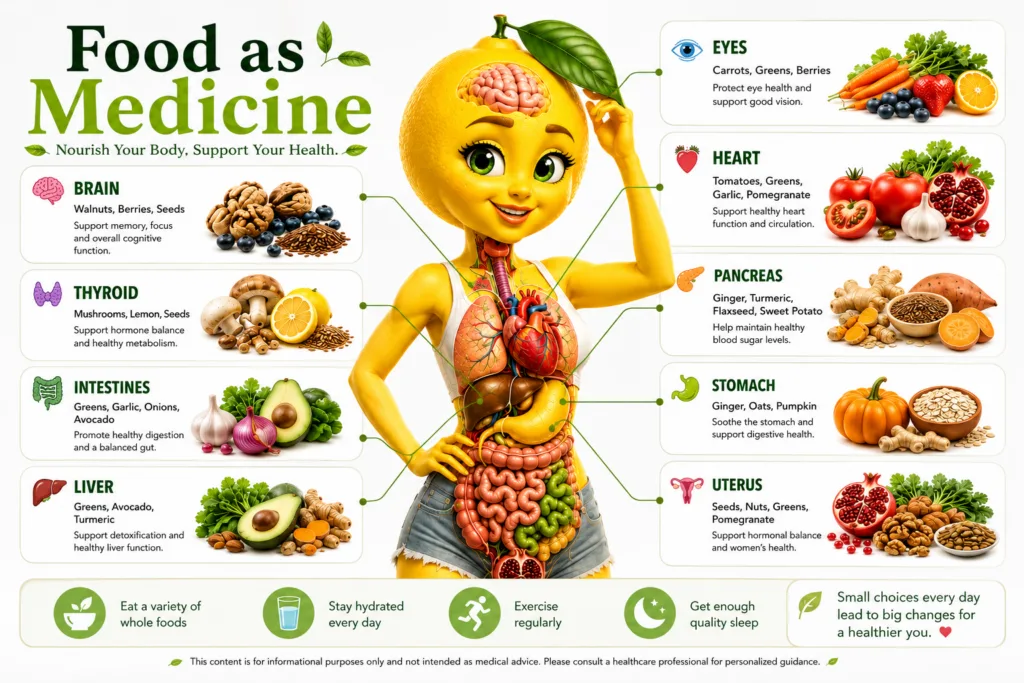
🧠 Brain
Best Foods:
- Walnuts
- Blueberries
- Seeds (flax, chia, pumpkin)
These foods are packed with healthy fats, antioxidants, and vitamins that help protect brain cells from oxidative stress and support memory, focus, and overall cognitive function.
Why they’re beneficial:
- Rich in omega-3 fats
- High in antioxidants
- Support healthy brain aging
👀 Eyes
Best Foods:
- Carrots
- Leafy greens
- Berries
- Citrus fruits
Carrots contain beta-carotene, which the body converts into vitamin A—a nutrient essential for vision. Leafy greens provide lutein and zeaxanthin, compounds known to support eye health.
Benefits:
- Helps maintain healthy vision
- Supports eye tissues
- Protects against oxidative damage
❤️ Heart
Best Foods:
- Tomatoes
- Garlic
- Leafy greens
- Pomegranate
Heart health starts on your plate. Tomatoes provide lycopene, garlic contains sulfur compounds, and leafy greens are rich in potassium and nitrates that help support healthy blood vessels.
Benefits:
- Supports healthy circulation
- Helps maintain healthy blood pressure
- Provides heart-friendly antioxidants
🦋 Thyroid
Best Foods:
- Mushrooms
- Lemon
- Seeds
The thyroid requires a variety of nutrients—including selenium and zinc—to function properly. Mushrooms and seeds contribute important minerals that support normal thyroid function.
Benefits:
- Supports hormone production
- Provides essential minerals
- Helps maintain energy metabolism
🍄 Immune Support with Mushrooms
Mushrooms are rich in vitamins, minerals, and beta-glucans, compounds that may help support a healthy immune response.
Popular varieties include:
- Shiitake
- Oyster
- White button
- Cremini
🫀 Liver
Best Foods:
- Avocado
- Leafy greens
- Turmeric
The liver works hard to process nutrients and remove waste products. Nutrient-dense foods like leafy greens and avocado provide vitamins and healthy fats that support normal liver function.
Benefits:
- Rich in antioxidants
- Supports healthy metabolism
- Provides anti-inflammatory compounds
🦠 Intestines (Gut Health)
Best Foods:
- Garlic
- Onions
- Leafy greens
- Avocado
A healthy gut is home to trillions of beneficial bacteria. Fiber-rich vegetables and prebiotic foods help nourish these microbes, supporting digestion and overall wellness.
Benefits:
- Promotes digestive health
- Supports a balanced gut microbiome
- Helps maintain regular digestion
🟡 Pancreas
Best Foods:
- Ginger
- Turmeric
- Flaxseed
- Sweet potato
These foods provide antioxidants and fiber that support overall metabolic health and help maintain healthy blood sugar levels when included in a balanced diet.
Benefits:
- Supports healthy digestion
- Provides anti-inflammatory compounds
- Helps maintain steady energy
🍲 Stomach
Best Foods:
- Oats
- Pumpkin
- Ginger
Gentle, fiber-rich foods are often easier on the stomach. Oats provide soluble fiber, pumpkin offers vitamins and fiber, while ginger has traditionally been used to support digestive comfort.
Benefits:
- Supports digestion
- Helps maintain stomach comfort
- Rich in nutrients
🌸 Women’s Reproductive Health
Best Foods:
- Nuts
- Seeds
- Leafy greens
- Pomegranate
These foods provide healthy fats, vitamins, minerals, and antioxidants that contribute to overall wellness and reproductive health.
Benefits:
- Nutrient-dense
- Rich in antioxidants
- Supports overall hormonal health
The Bigger Picture
No single food is a miracle cure. Instead, it’s the combination of healthy eating habits over time that makes the biggest difference.
Aim to:
- 🥗 Eat a variety of colorful fruits and vegetables.
- 🥜 Include healthy fats from nuts, seeds, and avocados.
- 🐟 Choose lean proteins and omega-3-rich foods.
- 🌾 Eat plenty of whole grains and fiber.
- 💧 Stay well hydrated.
- 🚶 Combine healthy eating with regular physical activity and quality sleep.
Final Thoughts
Your body is incredibly resilient, and every healthy meal is an opportunity to nourish it. Think of food as one of the most powerful tools you have to support long-term health—not because it replaces medicine, but because it helps your body function the way it’s designed to.
By making small, consistent choices every day, you can build a lifestyle that supports your brain, heart, digestive system, and overall well-being for years to come.
Disclaimer: This article is for educational purposes only and is not intended to diagnose, treat, cure, or prevent any disease. If you have a medical condition or specific dietary needs, consult a qualified healthcare professional before making significant changes to your diet.