Making your own seasoning blends at home is a game-changer for any cook, whether you’re a seasoned chef or just starting out. Imagine having a pantry stocked with vibrant, fresh, and perfectly balanced spices, tailored exactly to your taste preferences. This guide will walk you through the incredible benefits of crafting your own spice mixes, focusing on how you can create popular blends like zesty Italian, smoky BBQ, and versatile Taco seasoning.
Forget store-bought packets filled with questionable additives and excess sodium. With homemade seasoning recipes, you’re in complete control of the ingredients, ensuring pure, unadulterated flavor that will elevate any dish. Get ready to transform everyday meals into gourmet experiences with minimal effort and maximum satisfaction.
Why You’ll Love Crafting Your Own Seasoning Blends
Ditching the pre-made packets for your own homemade blends offers a world of benefits:
- Healthier Choice: By making your own, you control exactly what goes into your food, avoiding unwanted additives, anti-caking agents, and excessive sodium often found in commercial blends.
- Cost-Effective: Buying individual spices in bulk and mixing them yourself is often significantly cheaper than purchasing pre-made seasoning packets or jars over time.
- Customizable Flavor: Tailor each blend to your specific taste. Want more heat in your Cajun? Less salt in your Ranch? You have the power to adjust every element.
- Always Fresh: Store-bought blends can sit on shelves for months, losing potency. Your homemade blends, made with fresh spices, will deliver a more vibrant and intense flavor every time.
- Versatile Use: From marinades and rubs to dressings and dips, these blends are incredibly versatile and can enhance a wide range of dishes.
- Simple Preparation: The process is as easy as measuring and mixing. No complicated steps, just pure flavor creation.
Ingredients for Your Spice Pantry
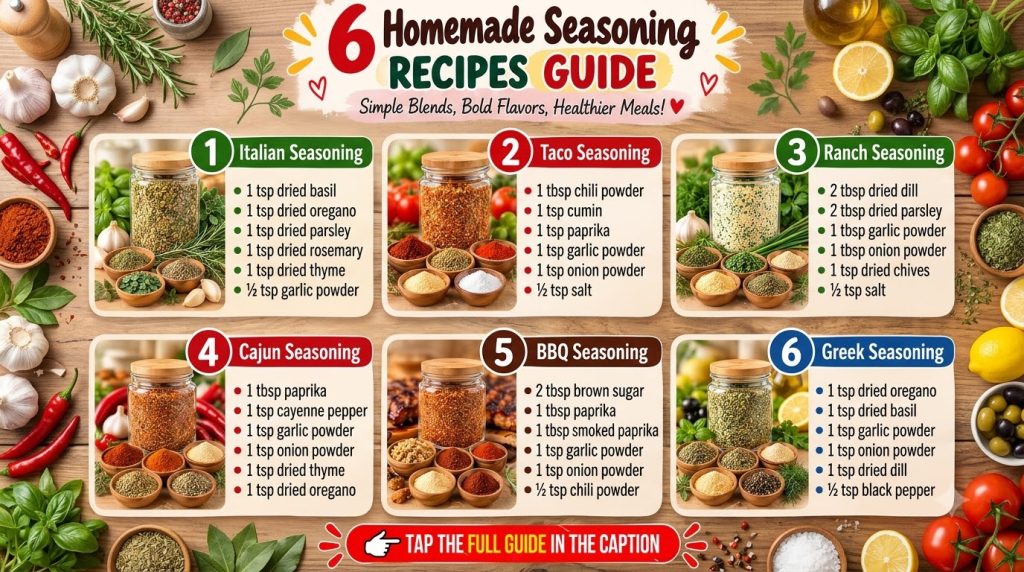
While specific ratios for each of the 6 blends (Italian, Taco, Ranch, Cajun, BBQ, Greek) are not provided in this general guide, here’s a list of common dried herbs and spices you’ll want to keep on hand to create a variety of seasoning blends. Consider this your essential pantry list for homemade seasonings:
- Herbs: Dried Oregano, Dried Basil, Dried Thyme, Dried Rosemary, Dried Dill Weed, Dried Marjoram, Bay Leaves
- Spices: Garlic Powder, Onion Powder, Paprika (Sweet, Smoked, or Hot), Chili Powder, Cumin, Ground Coriander, Black Pepper (freshly ground is best!), Cayenne Pepper, Red Pepper Flakes, Turmeric, Mustard Powder, Celery Salt, White Pepper
- Others: Fine Sea Salt (or Kosher Salt), Brown Sugar (for BBQ blends), Dried Parsley
Ingredient Notes
- Quality Matters: Start with fresh, high-quality spices. Old, faded spices will result in dull-tasting blends.
- Whole vs. Ground: While ground spices are convenient, consider buying some spices whole (like cumin seeds, coriander seeds, peppercorns) and grinding them yourself just before mixing for the most potent flavor.
- Salt Content: Many store-bought blends are heavy on salt. When making your own, you can reduce or omit salt entirely and add it separately to your dish, allowing you to control the sodium intake precisely.
Equipment You’ll Need
You don’t need fancy gadgets to start making your own seasoning blends. Here’s what’s typically useful:
- Small mixing bowls
- Measuring spoons (standard and metric if preferred)
- A small whisk or fork
- Airtight jars or containers for storage
- A funnel (optional, for transferring to jars)
- A spice grinder or coffee grinder (optional, for grinding whole spices)
How to Make Homemade Seasoning Blends
Crafting your own spice mixes is a straightforward process. This general method applies to almost any blend you wish to create:
-
Gather Your Ingredients
Select the specific dried herbs and spices for the blend you want to make. For example, if you’re making an Italian blend, you’ll reach for dried oregano, basil, thyme, and garlic powder.
-
Measure Precisely
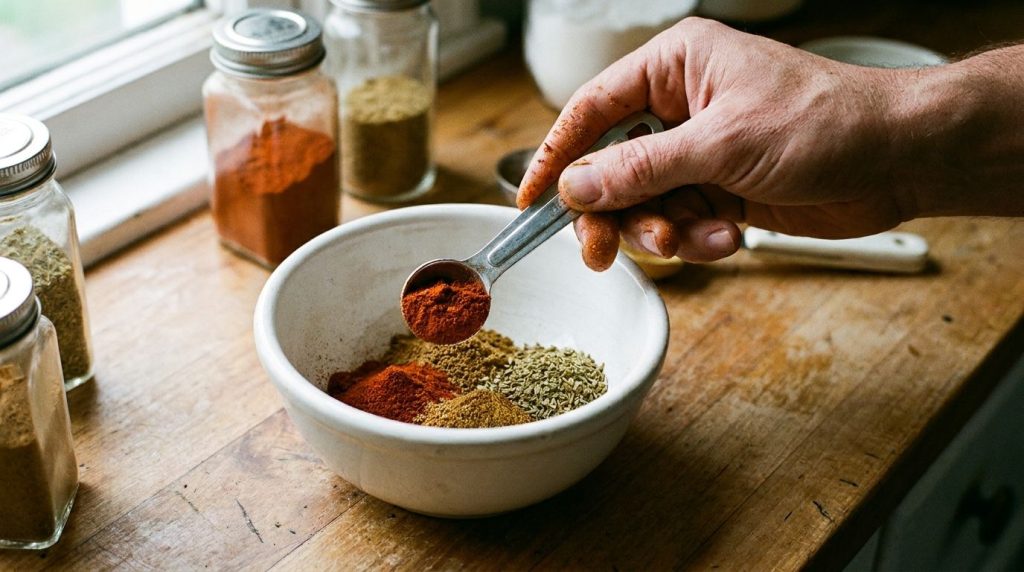
Using clean measuring spoons, accurately measure each individual spice and herb into a small mixing bowl. While specific ratios for the 6 blends mentioned (Italian, Taco, Ranch, Cajun, BBQ, Greek) are a matter of personal preference or specific recipes, ensure you’re consistent if you’re replicating a favorite.
-
Combine Thoroughly
Once all the ingredients are in the bowl, use a small whisk or fork to mix them thoroughly. You want to ensure every component is evenly distributed, so you get a consistent flavor in every pinch.
-
Store Properly
Transfer your freshly mixed seasoning blend into a clean, airtight jar or container. A small funnel can help prevent spills. Don’t forget to label the jar with the name of the blend and the date it was made.
Pro Tips for the Best Results
- Start with Fresh Spices: This is the most crucial tip. If your individual spices are old and lack aroma, your blend will too. Replace them regularly.
- Toast Whole Spices (Optional): For certain blends, lightly toasting whole spices (like cumin or coriander seeds) in a dry pan before grinding can deepen their flavor profile significantly.
- Grind Your Own: Investing in a dedicated spice grinder (or an inexpensive coffee grinder) allows you to grind whole spices just before blending, unlocking maximum aroma and flavor.
- Store Correctly: Always keep your homemade blends in airtight containers, away from direct sunlight, heat, and moisture. A cool, dark pantry is ideal.
- Label and Date: Always label your jars with the blend name and the date you created it. This helps you keep track of freshness.
- Adjust Salt: Consider making a low-salt or no-salt version of your blend and adding salt separately to your dishes as needed.
- Experiment with Ratios: Don’t be afraid to tweak the ingredient proportions to suit your palate. That’s the beauty of homemade!
- Make Small Batches: Especially when first experimenting, make smaller quantities. This ensures your blends are always fresh and gives you flexibility to adjust recipes.
Common Mistakes to Avoid
- Using Stale Spices: The biggest flavor killer. If your spices don’t smell potent, they won’t taste potent.
- Improper Storage: Leaving blends exposed to air, light, or heat will quickly degrade their flavor and aroma.
- Adding Too Much Salt: It’s easier to add more salt later than to fix an overly salty blend. Start low.
- Not Whisking Enough: Uneven distribution means inconsistent flavor. Mix thoroughly!
- Forgetting to Label: It’s easy to forget what’s in an unmarked jar, or when it was made.
Variations & Substitutions
The world of homemade seasoning is ripe for creativity! Here are some ideas beyond the core 6 blends:
- Ingredient Swaps: Experiment with different types of paprika (sweet, smoked, hot), various chili powders, or even specialty salts.
- Spice Levels: Easily adjust the heat by adding more or less cayenne pepper, red pepper flakes, or other ground chiles.
- Flavor Boosters: Incorporate citrus zest (dried lemon or orange peel), dried mushroom powder for umami, or a touch of sugar for a sweet-savory balance in some blends.
- Regional Inspirations: Beyond Italian, Taco, Ranch, Cajun, BBQ, and Greek, explore blends like Ras el Hanout, Garam Masala, Herbes de Provence, or Za’atar.
- Fresh vs. Dried: While dried herbs are standard for blends, you can certainly adapt some to use fresh herbs when cooking, though their shelf life will be much shorter.
Serving Suggestions
These homemade seasoning blends are incredibly versatile and can be used in countless ways:
- Italian Seasoning: Sprinkle on pasta dishes, pizzas, roasted vegetables, chicken, fish, or mix into homemade bread dough.
- Taco Seasoning: Perfect for ground beef, turkey, chicken, or plant-based proteins for tacos, burritos, nachos, and chili.
- Ranch Seasoning: Mix with Greek yogurt or sour cream for a delicious dip, sprinkle on popcorn, roasted potatoes, or chicken wings.
- Cajun Seasoning: Rub on chicken, fish, shrimp, or sausage. Great for seasoning gumbo, jambalaya, or roasted vegetables for a spicy kick.
- BBQ Seasoning: Ideal as a dry rub for ribs, chicken, pork shoulder, or even sprinkled on sweet potato fries before baking.
- Greek Seasoning: Fantastic for marinades for lamb, chicken, or pork. Also great for seasoning roasted potatoes, salads, or homemade tzatziki.
Storage & Reheating
Homemade seasoning blends are all about freshness and convenience, but they do require proper storage to maintain their potency.
- Refrigerator Storage: Not necessary. Spices and blends should be stored at room temperature.
- Freezer Suitability: Not recommended. Freezing can introduce moisture and degrade flavor.
- Best Storage Container: Always use clean, airtight glass jars or opaque spice containers. These protect the blends from air, light, and moisture.
- Approximate Storage Duration: For optimal flavor, use your homemade seasoning blends within 6 to 12 months. While they won’t spoil, their potency will gradually diminish over time.
- Reheating Method: Seasoning blends are not reheated. They are added to dishes during the cooking process.
FAQ
How long do homemade seasoning blends last?
For the best flavor and potency, homemade seasoning blends should be used within 6 to 12 months. Beyond this, they won’t necessarily spoil, but their aromatic compounds and flavor intensity will diminish.
Can I make these with fresh herbs?
While some fresh herbs can be dried and then ground for blends, these recipes are primarily designed for dried herbs and spices. Fresh herbs contain moisture and are not suitable for long-term dry storage in a seasoning blend.
Why should I make my own when I can buy them?
Making your own allows you to control the quality of ingredients, avoid artificial additives, adjust salt content to your preference, and save money in the long run. Plus, the flavor of freshly mixed spices is often far superior!
What’s the best way to store homemade seasoning blends?
Store your blends in clean, airtight jars or containers in a cool, dark place, such as a pantry or cabinet, away from direct sunlight, heat, and humidity.
Can I adjust the salt content in these blends?
Absolutely! This is one of the biggest advantages of making your own. You can reduce or even omit salt entirely, adding it separately to your dishes as you cook, according to your dietary needs and taste.
How do I know what spices go together?
Experience and culinary tradition are your best guides. Start by replicating well-known blends, then experiment by adding or subtracting small amounts of spices. Tasting and adjusting as you go is key to developing your palate.
Recipe Card
Recipe Name: Homemade Seasoning Blends (General Guide)
Short Description: Craft your own versatile seasoning mixes for any dish, controlling ingredients and customizing flavors.
Prep Time: 5 minutes per blend (estimate)
Cook Time: 0 minutes
Total Time: 5 minutes per blend
Servings: Varies (typically yields 1/4 to 1/2 cup per blend)
Course: Condiment, Seasoning
Cuisine: Global
Cooking Method: Mixing
Ingredients:
(Note: Specific ingredient ratios for each of the 6 blends – Italian, Taco, Ranch, Cajun, BBQ, Greek – are not provided in this general guide. This list comprises common pantry spices you’ll use for various blends. Refer to trusted recipes or experiment with your own preferred ratios.)
- Dried oregano
- Dried basil
- Dried thyme
- Paprika (sweet, smoked, or hot)
- Chili powder
- Cumin (ground or whole)
- Garlic powder
- Onion powder
- Cayenne pepper
- Black pepper (freshly ground)
- Fine sea salt (optional, to taste)
- Red pepper flakes
- Celery salt
- Dried dill weed
- Dried rosemary
- Mustard powder
- Brown sugar (for BBQ blends)
- Dried marjoram
- Ground coriander
Instructions:
- Choose Your Blend: Decide which type of seasoning blend you wish to create (e.g., Italian, Taco, Ranch, Cajun, BBQ, Greek).
- Select & Measure Ingredients: Gather the specific dried herbs and spices required for your chosen blend. Accurately measure each ingredient according to your preferred ratios. (Reminder: Specific ratios are not detailed in this guide; consult reliable recipes or adjust to your taste.)
- Combine Thoroughly: Place all the measured ingredients into a small mixing bowl. Using a small whisk or fork, combine them thoroughly, ensuring an even distribution of all spices.
- Store & Label: Carefully transfer your newly mixed seasoning blend into a clean, airtight jar or container. Label the container with the blend’s name and the date it was prepared.
Notes:
This recipe card provides a general framework for making homemade seasoning blends. The beauty lies in customization, so feel free to experiment with ingredient quantities to perfectly suit your palate. Always use fresh spices for the most vibrant flavor.
Storage:
Store your homemade seasoning blends in an airtight container in a cool, dark place, such as a pantry, for optimal freshness. They are best used within 6 to 12 months.