Imagine spending hours planning your garden, carefully preparing the soil, and eagerly sowing your seeds, only to find sparse or weak seedlings emerge. It can be disheartening, but often, the solution is simpler than you think: it all comes down to planting depth. Getting the seed depth just right is one of the most critical yet overlooked steps in successful gardening. Whether you’re a seasoned gardener or just starting your green journey, understanding how deep to plant each tiny seed can dramatically boost your garden’s vigor and yield.
This guide will demystify seed planting depths, transforming potential frustration into a flourishing harvest. We’ll explore why a seemingly small difference in depth can have a huge impact on your germination rates and plant health, providing practical, plant-specific guidance for some of your favorite garden vegetables. Get ready to cultivate confidence and grow a more productive, sustainable garden!
Why Planting Depth is Crucial for Germination
Seeds are tiny packages of potential, each with specific requirements to awaken from dormancy. Planting depth impacts several vital factors:
- Moisture Access: Seeds need consistent moisture to soften their seed coat and trigger germination. If planted too shallow, they can dry out quickly. Too deep, and they might not receive enough water or oxygen.
- Oxygen Supply: Just like us, seeds need oxygen to respire and grow. Compacted or overly deep soil can restrict oxygen flow, suffocating the embryo.
- Light Requirements: Some seeds, particularly very tiny ones like lettuce, actually need light to germinate. Planting them too deep will prevent them from sensing this light.
- Energy Reserves: A seed contains a limited energy supply. If planted too deep, the seedling exhausts its energy trying to push through too much soil before it can reach sunlight and begin photosynthesis. This results in weak, leggy seedlings or complete failure to emerge.
As a general rule of thumb, many seeds are planted at a depth roughly two to three times their diameter. However, specific crops have unique needs, which we’ll delve into next.
Your Guide to Perfect Seed Depths for Common Vegetables
Let’s look at specific planting depths for popular garden staples, ensuring you give each seed the best start:
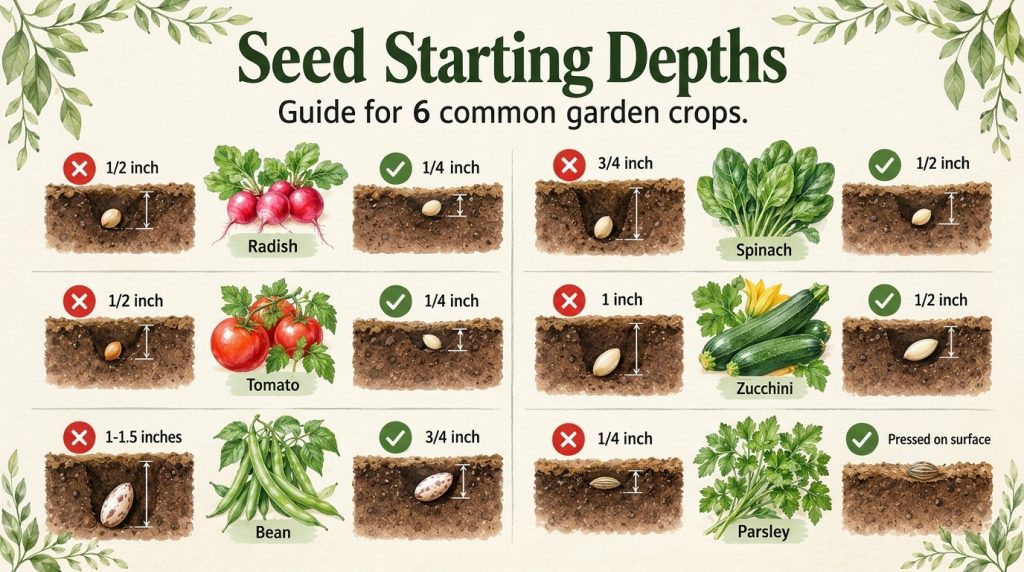
1. Tomato (Solanum lycopersicum)
Tomatoes are warm-season favorites, beloved for their juicy fruits. While they can be started indoors and transplanted, direct sowing is also possible in warmer climates.
- Recommended Depth: 1/4 inch (0.6 cm)
- Why it matters: Tomato seeds are relatively small. Planting them too deep can prevent them from emerging, while planting them too shallow risks them drying out before germination.
- Care Tip: Once seedlings have developed their first true leaves, thin them to 18-24 inches apart. If transplanting, tomatoes are unique in that they can be planted deeper than their original pot, as they will root along the buried stem, creating a stronger root system.
2. Lettuce (Lactuca sativa)
A cool-season leafy green, lettuce is a staple for salads. Its tiny seeds require particular attention to depth.
- Recommended Depth: 1/8 inch (0.3 cm)
- Why it matters: Lettuce seeds are very small and often require light to germinate. A shallow depth ensures they receive enough light while still maintaining sufficient moisture. Planting too deep is a common reason for poor lettuce germination.
- Care Tip: Keep the soil consistently moist during germination. Once established, lettuce benefits from succession planting every 2-3 weeks for a continuous harvest throughout the cooler parts of the growing season.
3. Carrot (Daucus carota subsp. sativus)
Growing sweet, crunchy carrots starts with careful sowing. These fine seeds need loose, stone-free soil to develop properly.
- Recommended Depth: 1/4 inch (0.6 cm)
- Why it matters: Carrot seeds are small and slow to germinate. A shallow depth ensures they emerge without exhausting their energy, but deep enough to stay moist. Their taproot needs unobstructed downward growth.
- Care Tip: Mix carrot seeds with a bit of sand before sowing to help with even distribution. Water very gently after sowing to avoid washing away the seeds. Thin seedlings ruthlessly to 2-4 inches apart for well-formed roots.
4. Radish (Raphanus sativus)
Radishes are the sprinters of the garden, offering a quick harvest of peppery roots.
- Recommended Depth: 1/2 inch (1.3 cm)
- Why it matters: Radish seeds are slightly larger than carrot or lettuce seeds. This depth provides enough moisture and anchorage for their rapid growth while allowing quick emergence.
- Care Tip: Plant small batches every 1-2 weeks for a continuous supply. Radishes grow best in cool weather; heat can make them woody and overly spicy. Harvest promptly when roots reach desired size.
5. Green Bean (Phaseolus vulgaris)
Green beans are easy to grow and highly productive warm-season legumes, available in bush or pole varieties.
- Recommended Depth: 1 inch (2.5 cm)
- Why it matters: Green bean seeds are relatively large and need to be planted deep enough to absorb sufficient moisture for germination and to firmly anchor the developing seedling. Planting too shallow can lead to poor root development or drying out.
- Care Tip: Plant after all danger of frost has passed and soil temperatures are consistently above 60°F (15°C). Provide support for pole bean varieties.
6. Zucchini (Cucurbita pepo)
Zucchini, a prolific summer squash, is a fantastic choice for home gardeners, offering abundant harvests.
- Recommended Depth: 1 inch (2.5 cm)
- Why it matters: Zucchini seeds are large, similar to beans, and require ample moisture and good anchorage. This depth ensures the robust seedling has a strong start and can push through the soil effectively. Planting too shallow risks the seed drying out or the emerging seedling being unstable.
- Care Tip: Give zucchini plants plenty of space (3-4 feet apart) as they are vigorous growers. Ensure consistent watering, especially when fruits are forming, to prevent blossom end rot.
General Seed Starting and Care Tips
Beyond specific depths, a few universal gardening tips will enhance your seed starting success:
- Soil Preparation: Always use a high-quality, well-draining seed-starting mix or amend your garden soil with compost. Good soil structure is vital for root development and moisture retention.
- Consistent Moisture: After planting, gently water the area. Use a fine spray to avoid displacing tiny seeds. Keep the soil consistently moist but not waterlogged until germination occurs. A layer of fine vermiculite can help retain moisture.
- Soil Temperature: Most vegetable seeds have an optimal soil temperature range for germination. Check seed packets for specifics. Using a soil thermometer can be very helpful, especially for warm-season crops.
- Thinning: Once your seedlings have grown their first set of true leaves, thin them to the recommended spacing. This seems counter-intuitive but provides adequate light, nutrients, and airflow for the remaining plants, preventing overcrowding and disease.
- Regional Considerations: Always consult your local extension office or reliable regional gardening guides for specific planting dates based on your USDA hardiness zone and average last frost date.
Common Seed-Starting Mistakes to Avoid
Even experienced gardeners make mistakes. Here are some pitfalls to sidestep:
- Planting Too Deep or Too Shallow: As we’ve discussed, this is the leading cause of poor germination. Always double-check recommended depths.
- Inconsistent Watering: Letting seeds dry out completely or drowning them in soggy soil are both detrimental. Aim for consistently moist conditions.
- Poor Soil Quality: Using heavy, compacted garden soil for seed starting can prevent tiny roots from developing and suffocate seeds.
- Starting Too Early or Too Late: Planting before soil temperatures are right or too close to extreme heat can stress seedlings. Pay attention to your local climate and specific plant needs.
- Ignoring Seed Packet Instructions: These packets are packed with vital information on spacing, light, and specific care. Don’t toss them before you’ve reviewed them.
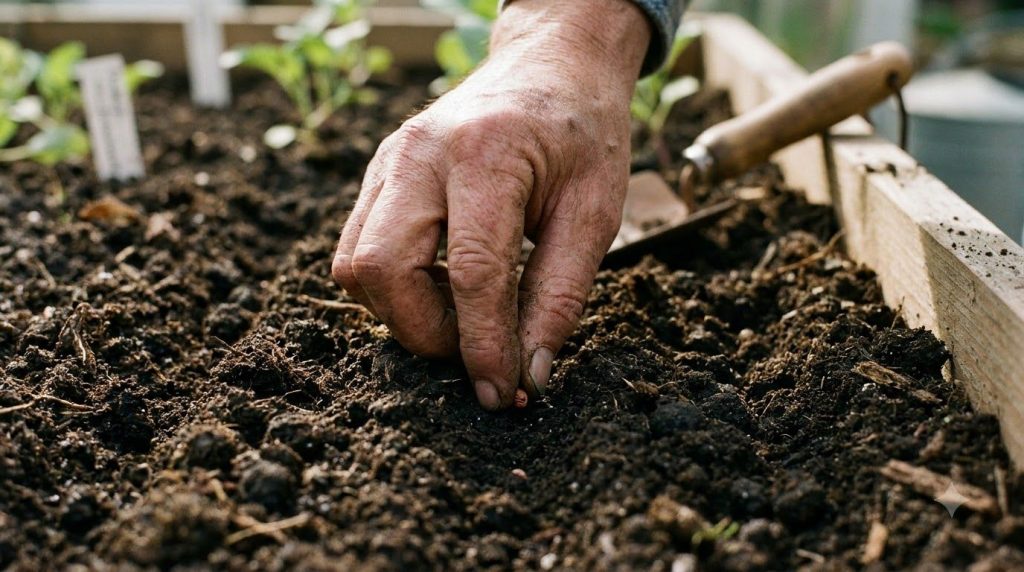
Cultivating Confidence, One Seed at a Time
Mastering seed planting depth is a fundamental skill that empowers you to grow a more successful and satisfying garden. By understanding the specific needs of each tiny seed and providing the right environment, you’re not just planting; you’re nurturing life and laying the foundation for abundant harvests.
So, grab your favorite seeds, prepare your soil, and approach each planting with newfound confidence. Observe your seedlings as they emerge, learn from each growing cycle, and celebrate every successful sprout. Your green thumb will only grow stronger with each precise planting, leading you to a garden bursting with life and delicious produce. Happy gardening!