Cultivate a Bountiful Harvest: 12 Essential Tomato Companion Plants
Imagine stepping into your garden, the air rich with the scent of ripening tomatoes, and seeing your plants thriving, healthy, and abundant. Achieving that vibrant, pest-resistant tomato patch isn’t just a dream – it’s entirely possible with a little garden wisdom. Companion planting is an ancient, yet ever-relevant, gardening strategy that pairs specific plants to create a mutually beneficial ecosystem. By strategically placing certain plants near your tomatoes, you can naturally deter pests, attract helpful pollinators, improve soil health, and even enhance the flavor of your harvest. Ready to transform your tomato growing experience? Let’s explore the perfect companions for your prized tomato plants.
The Power of Companion Planting for Tomatoes
Companion planting is more than just placing two plants next to each other; it’s about fostering a dynamic relationship in your garden. For tomatoes, the benefits can be profound. Some companions work by emitting scents that confuse or repel harmful insects. Others attract beneficial predatory insects that feast on common tomato pests like aphids and hornworms. Certain plants can improve soil nutrients or structure, while others create a favorable microclimate by shading the soil and retaining moisture. Understanding these roles helps you build a resilient and productive vegetable garden.
12 Stellar Companions for Your Tomato Patch
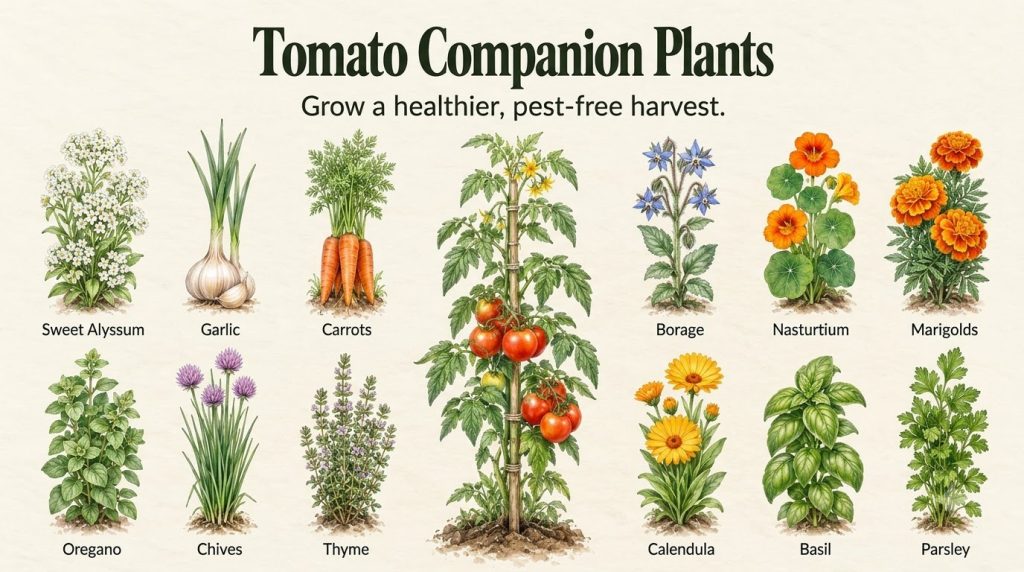
Here are some of the best plants to grow alongside your tomatoes, each offering unique advantages:
1. Basil
A classic pairing for a reason, basil (Ocimum basilicum) is said to improve tomato flavor while deterring common pests like flies and tomato hornworms. Its strong aroma is a natural repellent. Plant basil close to your tomato plants, ensuring it gets similar sun exposure, typically full sun (6-8 hours daily), and well-draining soil. As a bonus, you’ll have fresh basil for your culinary endeavors!
Care Tip: Pinch off basil flowers regularly to encourage bushier growth and more leaves, and to prevent it from going to seed too quickly.
2. Marigolds
French Marigolds (Tagetes patula) are renowned for their ability to deter root-knot nematodes, microscopic worms that can damage tomato roots. They also help repel whiteflies and other garden pests with their distinctive scent. Plant marigolds throughout your tomato beds or in pots placed nearby. They thrive in full sun and various soil types.
Warning: Ensure you’re planting French marigolds, as some other marigold varieties may not offer the same nematode control.
3. Borage
This beautiful herb (Borago officinalis) with its vibrant blue flowers is a magnet for pollinators like bees, essential for fruit set on tomatoes. Borage is also believed to deter tomato hornworms and cabbage worms. Some gardeners even claim it improves tomato growth and disease resistance. Borage can grow quite large, so give it some space, or plant it on the outer edges of your tomato patch.
Care Tip: Borage can self-seed readily, so be prepared to manage volunteers in subsequent seasons if you don’t want it spreading.
4. Carrots
While not a direct pest deterrent for tomatoes, growing carrots (Daucus carota subsp. sativus) nearby can contribute to a healthy soil environment. Their deep taproots help loosen compacted soil, improving drainage and aeration for surrounding plants, including tomatoes. Plant carrots in a separate row or block adjacent to your tomatoes, ensuring consistent moisture for germination and growth.
Spacing Tip: Ensure adequate spacing between carrots and developing tomato plants to prevent competition for light and nutrients.
5. Nasturtiums
Nasturtiums (Tropaeolum majus) serve as excellent trap crops, luring aphids away from your tomatoes. Their bright, cheerful flowers and peppery leaves are also edible, adding a unique flavor to salads. Plant them around the perimeter of your tomato bed where they can sprawl as a ground cover or climb a small support.
Pest Management: Regularly inspect nasturtiums for aphid infestations and wash them off with a strong spray of water or prune affected areas to remove pests from the garden.
6. Parsley
Parsley (Petroselinum crispum) is a host plant for beneficial insects, particularly hoverflies and parasitic wasps, whose larvae prey on aphids and other soft-bodied pests that can plague tomatoes. Plant parsley in partial shade near your tomatoes, as intense full sun can cause it to bolt (go to seed) prematurely.
Care Tip: Parsley is a biennial, meaning it grows leaves in its first year and flowers/seeds in its second. Harvest leaves regularly for culinary use.
7. Mint
The strong scent of mint (Mentha spp.) can deter a variety of pests, including aphids, slugs, and flea beetles. However, mint is notoriously aggressive and can quickly take over garden beds. If you choose to plant mint near your tomatoes, it is crucial to plant it in a container, ideally one sunk into the ground, to prevent its vigorous root system from spreading.
Critical Warning: Never plant mint directly in your garden soil unless you are prepared for it to spread uncontrollably. Use pots or raised beds.
8. Onions
Like other members of the allium family, onions (Allium cepa) emit sulfur compounds that repel a range of pests, including aphids, slugs, and some borers. Their pungent aroma can help mask the scent of your tomatoes, making them harder for pests to locate. Plant onion sets or seedlings around the base of your tomato plants.
Soil Benefits: Onions require fertile, well-drained soil, which aligns well with tomato needs.
9. Calendula
Also known as ‘Pot Marigold’ (Calendula officinalis), this cheerful annual attracts beneficial insects like ladybugs and hoverflies, which are natural predators of aphids. Some studies also suggest certain calendula varieties can deter root-knot nematodes. Plant calendula in full sun near your tomato rows for both beauty and pest control.
Care Tip: Deadhead spent calendula blooms to encourage continuous flowering throughout the season.
10. Chives
Chives (Allium schoenoprasum) are another excellent allium companion. They are believed to improve the flavor and vigor of tomato plants while repelling aphids, spider mites, and nematodes. Their strong scent acts as a natural deterrent. Chives are perennial and can be planted directly in your tomato beds, forming neat clumps.
Pruning Advice: Regularly snip chive leaves for culinary use; this also encourages fresh growth.
11. Lettuce
Lettuce (Lactuca sativa) can be planted as a living mulch around your tomato plants. It helps keep the soil cool, retains moisture, and suppresses weeds, creating a more stable environment for tomato roots. As the tomato plants grow larger, they will provide partial shade for the lettuce, which can extend the lettuce harvest into warmer weather.
Harvesting Tip: Harvest outer lettuce leaves regularly to prevent bolting and allow the tomato plants to fully mature without undue competition.
12. Garlic
Garlic (Allium sativum) is a powerful companion. Its sulfur compounds are effective at repelling a wide array of pests, including aphids, spider mites, and even some larger mammals. It’s also thought to help deter certain fungal diseases, thanks to its antifungal properties. Plant garlic cloves directly into the soil around your tomato plants in the fall or early spring.
Pest Prevention: Consider planting garlic bulbs a few inches deep around the drip line of your tomato plants for maximum repellent effect.
Beyond Specific Plants: General Companion Planting Principles
To maximize the success of your companion planting efforts, consider these general gardening tips:
- Air Circulation: Ensure adequate spacing between plants to allow for good air circulation, which is crucial for preventing fungal diseases in tomatoes. Even with companions, overcrowding can lead to problems.
- Soil Health: Focus on building rich, healthy soil with plenty of organic matter. Healthy soil leads to healthy plants, which are naturally more resistant to pests and diseases.
- Observation: Regularly observe your garden for signs of pests or diseases. Companion plants are a preventative measure, but they don’t guarantee a pest-free garden. Early detection is key.
- Watering: Water deeply and consistently, especially for tomatoes. Many companion herbs prefer similar watering schedules, but always check individual plant needs.
Common Mistakes to Avoid
Even with the best intentions, companion planting can go awry. Here are a few pitfalls to sidestep:
- Overcrowding: Planting too many companions too close can lead to competition for nutrients, water, and sunlight, negatively impacting your tomatoes and the companions themselves.
- Ignoring Aggressive Spreaders: As mentioned with mint, failing to contain vigorous plants can cause them to choke out your desired crops.
- Expecting Miracles: Companion planting is a tool for integrated pest management, not a magic bullet. It enhances natural defenses but doesn’t eliminate the need for monitoring and occasional intervention.
- Incompatible Pairings: While we’ve listed good companions, remember some plants are detrimental. For example, members of the brassica family (broccoli, cabbage) can sometimes stunt tomato growth. Always research before pairing.
Regional and Seasonal Considerations
When you plant your tomatoes and their companions will largely depend on your local climate and USDA hardiness zone. Tomatoes are warm-season crops, typically planted after all danger of frost has passed in spring, when soil temperatures consistently reach at least 60°F (15°C). In colder zones (USDA Zones 3-5), this might be late May or early June. In moderate zones (6-8), late April to mid-May is common. In warmer zones (9-11), you might have success with early spring and even fall plantings. Always check your local extension office for specific planting dates and recommendations for your region.
Cultivate Your Best Tomato Season Yet
Companion planting with tomatoes is a rewarding journey that connects you more deeply with the natural processes of your garden. By thoughtfully integrating these 12 plants into your tomato patch, you’re not just growing food; you’re cultivating a thriving, resilient ecosystem. Observe how these plants interact, enjoy the reduced pest pressure, and savor the enhanced flavors of your harvest. Your healthiest, most abundant tomato season starts now. Happy gardening!