Easy-Care Blooms for Your Dream Cottage Garden!
Imagine strolling through a garden overflowing with vibrant colors and sweet fragrances, where buzzing bees flit between blossoms and soft petals sway gently in the breeze. That’s the charm of a cottage garden — a style renowned for its abundant, informal beauty. But what if you could have all that magic without constant fuss? Many gardeners believe a lush, romantic garden demands endless work, but that couldn’t be further from the truth. With the right plant choices, you can cultivate a stunning, low-maintenance cottage garden that provides continuous joy with minimal effort. Let’s explore some resilient favorites that will bring your cottage garden dreams to life.
The Essence of a Low-Maintenance Cottage Garden
A cottage garden is characterized by its informal design, dense plantings, and a mix of ornamental and edible plants. The “low-maintenance” aspect comes from choosing plants that are well-suited to your local climate and soil conditions, requiring less intervention once established. This means selecting resilient perennials that return year after year, tolerate some drought, and resist common pests and diseases. By planting appropriately and observing your garden’s needs, you’ll spend more time enjoying its beauty and less time battling weeds or watering.
Meet Your Easy-Care Cottage Garden Favorites
1. Purple Coneflower (Echinacea purpurea)
A true workhorse in the garden, Purple Coneflower is a pollinator magnet, drawing in bees and butterflies with its sturdy, daisy-like blooms. Its distinctive cone shape and cheerful purple petals add architectural interest and vibrant color from mid-summer into fall.
- Hardiness: USDA Zones 3-9
- Plant type: Perennial
- Exposure: Full sun to partial shade
- Height: 2-5 feet
- Spread: 1-2 feet
- Care Tip: To encourage more blooms, deadhead spent flowers regularly. For naturalizing and providing winter interest for birds, allow some flower heads to go to seed. Divide congested clumps every 3-4 years in spring or fall to maintain vigor.
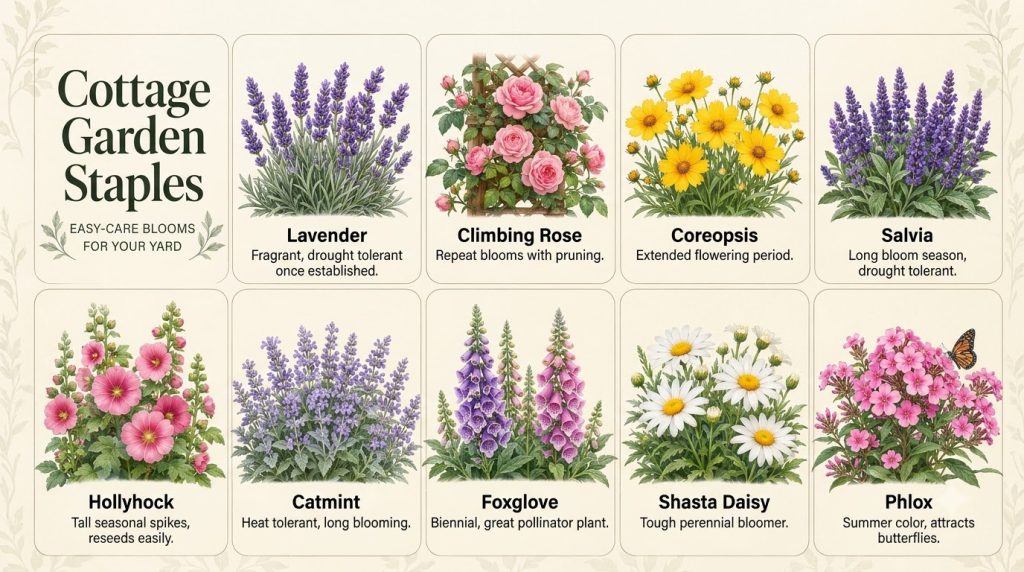
2. Lavender (Lavandula angustifolia)
Known for its intoxicating fragrance and beautiful purple spikes, Lavender is a quintessential cottage garden plant. It thrives in sunny, dry conditions, making it an excellent choice for drought-tolerant landscapes and areas with well-drained soil.
- Hardiness: USDA Zones 5-9
- Plant type: Perennial sub-shrub
- Exposure: Full sun
- Height: 1-3 feet
- Spread: 2-3 feet
- Care Tip: Prune lavender after its main flush of blooms to maintain a compact, bushy shape and encourage a second, smaller bloom. Avoid pruning into old, woody stems, as this can reduce flowering. Ensure good air circulation to prevent fungal issues.
3. Foxglove (Digitalis purpurea)
These stately beauties add vertical drama and a touch of old-world charm to any garden. Their tall spires of bell-shaped flowers are loved by hummingbirds and create an enchanting display in late spring to early summer.
- Hardiness: USDA Zones 4-9 (often biennial or short-lived perennial)
- Plant type: Biennial / Short-lived perennial
- Exposure: Full sun to partial shade
- Height: 2-5 feet
- Spread: 1-2 feet
- Care Tip: Foxgloves readily self-seed, ensuring a continuous display in your garden year after year. Allow some spent flower stalks to remain until seeds drop. Plant in drifts for a dramatic effect.
- Warning: All parts of Foxglove are toxic if ingested, so plant with care around children and pets.
4. Yarrow (Achillea millefolium)
Resilient and drought-tolerant, Yarrow produces flattened clusters of flowers in shades of yellow, pink, red, and white. It’s an excellent choice for sunny borders and attracts beneficial insects to the garden, contributing to a healthy ecosystem.
- Hardiness: USDA Zones 3-9
- Plant type: Perennial
- Exposure: Full sun
- Height: 1-3 feet
- Spread: 1-3 feet
- Care Tip: Deadhead spent flowers to encourage continuous blooming throughout the summer and prevent aggressive self-seeding. Yarrow thrives in poor to average soil and doesn’t appreciate overly rich conditions.
5. Hydrangea (Hydrangea spp.)
Hydrangeas are synonymous with long-lasting, abundant blooms, offering a range of flower shapes and colors. Depending on the species, they can provide continuous interest from summer into fall, making them a cornerstone of the cottage garden.
- Hardiness: USDA Zones 3-9 (varies by species)
- Plant type: Deciduous shrub
- Exposure: Partial shade (for bigleaf types) to full sun (for panicle types)
- Height: 3-15 feet
- Spread: 3-12 feet
- Care Tip: Hydrangeas prefer consistently moist, well-drained soil. The best time to prune depends on the type: bigleaf hydrangeas (H. macrophylla) bloom on old wood and should be pruned after flowering, while panicle hydrangeas (H. paniculata) bloom on new wood and can be pruned in late winter or early spring.
6. Daylily (Hemerocallis spp.)
Daylilies are celebrated for their reliability and versatility, offering a dazzling array of colors, forms, and sizes. Though each individual flower lasts only a day, the continuous succession of blooms can keep your garden vibrant for weeks or even months.
- Hardiness: USDA Zones 3-9
- Plant type: Perennial
- Exposure: Full sun to partial shade
- Height: 1-4 feet
- Spread: 1-3 feet
- Care Tip: While daylilies are tough, dividing congested clumps every 3-5 years will rejuvenate the plants and improve flowering. Do this in early spring or after flowering in late summer/early fall.
7. Catmint (Nepeta x faassenii)
Catmint is an outstanding performer, offering a very long bloom period of soft lavender-blue flowers. It’s deer and rabbit resistant, drought tolerant once established, and beloved by pollinators, making it an excellent border plant or ground cover.
- Hardiness: USDA Zones 3-8
- Plant type: Perennial herb
- Exposure: Full sun
- Height: 1-3 feet
- Spread: 1-3 feet
- Care Tip: After its first flush of blooms, shear back the entire plant by about a third to encourage a robust second — and often third — wave of flowers, extending its season of interest.
8. Peony (Paeonia spp.)
With their large, often fragrant blooms, peonies are a classic symbol of beauty and abundance in the cottage garden. These long-lived perennials require minimal attention once established, gracing your garden with spectacular flowers in late spring to early summer.
- Hardiness: USDA Zones 3-8
- Plant type: Perennial
- Exposure: Full sun
- Height: 2-4 feet
- Spread: 2-4 feet
- Care Tip: Peonies are particular about planting depth; ensure the “eyes” (small pink buds on the root crown) are no more than 1-2 inches below the soil surface. Provide strong support stakes for varieties with very large or double blooms to prevent them from flopping after rain.
9. Bleeding Heart (Lamprocapnos spectabilis)
For shady spots, the Bleeding Heart offers unique, heart-shaped flowers that dangle gracefully from arching stems in early spring. Its delicate appearance belies its hardiness, making it a truly enchanting addition to a woodland or shade garden.
- Hardiness: USDA Zones 3-9
- Plant type: Perennial
- Exposure: Partial to full shade
- Height: 2-3 feet
- Spread: 2-3 feet
- Care Tip: Bleeding Heart thrives in consistently moist, well-drained soil rich in organic matter. Be aware that it may go dormant and disappear by mid-summer, especially in warmer climates or dry conditions. Plant it alongside hostas or ferns that will fill in the space as its foliage fades.
Creating a Thriving, Low-Maintenance Garden
Beyond choosing the right plants, a few foundational gardening practices will set your cottage garden up for long-term success:
- Soil Health: Good soil is the foundation of a healthy garden. Amend your soil with organic compost to improve drainage, fertility, and microbial life. Healthy soil reduces the need for constant fertilizing and helps plants resist stress.
- Right Plant, Right Place: Pay close attention to each plant’s specific needs for sunlight, soil moisture, and mature size. Placing a sun-loving plant in deep shade or a moisture-lover in dry, sandy soil will only lead to disappointment and extra work.
- Watering Wisely: Once established, many of these plants are quite drought-tolerant. However, during prolonged dry spells or in their first year, they will need supplemental watering. Water deeply and less frequently to encourage strong root development, rather than shallow daily sprinkles.
- Mulch: Apply a 2-4 inch layer of organic mulch around your plants. Mulch suppresses weeds, conserves soil moisture, regulates soil temperature, and slowly adds nutrients as it breaks down.
- Observational Care: Regularly walk through your garden. Notice changes in foliage, unexpected pests, or wilting. Early detection allows for small, targeted interventions rather than large-scale problems later.
Regional Considerations for Your Cottage Garden
While many of these plants are adaptable across a wide range of USDA zones, always consider your local climate:
- Zones 3-5 (Northern Climates): Focus on ensuring plants are fully hardy and protected with a good layer of mulch for winter. Early spring planting is ideal once the danger of hard frost has passed and the soil has warmed.
- Zones 6-8 (Mid-Atlantic to Pacific Northwest): This broad range offers excellent conditions for many cottage garden plants. Watch for specific soil moisture needs, as summers can range from humid to dry.
- Zones 9-11 (Southern and Coastal Climates): While some of these plants will thrive, adjust for intense summer heat. Provide afternoon shade for plants like Coneflower and Hydrangea, which might otherwise scorch. Consider plants that are genuinely perennial in warmer zones or grow certain varieties as annuals if they struggle with heat. Local extension services are invaluable resources for specific recommendations.
Cultivate Your Cottage Garden Oasis
Creating a low-maintenance cottage garden is a journey of joyful discovery, not a chore. By selecting these resilient, beautiful plants and applying thoughtful care practices, you can build a garden that flourishes with vibrant life, attracting beneficial insects and offering a tranquil retreat without demanding all your precious time. Embrace the charm, enjoy the process, and watch your dream garden blossom into an easy-care reality. Happy gardening!