Imagine a vibrant touch of green in every corner of your home, without the mess of soil. Growing plants in water, often called hydroponics or simply water propagation, offers a unique way to enjoy nature’s beauty indoors. It’s a serene, clean, and surprisingly simple method that connects you deeply with the life cycle of your plants. Whether you’re a seasoned gardener looking for a new aesthetic or a beginner eager to try a low-maintenance approach, cultivating plants in water can transform your space and bring a calming presence into your daily life.
This guide will walk you through 12 wonderful plants that thrive in water, either for propagation or as long-term residents in their watery homes. You’ll learn the practical steps, essential care tips, and how to avoid common pitfalls, empowering you to create your own beautiful aquatic plant displays.
The Art of Water Gardening: Propagation vs. Long-Term Growth
Growing plants in water can serve two main purposes: propagating new plants from cuttings or maintaining mature plants as long-term residents. Most plants root easily in water, but keeping them healthy in water indefinitely requires a bit more attention to light, water quality, and nutrient supply.
- Water Propagation: This is an excellent way to start new plants from stem or leaf cuttings. Many plants will develop roots in a matter of weeks, after which they can be transplanted into soil.
- Long-Term Water Culture: A select group of plants can thrive purely in water for extended periods, even years. These plants generally need bright, indirect light and regular water changes, along with occasional liquid fertilizer.
For all water-grown plants, use dechlorinated water. You can let tap water sit out for 24 hours to allow chlorine to dissipate, or use filtered water. Always ensure the vessel is clean to prevent algae growth.
The Water-Loving Dozen: Plants to Grow in Water
Let’s explore 12 fantastic plants perfect for your water garden journey.
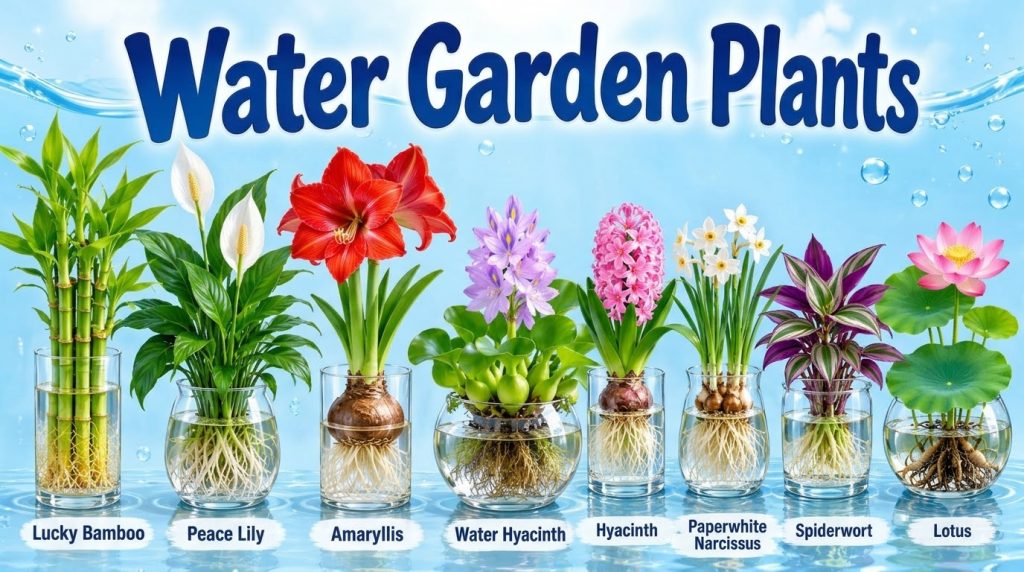
1. Peace Lily (Spathiphyllum spp.)
Peace Lilies are renowned for their elegant white ‘blooms’ (modified leaves called spathes) and glossy green foliage. They adapt beautifully to water culture, making them ideal for a sophisticated indoor display.
- Plant type: Tropical perennial
- Exposure: Low to bright indirect light
- Care tip: When transferring a soil-grown Peace Lily to water, thoroughly rinse all soil from its roots to prevent rot. Change the water weekly and consider adding a tiny amount of liquid houseplant fertilizer every 4-6 weeks for continuous health.
- Warning: All parts of the Peace Lily are toxic if ingested, so keep away from pets and children.
2. Lucky Bamboo (Dracaena sanderiana)
Despite its name, Lucky Bamboo is not true bamboo but a species of Dracaena. It’s incredibly resilient and is a symbol of good fortune, often styled into intricate shapes.
- Plant type: Tropical perennial
- Exposure: Medium to bright indirect light
- Care tip: Keep the water level consistent, ensuring the roots are always submerged. Use distilled or filtered water to avoid fluoride buildup, which can cause leaf tip burn.
- Pruning: Trim yellowing leaves or unwanted shoots with clean scissors to encourage bushier growth.
3. Pothos (Epipremnum aureum)
Pothos, also known as Devil’s Ivy, is one of the easiest plants to propagate and grow in water. Its trailing vines and heart-shaped leaves make it a popular choice for shelves or hanging displays.
- Plant type: Tropical perennial vine
- Exposure: Low to bright indirect light (variegation is best in brighter light)
- Care tip: Take stem cuttings that include at least one node (the bump on the stem where a leaf attaches or new roots emerge). Place the node underwater, and roots should form within 2-4 weeks. Pothos can live in water for years with regular water changes and occasional feeding.
4. Philodendron (Philodendron hederaceum)
Heartleaf Philodendron is another vining favorite, very similar to Pothos in its ease of care and appearance, with slightly more pronounced heart-shaped leaves.
- Plant type: Tropical perennial vine
- Exposure: Low to bright indirect light
- Care tip: Like Pothos, stem cuttings with a node submerged in water are the key. Change the water every week to two weeks. Watch for new roots and leaf growth as signs of success.
5. Coleus (Plectranthus scutellarioides)
Coleus is celebrated for its stunning, vibrant foliage in a myriad of colors and patterns. While often grown as an annual outdoors, its cuttings root very quickly in water, making it perfect for temporary indoor displays or starting new plants for your garden.
- Plant type: Tender perennial (often grown as annual)
- Exposure: Bright, indirect light for best color
- Care tip: Take soft stem cuttings about 4-6 inches long, removing any leaves that would be submerged. You’ll often see roots in just a week! Transfer to soil once roots are several inches long.
6. Begonia (Begonia spp.)
Many types of Begonias, particularly cane and rhizomatous varieties, root readily from stem cuttings in water. Their diverse foliage and flowers add a touch of drama.
- Plant type: Annual or tender perennial, depending on species
- Exposure: Bright, indirect light
- Care tip: Choose healthy stem cuttings about 4-6 inches long. Remove lower leaves and submerge the bottom nodes. Roots typically form in 3-5 weeks. These are best transferred to soil once a good root system has developed.
7. Impatiens (Impatiens walleriana)
Impatiens are beloved for their prolific, colorful blooms. Taking cuttings and rooting them in water is a fantastic way to carry over your favorite varieties through winter or to get a head start on spring planting.
- Plant type: Tender perennial (often grown as annual)
- Exposure: Partial shade to bright indirect light
- Care tip: Cuttings from Impatiens root exceptionally fast in water, often within a week. Keep them in a warm, bright spot. Once rooted, they can be potted up for continued growth or enjoyed temporarily in their water vessel.
8. English Ivy (Hedera helix)
English Ivy is a classic trailing plant with iconic lobed leaves. It roots easily in water and can create a lovely cascade from a shelf or basket.
- Plant type: Evergreen vine
- Exposure: Medium to bright indirect light
- Care tip: Take stem cuttings that are 4-6 inches long, ensuring each has several nodes. Remove the lowest leaves before placing in water. Once rooted, it can be maintained in water or planted in soil.
- Warning: English Ivy can be invasive in some outdoor environments in USDA zones 5-9, so consider its placement carefully if you ever plant it outside. It is also toxic if ingested.
9. Spider Plant (Chlorophytum comosum)
Spider plants are famous for their arching leaves and the ‘spiderettes’ or plantlets that dangle from the mother plant. These plantlets are incredibly easy to root in water.
- Plant type: Perennial houseplant
- Exposure: Medium to bright indirect light
- Care tip: Simply snip a spiderette from the main plant, ensuring it has a small crown of leaves and some tiny nubs of roots already forming. Place the base in water, keeping the leaves out. Roots will develop quickly, usually within 1-2 weeks.
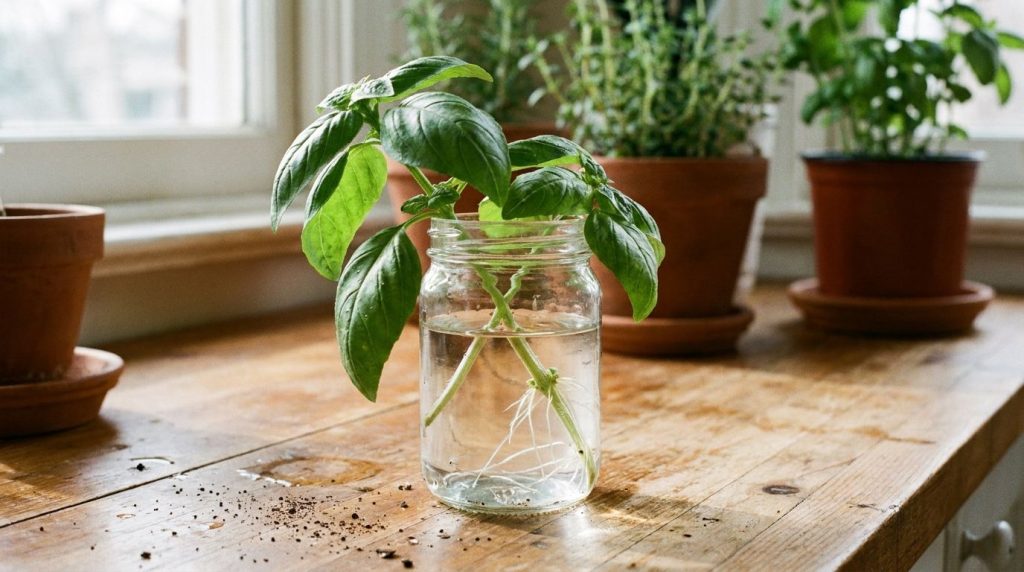
10. Basil (Ocimum basilicum)
Your favorite culinary herb can also be rooted in water! This is a great way to extend the life of a store-bought basil plant or start new plants for your kitchen garden.
- Plant type: Annual herb (tender perennial in zones 9-11)
- Exposure: Bright light
- Care tip: Take cuttings from healthy, non-flowering stems, about 4-6 inches long. Remove leaves from the bottom 2 inches. Place in water, changing it every couple of days. Roots typically form in 1-2 weeks. You can keep them in water for fresh basil leaves, but they often perform better long-term in soil.
11. Rosemary (Salvia rosmarinus)
Rosemary is a fragrant, woody herb that can be a bit more challenging than basil to root in water, but it’s certainly possible with patience. It’s best rooted from semi-hardwood cuttings.
- Plant type: Perennial woody herb (USDA Zones 7-10)
- Exposure: Bright light
- Care tip: Take 4-6 inch cuttings from new growth that isn’t too soft or too woody. Gently scrape a small strip of bark from the bottom inch of the cutting to expose the cambium layer. Change water every few days. Roots can take 3-8 weeks to form, so be patient.
12. African Violet (Saintpaulia spp.)
African Violets are cherished for their fuzzy leaves and charming blooms. Propagating them from a single leaf in water is a rewarding project.
- Plant type: Perennial houseplant
- Exposure: Bright, indirect light
- Care tip: Choose a healthy, mature leaf with about an inch of stem attached. Cut the stem at an angle and place it in a shallow glass of water, ensuring only the stem is submerged. New plantlets will eventually form at the base of the stem, a process that can take several weeks to a few months. Once plantlets are a good size, transfer them to a small pot with African Violet soil.
Common Mistakes and How to Avoid Them
Even with easy-to-grow plants, a few common missteps can hinder your water gardening success:
- Stagnant Water: Leaving water unchanged leads to oxygen depletion and can foster harmful bacteria or algae. Change the water weekly, or at least every two weeks, to keep it fresh and oxygenated.
- Lack of Nutrients: While cuttings don’t need nutrients initially, plants grown long-term in water will eventually exhaust the minimal minerals present in tap water. Add a diluted liquid houseplant fertilizer specifically formulated for hydroponics, following package directions carefully, every 4-6 weeks.
- Insufficient Light: Even water-grown plants need light for photosynthesis. Place your plants in a location with bright, indirect light. Too little light leads to leggy, weak growth; too much direct sun can burn leaves and encourage algae.
- Rotting Plant Material: Remove any leaves or stems that fall into the water and start to decay. This prevents the growth of harmful pathogens and keeps the water clean.
- Overcrowding: Give your cuttings or plants enough space in their vessel. Good airflow and sufficient room for roots are crucial for healthy growth.
Cultivating Your Indoor Oasis
Water gardening is a delightful way to observe root development, propagate new plants, and enjoy living greenery in a clean, minimalist style. It offers a unique connection to the natural world, allowing you to see the hidden life beneath the water’s surface. With a little attention to detail, a handful of cuttings, and a clear glass vessel, you can effortlessly bring the tranquil beauty of nature into your home. Start experimenting with these 12 plants today and discover the joy of growing in water!