Imagine a vibrant indoor garden that asks for little yet gives back so much. That’s the promise of growing plants in water! For anyone who loves the beauty of greenery but worries about messy soil, frequent watering, or complicated care routines, water cultivation offers an elegant and surprisingly simple solution. Transforming a few cuttings into thriving plants is not just satisfying; it’s a beautiful way to connect with nature’s resilience right in your living space. Forget the green thumb myth; with these nine resilient plants, you’re just a clear vase and a snip away from a serene, low-maintenance indoor oasis.
The Magic of Water Cultivation: Simple Hydroponics for Home Gardeners
Growing plants in water, often referred to as hydroculture or a basic form of hydroponics, is a fantastic way to enjoy houseplants. It eliminates soil-borne pests, reduces the risk of over or underwatering, and allows you to marvel at the intricate root systems developing beneath the water’s surface. While some plants can live indefinitely in water with the right care and nutrients, others are best started this way before transitioning to soil. For our purposes, we’re focusing on plants that truly thrive in a purely aquatic environment, making them perfect candidates for long-term water display or easy propagation.
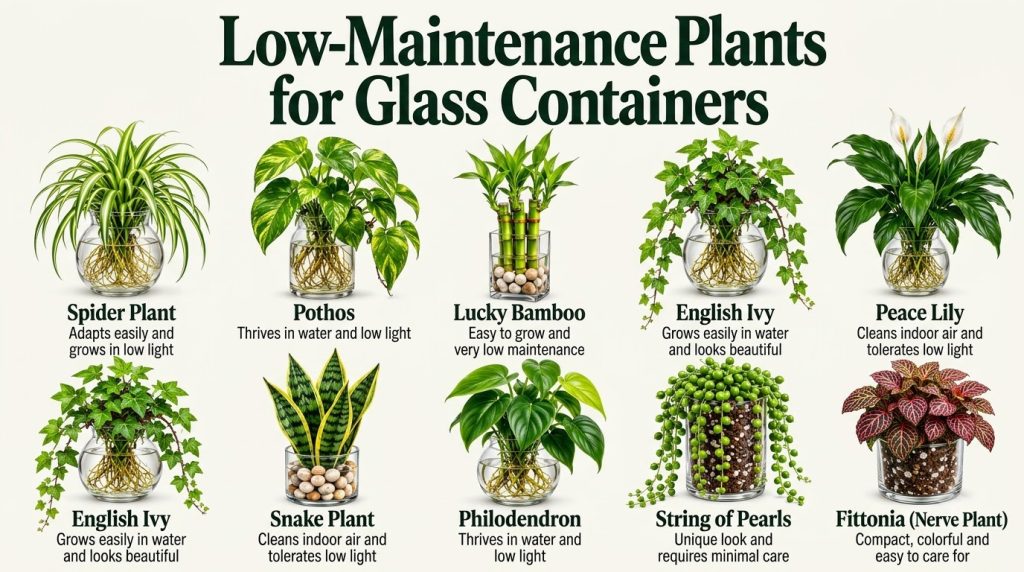
Your Green Companions: 9 Easy-Care Plants for Water Growing
Let’s dive into the fantastic world of these nine plants that flourish with their roots in water, transforming your space with minimal effort.
Pothos (Epipremnum aureum)
Known as the ‘devil’s ivy’ for its tenacity, Pothos is a classic choice for water propagation and growth. Its heart-shaped leaves come in various variegations, adding a splash of color to any room. Pothos roots readily from stem cuttings, often within a couple of weeks.
- Plant type: Trailing vine
- Exposure: Tolerates low light, but thrives in bright, indirect light. Direct sun can scorch leaves.
- Propagation: Take a 4-6 inch stem cutting with at least 2-3 nodes (the small bumps where leaves and roots emerge). Remove any leaves that would be submerged in water.
- Care Tip: Change the water every week or two to keep it fresh and oxygenated, preventing stagnation and algae buildup.
Spider Plant (Chlorophytum comosum)
Spider plants are famous for their arching foliage and the ‘plantlets’ or ‘spiderettes’ they produce, which are perfect for water propagation. These plantlets are miniature versions of the parent, already equipped to root.
- Plant type: Clumping perennial with arching leaves
- Exposure: Bright, indirect light is ideal. Some morning sun is acceptable, but avoid harsh afternoon sun.
- Propagation: Snip off a ‘spiderette’ from the mother plant, ensuring it has a small crown of leaves. You can also root larger offsets.
- Care Tip: Place the plantlet directly in water. Once established, ensure the water level remains consistent to keep the roots submerged.
Lucky Bamboo (Dracaena sanderiana)
Despite its name, Lucky Bamboo is not a true bamboo but a type of Dracaena. It’s a symbol of good fortune and remarkably easy to grow in water, often sold in decorative arrangements.
- Plant type: Upright cane, often manipulated into spirals or braids
- Exposure: Enjoys low to bright indirect light. Direct sun can yellow the stalks.
- Propagation: Cuttings of the cane with at least one node can be rooted.
- Care Tip: Use filtered or distilled water, as lucky bamboo is sensitive to chlorine and fluoride in tap water. Change water weekly.
Monstera (Monstera deliciosa)
The iconic Monstera, with its dramatic fenestrated leaves and prominent aerial roots, makes a stunning statement grown in water. Its aerial roots are designed to absorb moisture and nutrients from the air, making them excellent candidates for water culture.
- Plant type: Large, tropical vining plant
- Exposure: Thrives in bright, indirect light.
- Propagation: Take a stem cutting that includes at least one node and preferably an aerial root or two.
- Care Tip: Ensure the node and any aerial roots are submerged. As it grows, you might need a larger vessel or consider providing supplemental liquid fertilizer for sustained growth.
Philodendron (Philodendron hederaceum)
Similar to Pothos, the heartleaf Philodendron is a vigorous vining plant cherished for its glossy, heart-shaped leaves. It’s incredibly forgiving and one of the easiest plants to root and grow in water.
- Plant type: Trailing vine
- Exposure: Tolerates low light but prefers bright, indirect light for best growth.
- Propagation: Take a stem cutting with a few nodes, ensuring the lowest node is submerged.
- Care Tip: Philodendrons can become quite large; prune regularly to maintain desired size and encourage bushier growth, using the cuttings for more water plants!
Syngonium (Syngonium podophyllum)
Also known as Arrowhead Plant, Syngonium offers a beautiful variety of leaf shapes and colors, ranging from deep green to pink and white. They readily root in water and can create a lovely bushy display.
- Plant type: Vining or bushy plant, depending on pruning
- Exposure: Grows well in medium to bright indirect light. Lower light can diminish variegation.
- Propagation: Take a stem cutting with at least one node. Remove lower leaves.
- Care Tip: While generally resilient, ensure good air circulation around the plant, and always keep the water fresh to prevent bacterial issues.
Begonia (Begonia spp.)
Many types of Begonias, particularly cane and rhizomatous varieties, can be propagated and grown in water from stem cuttings. Their vibrant foliage and unique textures make them attractive additions.
- Plant type: Diverse; many are bushy or upright
- Exposure: Prefers bright, indirect light. Some morning sun is tolerated.
- Propagation: Take a stem cutting about 4-6 inches long, ensuring it has several leaves. Place in water with nodes submerged.
- Care Tip: Begonias can be sensitive to constantly wet leaves, so ensure only the stem is in the water and the foliage stays dry to prevent mildew.
Tradescantia (Tradescantia zebrina)
Known for its striking striped leaves in shades of purple, green, and silver, Tradescantia (also called Wandering Jew or Inchplant) is a rapid grower in water. It quickly forms a lush, trailing display.
- Plant type: Fast-growing, trailing perennial
- Exposure: Vibrant color is best maintained in bright, indirect light. Too little light can make colors fade.
- Propagation: Easily roots from stem cuttings. Just snip a piece and place it in water.
- Care Tip: Because it grows so quickly, prune regularly to keep it bushy and prevent it from becoming leggy. These cuttings can be used to start new plants or fill out the existing display.
Coleus (Coleus scutellarioides)
With an astonishing array of leaf colors and patterns, Coleus is often grown for its ornamental foliage. It roots extremely easily in water, making it a joy to propagate and display.
- Plant type: Bushy annual (often grown as a houseplant or tender perennial indoors)
- Exposure: Loves bright, indirect light for the best color intensity. Too much direct sun can scorch the leaves, while too little will make colors dull.
- Propagation: Take a 4-6 inch stem cutting, removing the lower leaves.
- Care Tip: Pinch back the growing tips periodically to encourage a bushier plant and prevent it from flowering prematurely, which can cause the plant to decline.
Mastering Your Water Garden: Essential Care Tips
While growing plants in water is wonderfully simple, a few key practices will ensure your green companions thrive.
The Right Light, The Right Spot
Most of these plants prefer bright, indirect light. Think of a spot a few feet from an east or west-facing window, or near a south-facing window where the light is diffused by sheers or obstructions. Avoid harsh, direct afternoon sun which can scorch leaves, and extremely low light which can lead to leggy, pale growth. Rotate your plants weekly to ensure even growth.
Water Quality and Changes
This is crucial! Don’t just top off the water. Change the water completely every 1-2 weeks. This replenishes oxygen, removes waste products, and prevents the buildup of algae or harmful bacteria. If your tap water is heavily chlorinated, let it sit out for 24 hours before using, or use filtered water. Algae is usually a sign of too much direct light hitting the water, so consider moving the plant or using a darker vessel once roots are established.
Nourishing Your Rooted Friends
While plain water is fine for starting cuttings, for long-term growth, plants need nutrients. After a few weeks of rooting, consider adding a highly diluted liquid fertilizer (about 1/4 strength of the recommended dose) to the water during changes. Specialized hydroponic nutrient solutions are also available and provide a balanced diet for water-grown plants.
When to Pot Up (or Not!)
Many of these plants can live indefinitely in water with proper nutrient supplementation. However, if you notice growth slowing significantly, yellowing leaves, or if the plant becomes too large for its container, it might be time to transition it to soil. To pot up, simply plant the rooted cutting into a well-draining potting mix in a container of appropriate size, keeping the soil consistently moist for the first few weeks to ease the transition.
Avoiding Common Pitfalls in Water Propagation
Even with easy-care plants, a few common mistakes can hinder your success. Being aware of these can save you a lot of frustration:
- Stagnant Water: As mentioned, not changing the water often enough leads to oxygen depletion, which can cause roots to rot. Regular changes are key.
- Decaying Material: Always remove any leaves that fall into the water or any stem parts that begin to rot. Decomposing organic matter contaminates the water and encourages harmful bacteria.
- Impatience: Rooting times vary. Some plants root in days, others take weeks. Provide consistent conditions and be patient.
- Too Much Direct Sun on Water: This isn’t just about leaf scorch; direct sunlight hitting the water encourages algae growth, which competes with your plant for nutrients and light.
Growing plants in water is a rewarding experience that simplifies indoor gardening and brings a unique aesthetic to your home. By choosing these resilient plants and following a few simple care guidelines, you can effortlessly create a vibrant, green sanctuary. So grab a few cuttings, find some clear containers, and start your journey into the captivating world of water gardening today!