Hey there, fellow garden enthusiasts! Are you looking for simple, natural, and effective ways to boost your garden’s health without resorting to harsh chemicals? If so, you’re in for a treat! Today, we’re diving into the wonderful world of white vinegar – a common household item that holds incredible power for your green space.
Forget expensive specialty products; this humble liquid is a game-changer, offering a multitude of benefits from pest control to cleaning, all while being eco-friendly and budget-conscious. Get ready to transform your garden into a thriving, natural paradise with these fantastic white vinegar hacks!
Why White Vinegar is a Gardener’s Best Friend
Before we jump into the specific uses, let’s appreciate why white vinegar is such a fantastic addition to your gardening toolkit. It’s affordable, readily available, and perhaps most importantly, it’s a natural and non-toxic alternative to many chemical-laden garden products. Its acetic acid content makes it incredibly versatile, capable of tackling various garden challenges.
Benefits of Using White Vinegar:
- Eco-Friendly: It breaks down naturally, leaving no harmful residues in your soil or water.
- Cost-Effective: Much cheaper than specialized garden chemicals.
- Versatile: One product, many solutions!
- Safe: When used correctly, it’s safe for you, your family, and your pets (though direct ingestion should be avoided).
8 Amazing Ways White Vinegar Transforms Your Garden
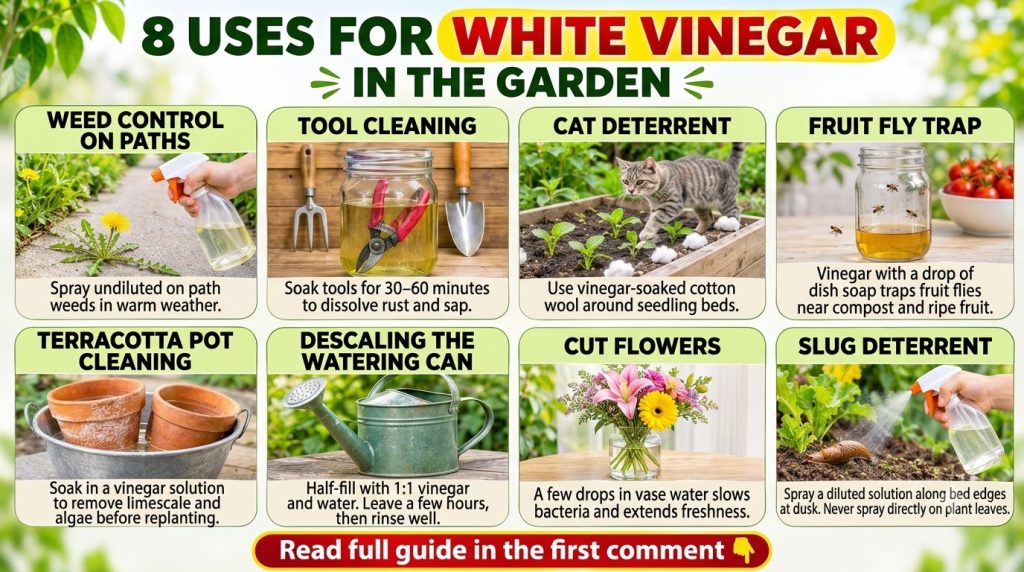
Let’s get to the good stuff! Here are eight incredible ways you can put white vinegar to work in your garden:
1. Natural Weed Control
Tired of pesky weeds invading your paths and patios? White vinegar can be a surprisingly effective herbicide! Its acetic acid dries out and kills weeds, especially young, tender ones. For best results, use full-strength distilled white vinegar (5% acetic acid) on a sunny day. Spray directly onto the leaves of unwanted weeds, being careful to avoid your beloved plants, as it can harm them too. Reapply as needed.
2. Effective Fruit Fly Trap
Are fruit flies buzzing around your ripening produce? Create a simple, non-toxic trap! Mix equal parts white vinegar and water with a few drops of dish soap in a shallow dish. The fruit flies are attracted to the vinegar, and the dish soap breaks the surface tension, causing them to drown. Place these traps near your fruit trees or vegetable patches.
3. Rust-Free Tool Cleaning
Garden tools can quickly develop rust, especially after a rainy season. White vinegar is excellent for restoring them! Soak rusty tools in a bucket of undiluted white vinegar overnight. The acetic acid will loosen the rust, making it easy to scrub off with a wire brush the next day. Rinse thoroughly and dry completely to prevent new rust.
4. Deterring Common Pests
Many common garden pests, like ants and slugs, dislike the smell and taste of vinegar. For ants, spray a diluted solution (equal parts vinegar and water) around their entry points or directly on trails. To deter slugs, create a barrier by spraying a ring of vinegar solution around vulnerable plants. Remember to reapply after rain.
5. Soil Acidifier for Acid-Loving Plants
Some plants, such as hydrangeas, azaleas, rhododendrons, and blueberries, thrive in acidic soil. If your soil is too alkaline, you can gently lower its pH with white vinegar. Mix one cup of white vinegar with one gallon of water and use it to water these plants sparingly. Test your soil pH regularly to avoid over-acidifying.
6. Cleaning Bird Baths and Pots
Keeping your bird baths clean is crucial for the health of your feathered friends. White vinegar is a natural disinfectant and cleaner! Scrub bird baths and empty terracotta pots with a solution of equal parts vinegar and water to remove algae, mineral deposits, and grime. Rinse well before refilling or replanting.
7. Extending Cut Flower Life
Want your beautiful cut flowers to last longer? Add a splash of white vinegar to their vase water! A mixture of 2 tablespoons white vinegar, 2 tablespoons sugar, and 1 quart of water helps inhibit bacterial growth and provides nutrients, keeping your blooms fresher for longer. Change the water and solution every few days.
8. Sanitizing Seed Trays and Pots
Before starting new seeds or reusing pots, it’s important to sanitize them to prevent the spread of diseases. Wash seed trays, pots, and gardening containers with a solution of one part white vinegar to four parts water. This helps to kill off any lingering bacteria, fungi, or pathogens, giving your new plants a healthy start.
Important Tips for Using White Vinegar in Your Garden
While white vinegar is a fantastic natural solution, a few precautions will ensure you use it safely and effectively:
- Dilution is Key: For most applications, especially near desired plants, dilute vinegar with water. Use full strength only for specific tasks like weed killing on paths or heavy rust removal, where collateral damage isn’t a concern.
- Avoid Overuse: Too much vinegar can harm soil microbes and beneficial insects. Use it judiciously and only when needed.
- Test First: If you’re unsure how a plant or surface will react, test a small, inconspicuous area first.
- Protect Your Plants: When using vinegar as a weed killer, be precise with your application. A shield or barrier can prevent accidental overspray on nearby plants.
- Safety First: Wear gloves and eye protection when working with undiluted vinegar, especially if you have sensitive skin.
White vinegar truly is a garden superhero! By incorporating these simple and natural hacks into your routine, you can create a healthier, more vibrant garden while being kind to the environment and your wallet. Give these tips a try and watch your garden flourish!
Do you have any other clever ways you use white vinegar in your garden? Share your wisdom in the comments below – we’d love to hear your favorite eco-friendly gardening tricks!