Ah, the humble compost pile! It’s a gardener’s best friend, turning kitchen scraps and yard waste into nutrient-rich gold for your plants. But sometimes, instead of that satisfying earthy aroma, you’re greeted by something less pleasant. Don’t fret! Your compost pile is talking to you, and understanding its ‘language’ of smells is key to turning those less-than-ideal odors into a beautifully balanced, vibrant compost.
Decoding your compost pile’s scent is like having a secret superpower. Each smell gives you a clue about what’s happening inside and what adjustments you need to make. Let’s dive into the most common compost smells and how to transform your pile into a fragrant, productive powerhouse!
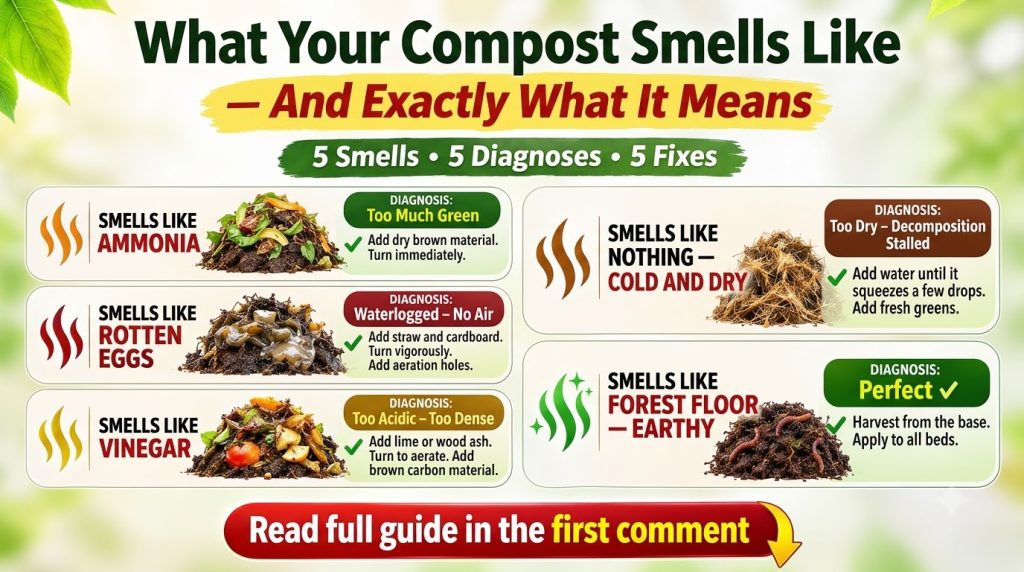
The Rotten Egg or Sulphur Smell: Too Much Moisture, Not Enough Air
If your compost pile smells like rotten eggs, sewage, or strong sulphur, it’s a clear sign of anaerobic decomposition. This means there isn’t enough oxygen, and beneficial aerobic bacteria (the ones that break down organic matter efficiently and without foul odors) are struggling. Instead, anaerobic bacteria, which produce these unpleasant gases, are taking over.
Diagnosis:
- The pile is too wet, often waterlogged.
- Lack of aeration or turning.
- Too many ‘green’ materials (nitrogen-rich, like fresh grass clippings or food scraps) without enough ‘brown’ materials (carbon-rich, like dry leaves or wood chips).
The Fix:
- Aerate, Aerate, Aerate! Turn your pile frequently with a pitchfork or compost aerator. This introduces oxygen and helps dry out the wet spots.
- Add ‘Brown’ Materials: Mix in plenty of dry, carbon-rich materials like shredded dry leaves, straw, wood chips, or even shredded newspaper. These absorb excess moisture and create air pockets.
- Reduce Water: If you’re actively watering your pile, stop for a while. Protect it from heavy rain if possible. The compost should feel like a wrung-out sponge, damp but not saturated.
The Ammonia Aroma: Too Much Nitrogen
A strong smell of ammonia, similar to cat urine, indicates an excess of nitrogen-rich ‘green’ materials in your pile. While nitrogen is essential for composting, too much without a balanced amount of carbon can lead to rapid decomposition that releases ammonia gas.
Diagnosis:
- Overload of fresh grass clippings, kitchen scraps, or manure.
- Insufficient ‘brown’ materials to balance the nitrogen.
The Fix:
- Balance with ‘Browns’: Add a generous amount of carbon-rich materials like dry leaves, sawdust, shredded cardboard, or wood chips. Mix them thoroughly into the pile. The ideal carbon-to-nitrogen ratio for composting is generally around 30:1.
- Turn the Pile: Turning helps distribute materials and allows the ammonia gas to dissipate.
- Monitor ‘Greens’: In the future, try to add ‘green’ and ‘brown’ materials in layers or mix them consistently to maintain a good balance.
The Sour or Vinegary Odor: Anaerobic Decomposition & pH Imbalance
If your compost smells sour, like vinegar or fermentation, it’s often another symptom of anaerobic conditions, possibly combined with an imbalance in pH. This can happen if there’s too much acidic food waste or if the pile is too dense and wet, leading to lactic acid fermentation.
Diagnosis:
- Pile is too wet and compacted.
- High concentration of acidic materials (e.g., fruit scraps, citrus peels) without proper balance.
- Lack of airflow.
The Fix:
- Introduce Air & Dry Materials: Similar to the rotten egg smell, turning the pile and adding ‘brown’ materials like shredded leaves or wood chips will help aerate it and absorb excess moisture.
- Balance pH: While compost naturally self-regulates pH over time, you can add a small amount of garden lime or wood ash (sparingly!) to help neutralize acidity if the problem persists.
- Avoid Overloading Acidic Waste: Distribute acidic kitchen scraps evenly throughout the pile and ensure they are well-mixed with other materials.
The Dry & Lifeless Pile: No Smell at All
Sometimes, the problem isn’t a bad smell, but no smell at all! If your compost pile is dry, cold, and showing little to no activity or smell, it usually means the microorganisms responsible for decomposition aren’t active. They need moisture and food to thrive.
Diagnosis:
- The pile is too dry.
- Lack of ‘green’ nitrogen-rich materials to fuel microbial activity.
- Insufficient size for heat generation.
The Fix:
- Add Moisture: Water your compost pile until it’s damp, but not soaking wet. Think of it like a wrung-out sponge.
- Introduce ‘Green’ Materials: Add fresh kitchen scraps, grass clippings, or other nitrogen-rich materials to kickstart microbial activity.
- Turn and Mix: Turn the pile to distribute moisture and new materials evenly. A larger pile (at least 3x3x3 feet) generally composts more efficiently because it can retain heat better.
The Sweet Earthy Scent: Compost Perfection!
This is the smell you’re striving for! A healthy, active compost pile should smell sweet, earthy, and fresh – like rich forest soil after a rain. This indicates that aerobic decomposition is happening beautifully, and your microorganisms are doing a fantastic job.
Diagnosis:
- Balanced carbon-to-nitrogen ratio.
- Adequate moisture.
- Good airflow.
- Active microbial life (you might even see worms or other beneficial insects).
Maintenance Tips for a Perfect Pile:
- Continue to Turn: Regular turning (once a week or every few weeks) maintains aeration and speeds up the process.
- Maintain Moisture: Keep the pile consistently damp.
- Feed it Right: Continue adding a balanced mix of ‘greens’ and ‘browns’.
- Harvest: Once your compost is dark, crumbly, and smells wonderfully earthy, it’s ready to enrich your garden beds, containers, and houseplants!
General Tips for a Happy Compost Pile
Mastering composting is a journey, but these simple practices can keep your pile healthy and happy:
- Chop Materials: Smaller pieces break down faster.
- Layer or Mix: Always try to add ‘greens’ and ‘browns’ in balanced layers or mix them well.
- Avoid Problematic Items: Steer clear of meat, dairy, oily foods, pet waste (unless specifically for a pet waste composter), and diseased plants to prevent odors and pests.
- Monitor & Adjust: Pay attention to your pile’s temperature, moisture, and smell. It will tell you what it needs!
By learning to decode the various smells emanating from your compost pile, you’re not just fixing problems; you’re becoming a more intuitive and successful gardener. Embrace the process, and soon you’ll be enjoying the rich rewards of your very own homemade compost!