Unlock the Secret to a Thriving Home Orchard!
Imagine biting into a crisp, juicy apple, freshly picked from your own backyard tree. This dream is entirely achievable, and one of the most vital steps to a successful harvest is mastering the art of apple tree pruning. It might seem daunting at first, but with a little guidance, you’ll be shaping your apple trees for optimal health and maximum yield in no time!
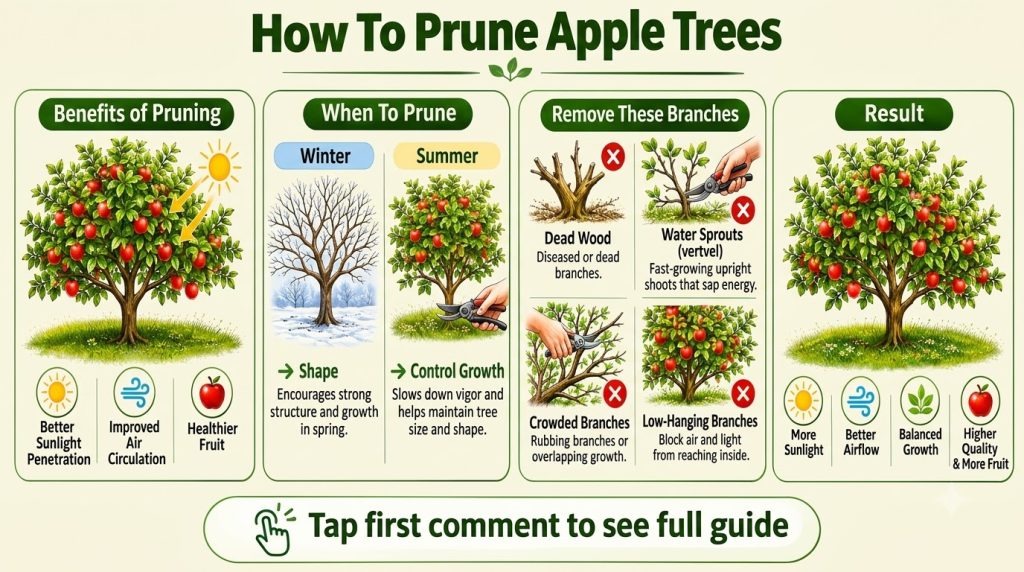
Why Is Pruning So Important for Apple Trees?
Pruning isn’t just about making your tree look neat; it’s a crucial practice for its overall health, productivity, and longevity. Here’s why it’s a gardener’s best friend:
- Increased Air Circulation: Removing dense branches allows air to flow freely through the canopy, which significantly reduces the risk of fungal diseases.
- Better Sunlight Penetration: Sunlight is vital for fruit development and ripening. Pruning opens up the tree, ensuring more light reaches inner branches and developing apples.
- Improved Fruit Quality: By reducing the number of fruits on the tree, the remaining apples receive more nutrients, resulting in larger, sweeter, and healthier fruit.
- Stronger Tree Structure: Pruning helps establish a strong central leader and well-spaced scaffold branches, preventing breakage from heavy fruit loads or strong winds.
- Easier Harvesting: A well-pruned tree is typically more manageable in size, making harvesting your delicious apples a much simpler task.
When is the Best Time to Prune Your Apple Trees?
Timing is everything when it comes to pruning. Generally, there are two primary periods for pruning apple trees:
Winter Pruning (Dormant Pruning)
This is the most common and often recommended time for major pruning. When your apple tree is dormant (late winter to early spring, before bud break), it’s easier to see the tree’s structure without leaves obstructing your view. This period is ideal for:
- Removing dead, diseased, or damaged branches.
- Shaping the tree and establishing its framework.
- Reducing overall tree size.
- Encouraging vigorous new growth in the spring.
Summer Pruning
Summer pruning is less about major structural changes and more about managing growth and encouraging fruit production. It’s typically done after the tree has set its fruit, usually in late spring to early summer. Focus on:
- Removing vigorous upright shoots (water sprouts) and suckers.
- Thinning out crowded areas to improve light and air penetration to ripening fruit.
- Controlling the size of overly vigorous branches.
What Branches Should You Remove?
Knowing what to cut is key. Here’s a guide to identifying branches that need to go:
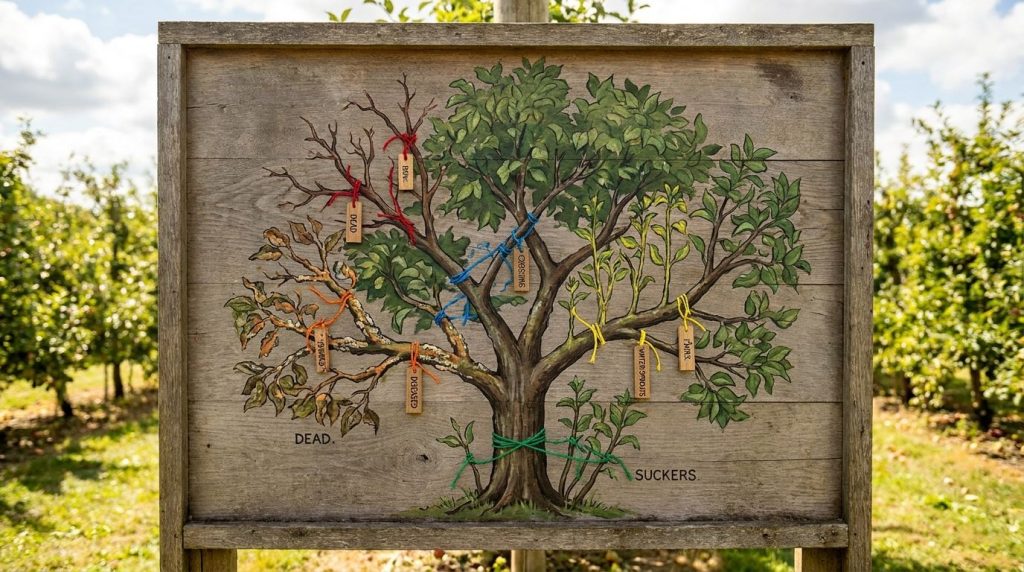
- Dead, Diseased, or Damaged Branches: Always remove these first. Diseased branches can spread pathogens, and damaged branches are entry points for pests.
- Crossing or Rubbing Branches: Branches that rub against each other can create wounds, making the tree susceptible to disease. Choose the stronger, better-positioned branch to keep.
- Suckers and Water Sprouts: Suckers grow from the base of the tree or rootstock, while water sprouts are vigorous, upright shoots that grow directly from branches. Both consume energy without producing fruit.
- Inward-Growing Branches: Branches growing towards the center of the tree contribute to a dense canopy and poor air circulation.
- Low-Hanging Branches: Branches too close to the ground can become pest highways or interfere with maintenance.
- Branches Too Close Together: Thin out crowded branches to ensure good spacing, allowing each branch adequate light and air. Aim for an open, goblet-like shape to maximize light exposure.
Essential Tools for Pruning
Having the right tools makes the job easier and ensures clean cuts that heal quickly:
- Hand Pruners: For smaller branches, up to ½ inch in diameter. Keep them sharp and clean.
- Loppers: For branches from ½ inch to 1 ½ inches in diameter, offering more leverage.
- Pruning Saw: For larger branches, over 1 ½ inches in diameter. Choose a sharp, curved blade for easier cutting.
- Safety Glasses and Gloves: Always protect your eyes and hands!
Tips for Successful Pruning
- Make Clean Cuts: Use sharp tools to make clean cuts. Ragged cuts are harder for the tree to heal and can invite disease.
- Cut at the Branch Collar: The branch collar is the swollen area where a branch meets the trunk or a larger branch. Cut just outside this collar, preserving it to help the tree heal naturally.
- Step Back Often: Periodically step away from the tree to assess its overall shape and balance. It’s easy to get lost in the details.
- Don’t Over-Prune: Removing too much at once can stress the tree. A general rule is not to remove more than 20-30% of the tree’s canopy in a single season.
Cultivate Your Apple Tree’s Potential!
Pruning your apple trees is an investment in their future, ensuring years of healthy growth and delicious fruit. By understanding the ‘why,’ ‘when,’ and ‘what’ of pruning, you’re not just maintaining a tree; you’re nurturing a vital part of your home garden and enjoying the fruits of your labor, quite literally!
Happy gardening, and happy harvesting!