Are you looking to enhance your well-being and fuel your body with vital nutrients? Understanding which foods are rich in essential vitamins is a fantastic first step. Vitamins are like the tiny superheroes of our bodies; they perform countless crucial jobs, from boosting our immune system to supporting bone health and giving us energy.
This article will guide you through the wonderful world of vitamin-rich foods. We’ll explore various essential vitamins and highlight delicious, everyday foods where you can find them. Get ready to learn how easy it is to incorporate these nutritional powerhouses into your diet and feel the difference!
The Power of Vitamins: Why They Matter
Vitamins are organic compounds that our bodies need in small amounts for a wide range of functions. Unlike macronutrients (carbohydrates, fats, proteins), vitamins don’t provide energy directly, but they are essential for processes that do. They help regulate metabolism, support growth and development, maintain nerve function, and protect cells from damage.
Two Main Types of Vitamins
- Fat-soluble vitamins: These include Vitamins A, D, E, and K. They are stored in the body’s fatty tissues and liver, meaning they can be stored for longer periods. They are best absorbed when consumed with dietary fats.
- Water-soluble vitamins: This group includes Vitamin C and all the B vitamins. These vitamins are not stored in the body for long periods and are excreted in urine, so they need to be replenished regularly through diet.
Key Vitamin-Rich Foods to Boost Your Health
Let’s dive into some of the most important vitamins and the delicious foods that provide them.
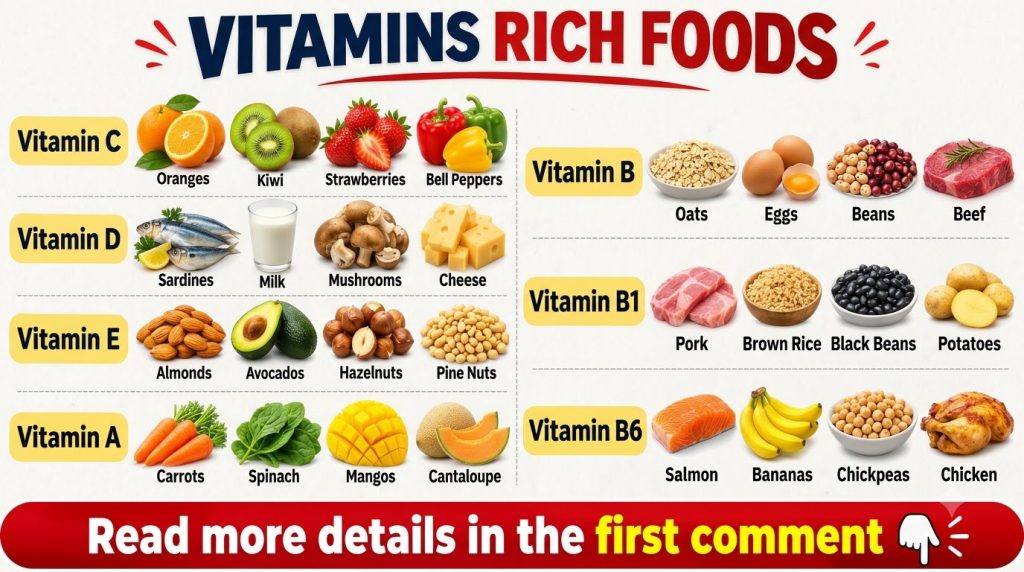
Vitamin C: The Immune Booster
Often associated with oranges, Vitamin C is a powerful antioxidant crucial for immune function, collagen production, and skin health. It also helps with iron absorption.
- Best Sources: Citrus fruits (oranges, grapefruits), bell peppers (especially red and yellow), strawberries, kiwi, broccoli, tomatoes.
- Why You Need It: Supports a strong immune system, promotes healthy skin, and aids in wound healing.

Vitamin D: The Sunshine Vitamin
Known for its role in bone health, Vitamin D helps the body absorb calcium. While sunlight is a primary source, many foods also contain this vital nutrient.
- Best Sources: Fatty fish (salmon, mackerel, tuna), fortified dairy products, fortified plant milks, egg yolks, some mushrooms.
- Why You Need It: Essential for strong bones and teeth, and it plays a role in immune system regulation.
Vitamin A: For Vision and Growth
Vitamin A is critical for good vision, immune function, and cell growth. It comes in two main forms: preformed Vitamin A (retinol) from animal products and provitamin A carotenoids (like beta-carotene) from plant foods.
- Best Sources: Carrots, sweet potatoes, spinach, kale, liver, eggs, dairy products.
- Why You Need It: Supports healthy vision, immune system, and skin.
Vitamin E: The Antioxidant Protector
This powerful antioxidant protects cells from damage and supports immune function. It’s often found in various plant-based foods.
- Best Sources: Almonds, sunflower seeds, spinach, avocado, olive oil, wheat germ.
- Why You Need It: Acts as an antioxidant, protecting cells from oxidative stress.
B Vitamins: The Energy Boosters
The B-vitamin complex (B1, B2, B3, B5, B6, B7, B9, B12) is a group of water-soluble vitamins that are crucial for energy metabolism, brain function, and red blood cell formation.
- Best Sources: Whole grains, leafy green vegetables, meat, poultry, fish, eggs, legumes, fortified cereals.
- Why You Need Them: Essential for energy production, nerve function, and cell health.
Vitamin K: For Blood Clotting and Bones
Vitamin K is well-known for its role in blood clotting and also plays a part in bone health.
- Best Sources: Leafy green vegetables (kale, spinach, collard greens), broccoli, Brussels sprouts, some fermented foods.
- Why You Need It: Crucial for proper blood clotting and supports bone health.
Practical Tips for Incorporating Vitamin-Rich Foods
Making vitamin-rich foods a regular part of your diet doesn’t have to be complicated. Here are some simple, actionable tips:
- Eat the Rainbow: Aim for a variety of colorful fruits and vegetables each day. Different colors often indicate different vitamin profiles.
- Start with Breakfast: Add berries to your oatmeal, spinach to your eggs, or a side of citrus fruit.
- Snack Smart: Grab an apple, a handful of almonds, or baby carrots instead of processed snacks.
- Load Up on Greens: Incorporate leafy greens into salads, smoothies, stir-fries, or as a side dish.
- Choose Whole Grains: Opt for whole-grain bread, pasta, and brown rice to boost B vitamins.
- Healthy Fats Matter: Pair fat-soluble vitamins (A, D, E, K) with healthy fats like avocado or olive oil for better absorption.
FAQs About Vitamin-Rich Foods
Q: Can I get all the vitamins I need from food alone?
A: For most healthy individuals, a balanced diet rich in a variety of fruits, vegetables, whole grains, and lean proteins can provide all the necessary vitamins. However, some individuals (e.g., those with specific dietary restrictions, certain medical conditions, or pregnant women) may benefit from supplements. Always consult a healthcare professional for personalized advice.
Q: Are frozen fruits and vegetables less nutritious than fresh?
A: Not necessarily! Frozen fruits and vegetables are often picked at their peak ripeness and flash-frozen, which helps preserve their nutrient content. They can be just as nutritious, and sometimes even more so, than fresh produce that has traveled long distances and sat on shelves for a while.
Q: What’s the best way to cook vegetables to retain vitamins?
A: Steaming, stir-frying lightly, or microwaving with minimal water are generally the best methods for preserving water-soluble vitamins (like Vitamin C and B vitamins). Over-boiling can cause many water-soluble vitamins to leach into the cooking water.
Q: Do I need to worry about getting too many vitamins?
A: It’s very difficult to get too many vitamins from food alone. However, taking high doses of certain vitamin supplements, particularly fat-soluble vitamins (A, D, E, K), can lead to toxicity because they are stored in the body. Always follow recommended daily allowances and consult a doctor before taking high-dose supplements.
Q: Are fortified foods a good source of vitamins?
A: Fortified foods, such as fortified cereals, milk, or plant-based beverages, can be a helpful way to boost your intake of certain vitamins, especially for those who might struggle to get enough from their diet. For example, many plant milks are fortified with Vitamin D and B12, which can be beneficial for vegans.
Conclusion
Embracing a diet rich in vitamins is one of the most effective ways to support your overall health and well-being. By focusing on a colorful variety of fruits, vegetables, whole grains, and lean proteins, you can naturally provide your body with the essential nutrients it needs to thrive. Remember, every bite is an opportunity to nourish yourself!
We hope this guide inspires you to explore more vitamin-rich foods in your daily meals. For more insights into healthy eating and delicious recipes, be sure to check out our other articles on healthy food content!
This content is for educational purposes only and should not be considered medical advice. Consult a qualified healthcare professional for personalized dietary recommendations.

