Ever wonder if you’re truly optimizing your diet beyond just what you eat, and considering when you eat it? While every body is unique, research and traditional wisdom suggest that the timing of your meals and snacks can significantly impact digestion, energy levels, and even sleep quality. Understanding the best time to eat common foods can be a game-changer for your overall wellness.
This guide from Glowra Health dives into the optimal moments for popular everyday items, helping you harness their benefits to the fullest. Get ready to rethink your daily routine and discover simple tweaks that could lead to profound improvements in how you feel.
Why Food Timing Matters for Your Well-being
Our bodies operate on a circadian rhythm, influencing everything from hormone production to digestion. Aligning our food intake with these natural rhythms can enhance nutrient absorption, prevent digestive discomfort, and support stable blood sugar levels. Eating certain foods at the ‘wrong’ time, according to your body’s natural clock, might lead to bloating, indigestion, interrupted sleep, or a dip in energy.
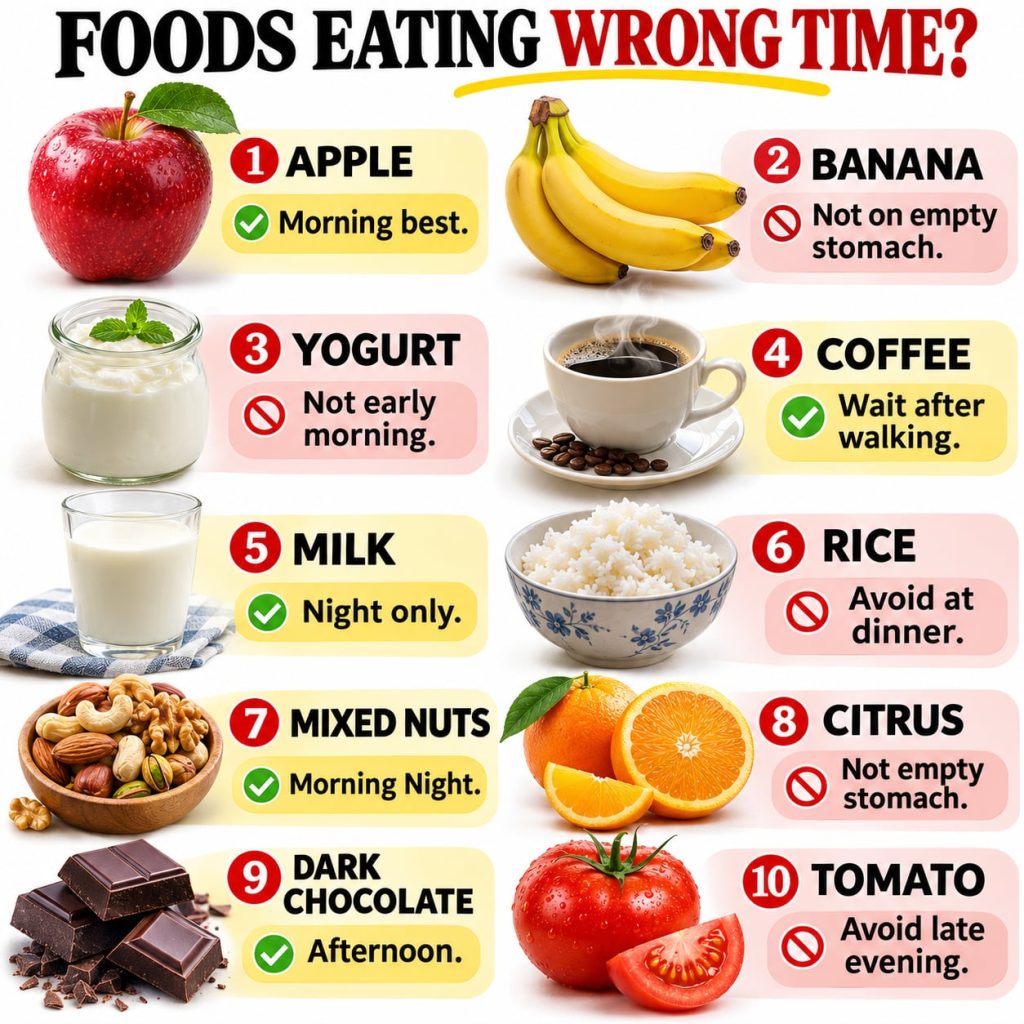 Discover the ideal times to enjoy your favorite foods for optimal health.
Your Guide to Optimal Food Timing
Let’s explore the recommended times for some of your most common dietary staples, based on their unique properties and how they interact with your body’s processes.
1. Apple: Morning Best, Avoid on an Empty Stomach
- Morning Best: Apples are rich in fiber, which can help kickstart your digestive system and provide sustained energy throughout the morning. The pectin in apples may also support healthy gut bacteria.
- Avoid on an Empty Stomach: While apples are incredibly healthy, for some individuals, eating them on an empty stomach may lead to increased acidity or gas due to their fiber content and natural acids. If you have a sensitive stomach, consider pairing it with a small amount of healthy fat or protein.
2. Banana: Lunch Best, Avoid at Dinner
- Lunch Best: Bananas are a fantastic source of energy, natural sugars, and potassium. Enjoying them around lunchtime can provide a natural boost to help you power through the afternoon slump.
- Avoid at Dinner: Eating bananas close to dinner or bedtime can be heavy for some digestive systems, potentially leading to mucus formation or indigestion overnight. Their natural sugars might also contribute to a spike in energy when you’re trying to wind down.
3. Yogurt: Night Best, Avoid During Dinner
- Night Best: Yogurt, especially plain varieties with live and active cultures, is excellent for your gut health. Consuming it as a light snack in the evening or before bed allows the beneficial probiotics to work their magic, supporting digestion while you sleep.
- Avoid During Dinner: While you can certainly enjoy yogurt, having it as a heavy part of a large dinner meal might not be ideal for everyone, as its cool nature can sometimes slow down the digestive fire if consumed in large quantities with other complex foods.
4. Coffee: Morning Best, Avoid at Night
- Morning Best: For many, coffee is a morning ritual that provides a welcome jolt of caffeine to enhance alertness and focus. The best time to drink coffee is typically a few hours after waking, allowing your natural cortisol levels to peak and then gently decline.
- Avoid at Night: This one is fairly straightforward. The caffeine in coffee can linger in your system for several hours, significantly disrupting sleep patterns and quality if consumed too close to bedtime.
5. Milk: Night Best, Avoid in the Morning
- Night Best: A warm glass of milk before bed is a classic for a reason. Milk contains tryptophan, an amino acid that can promote relaxation and aid in sleep. It’s a light, comforting beverage that may help calm your nervous system.
- Avoid in the Morning: For some, especially those with lactose sensitivity, drinking milk in the morning, particularly with other breakfast foods, can feel heavy and potentially slow down digestion throughout the day.
6. Rice: Lunch Best, Avoid at Dinner
- Lunch Best: Rice, particularly brown rice, is a great source of complex carbohydrates, providing sustained energy. Enjoying it at lunch can fuel your body and brain for the rest of the day’s activities.
- Avoid at Dinner: As a calorie-dense carbohydrate, consuming large portions of rice at dinner, especially if you have an inactive evening, may contribute to weight gain and can feel heavy, potentially disrupting sleep.
7. Nuts: Morning Best, Avoid at Night
- Morning Best: Nuts are packed with healthy fats, protein, and fiber, making them an excellent choice for a morning snack. They provide satiety and sustained energy, helping to curb hunger throughout the day.
- Avoid at Night: While healthy, nuts are calorie-dense and high in fat, which can take longer to digest. Eating them in large quantities close to bedtime might lead to digestive discomfort and could interfere with sleep.
8. Citrus Fruits: Morning Best, Avoid on an Empty Stomach
- Morning Best: Citrus fruits like oranges and grapefruits are bursting with Vitamin C and antioxidants, boosting your immune system and providing a refreshing start to your day.
- Avoid on an Empty Stomach: Similar to apples, the high acidity of citrus fruits can be irritating to the stomach lining for some individuals when consumed on an empty stomach, potentially leading to heartburn or acid reflux.
9. Dark Chocolate: Morning Best, Avoid at Night
- Morning Best: Dark chocolate, in moderation, offers powerful antioxidants and can provide a gentle energy lift. Enjoying a small piece in the morning can be a satisfying treat that doesn’t disrupt your sleep.
- Avoid at Night: Dark chocolate contains caffeine and other stimulants that can keep you awake if consumed too close to bedtime. Its fat and sugar content may also be too heavy for some digestive systems before sleep.
10. Tomato: Morning Best, Avoid at Night
- Morning Best: Tomatoes are rich in vitamins, minerals, and the powerful antioxidant lycopene. Consuming them in the morning allows for better digestion and absorption of their nutrients throughout your active day.
- Avoid at Night: The acidity in tomatoes can contribute to heartburn or acid reflux, especially when lying down, which can interfere with a restful night’s sleep for sensitive individuals.
FAQs About Optimal Food Timing
Q: Does food timing apply to everyone?
A: While these are general recommendations based on common physiological responses, individual experiences can vary. Factors like genetics, gut health, activity level, and existing conditions can influence how your body reacts to food timing. Listen to your body and adjust accordingly.
Q: Can I still eat these foods at other times?
A: Absolutely! This guide offers optimal times for maximizing benefits or minimizing potential discomfort. It doesn’t mean you can never enjoy a banana in the evening or coffee in the afternoon. The key is moderation and being mindful of how your body responds.
Final Thoughts on the Best Time to Eat Foods
Incorporating mindful eating and considering the best time to eat foods can be a powerful tool for enhancing your daily well-being. By making simple adjustments to when you enjoy your apples, yogurt, coffee, and other staples, you may experience better digestion, more stable energy, and improved sleep. Remember, consistency is key, and listening to your body’s unique signals will always be your best guide on your wellness journey with Glowra Health.