Collagen is more than just a buzzword in the beauty industry; it’s a vital protein that forms the scaffolding of your skin, bones, tendons, and ligaments. As we age, our natural collagen production declines, leading to visible signs like wrinkles, sagging skin, and joint stiffness. While supplements are popular, did you know that some of the most delicious sources of collagen come straight from the ocean?
Embracing a diet rich in collagen-boosting foods, particularly certain types of seafood, can play a significant role in maintaining youthful vitality from the inside out. Marine collagen, known for its high bioavailability, is a fantastic option for those looking to support their body’s structural integrity. Let’s explore the top seafood choices that can help you naturally enhance your collagen intake and support your journey to glowing health.
Why Marine Collagen is a Game-Changer for Your Health
Marine collagen, derived from fish, is often lauded for its superior absorption compared to other animal-derived collagens. This means your body can utilize it more efficiently to support skin elasticity, hydration, and overall joint health. Beyond its structural benefits, marine collagen may also contribute to stronger hair and nails, and even support digestive health.
By choosing collagen-rich seafood, you’re not just getting collagen; you’re also benefiting from a host of other essential nutrients like lean protein, omega-3 fatty acids, vitamins, and minerals. It’s a holistic approach to wellness that tastes incredible.
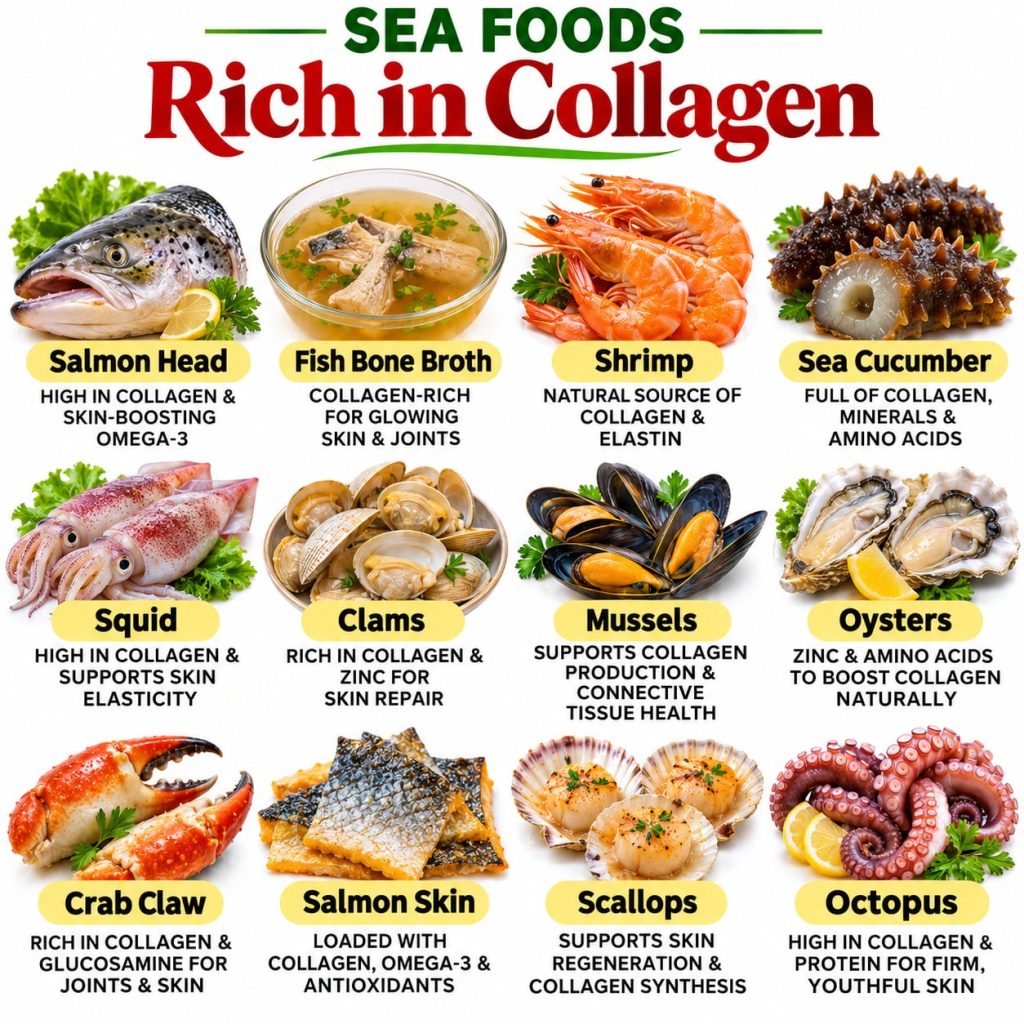 Discover the ocean’s best for a natural collagen boost.
Your Guide to Collagen-Rich Seafood Powerhouses
From luxurious crustaceans to often-overlooked fish parts, the sea offers an abundance of options to boost your collagen. Here are 12 incredible seafood choices that can help you replenish this essential protein:
Salmon Head
Don’t discard the head! Salmon heads are surprisingly rich in collagen, particularly in their bones and cartilage. They are an excellent base for highly nutritious fish stocks and broths, allowing you to extract maximum collagen and other beneficial minerals.
Fish Bone Broth
A true collagen elixir, fish bone broth made from fish heads, bones, and skin is packed with marine collagen. Slow simmering extracts gelatin and a variety of amino acids that are crucial for joint health, gut lining, and radiant skin. It’s a comforting and potent way to get your daily collagen.
Shrimp
Beyond being a versatile and delicious lean protein, shrimp contains some collagen, primarily in its shells. While you typically don’t eat the shells, extracts from shrimp shells are often used in marine collagen supplements. The meat itself offers amino acids that support collagen synthesis.
Sea Cucumber
Considered a delicacy in many cultures, sea cucumber is renowned for its incredibly high collagen content. Its gelatinous texture is a direct indicator of the abundance of connective tissue, making it a unique and powerful source of marine collagen, often consumed for its purported anti-aging benefits.
Squid
Squid, with its firm yet tender texture, is a good source of lean protein and also contains collagen in its connective tissues and cartilage. It’s a versatile seafood that can be grilled, fried, or added to stews, offering a unique way to diversify your collagen sources.
Clams
These small bivalves are not only packed with protein and essential minerals like iron and zinc but also contribute to your collagen intake. While less direct than bone broth, the amino acids present in clams support your body’s own collagen production.
Mussels
Similar to clams, mussels are a sustainable and nutrient-dense seafood. They provide a good amount of protein, omega-3 fatty acids, and various vitamins and minerals, all of which contribute to overall health, including the building blocks for collagen synthesis.
Oysters
Famous for their zinc content, which is crucial for immune function and skin health, oysters also offer amino acids that support collagen production. Enjoying them raw or lightly cooked can be a luxurious way to boost your nutrient intake.
Crab Claw
The cartilage and connective tissues found in crab claws are excellent sources of collagen. When cooking whole crabs, the collagen is released into the cooking liquid, creating a flavorful and nutritious base for soups and bisques.
Salmon Skin
Often discarded, salmon skin is a powerhouse of collagen. When crisped up, it’s a delicious and crunchy addition to meals, directly delivering high-quality marine collagen, along with beneficial omega-3s.
Scallops
These sweet, tender shellfish are a lean source of protein and contain various minerals. While not as concentrated in collagen as fish skin or bones, the amino acids they provide are vital for supporting your body’s collagen framework.
Octopus
Known for its unique texture and rich flavor, octopus is another excellent source of lean protein. Its dense connective tissues contain collagen, making it a valuable addition to a diet focused on boosting this essential protein.
Maximizing Your Collagen Intake from Seafood
To get the most collagen from your seafood, consider these tips:
- Embrace Broths: Utilize fish heads, bones, and skin to make rich, gelatinous broths. Slow cooking is key to extracting the collagen.
- Don’t Waste the Skin: If you’re cooking fish like salmon, try to crisp up and consume the skin for a direct collagen boost.
- Include Vitamin C: Pair your collagen-rich meals with vitamin C-rich foods (like citrus, bell peppers, or berries) as vitamin C is essential for collagen synthesis in the body.
- Variety is Key: Incorporating a diverse range of these seafood options will ensure you get a broad spectrum of nutrients that support overall health and collagen production.
Frequently Asked Questions About Collagen and Seafood
Can I get enough collagen from food alone?
While food sources like collagen-rich seafood can significantly contribute to your intake, individual needs vary. For some, especially those with higher needs due to age or specific health goals, supplements may be a beneficial addition. However, prioritizing whole food sources is always a great starting point.
What are the best ways to cook these seafoods for collagen?
For maximum collagen extraction, slow-cooking methods like simmering for broths or stews are ideal. For skin and flesh, grilling, baking, or pan-frying until crispy can preserve and concentrate the collagen content.
Are there any side effects to consuming collagen-rich seafood?
For most people, consuming collagen-rich seafood as part of a balanced diet is safe and beneficial. However, individuals with seafood allergies should, of course, avoid these foods. Always source your seafood responsibly to minimize exposure to contaminants.
Final Thoughts
Incorporating collagen-rich seafood into your diet is a delicious and effective way to support your body’s natural vitality. From enhancing skin elasticity to strengthening joints, the benefits are far-reaching. By embracing these ocean treasures, you can take a proactive step towards a healthier, more vibrant you. Which of these collagen powerhouses will you add to your next meal?
Medical Disclaimer
The information provided in this article is for informational purposes only and is not intended as medical advice. Always consult with a qualified healthcare professional before making any decisions about your health or diet, especially if you have existing health conditions or are pregnant or breastfeeding.