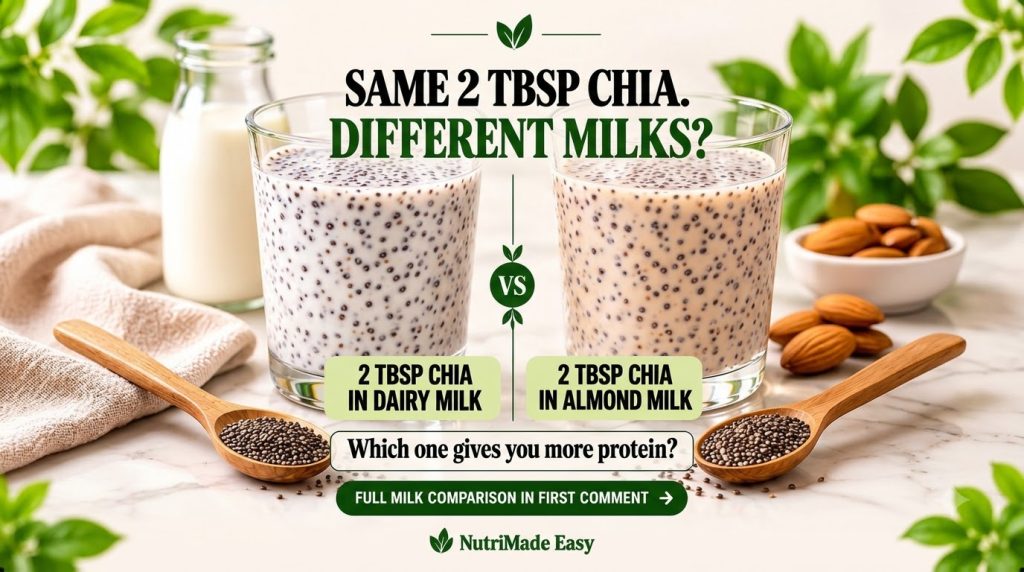
Same chia seeds. Different milks. But does your choice really change the nutrition?
If you have ever wondered whether to make chia pudding with regular dairy milk or almond milk, the answer depends on what you want from your breakfast.
Both options can make a delicious, fiber-rich chia pudding. However, they are not nutritionally identical.
Let’s compare the ingredients, calories, protein, texture, and the best way to prepare each version.
1. What Do 2 Tablespoons of Chia Seeds Provide?
Two tablespoons of dried chia seeds, approximately 28 grams, provide:
- Calories: 138
- Protein: 4.7 g
- Fiber: 9.8 g
- Fat: 8.7 g
- Carbohydrates: 11.9 g
Chia seeds also contain plant-based omega-3 fatty acids (ALA), calcium, magnesium, and other minerals.
These nutrients stay largely the same whether you soak the seeds in dairy milk or almond milk. The nutritional differences come primarily from the liquid you choose.
2. Dairy Milk vs Almond Milk: Nutrition Comparison
For a fair comparison, let’s use the same amount of chia and liquid in each recipe.
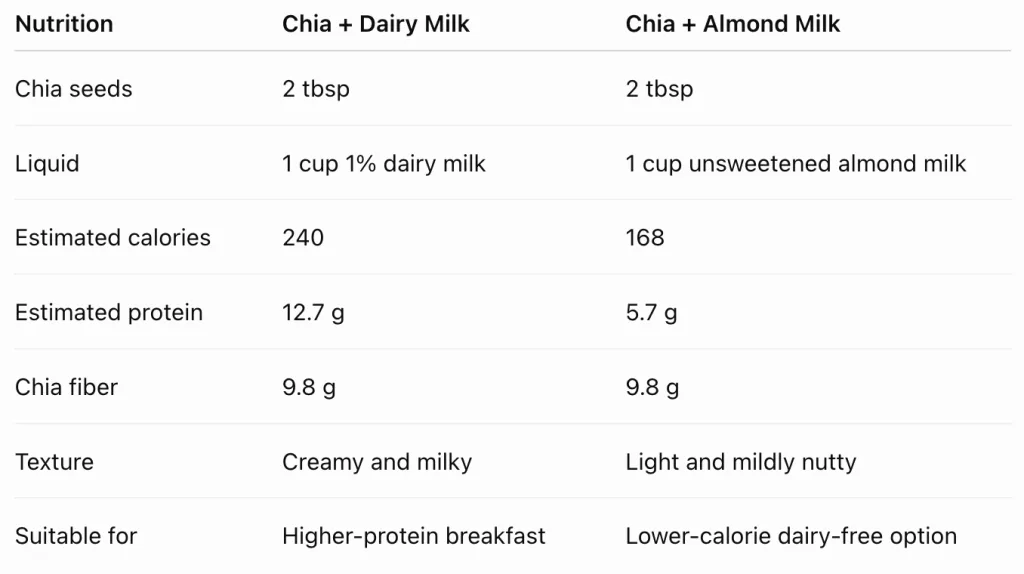
Values are approximate. Fortification, milk type, chia weight, and brand can change the results.
Which one has more protein?
Dairy milk wins this comparison.
One cup of 1% dairy milk typically provides around 8 grams of protein, compared with approximately 1 gram in a cup of unsweetened almond milk.
This makes dairy milk a practical choice when you want to add protein to your chia breakfast.
Which one has fewer calories?
Unsweetened almond milk is generally lower in calories.
However, lower calories do not automatically make one option healthier. Your overall diet, energy needs, and preferences matter.
What about calcium?
Both dairy milk and fortified almond milk can provide calcium.
Some almond milk products contain added calcium and vitamin D, so always check the nutrition label rather than assuming every brand contains the same nutrients.
3. Recipe: Creamy Dairy Milk Chia Pudding
Ingredients
- 2 tablespoons dry chia seeds
- 1 cup dairy milk (1% for the comparison above)
- 1/4 teaspoon vanilla extract, optional
- A few fresh berries, optional
Instructions
- Pour the dairy milk into a clean glass or jar.
- Add the chia seeds.
- Stir thoroughly for 30–60 seconds.
- Wait 5 minutes and stir again to break up clumps.
- Cover and refrigerate for at least 2 hours, ideally overnight.
- Check that the seeds have fully hydrated.
- Add your favorite fruit and enjoy.
Result: A smooth, creamy chia pudding with additional protein from dairy milk.
4. Recipe: Dairy-Free Almond Milk Chia Pudding
Ingredients
- 2 tablespoons dry chia seeds
- 1 cup unsweetened almond milk
- 1/4 teaspoon vanilla extract, optional
- A pinch of cinnamon, optional
Instructions
- Add almond milk to a jar.
- Stir in chia seeds until evenly distributed.
- Wait 5 minutes, then stir again.
- Refrigerate for at least 2 hours or overnight.
- Stir before serving and add cinnamon if desired.
Result: A lighter chia pudding with a pleasant nutty flavor.
5. Which Milk Should You Choose?
Choose dairy milk if you:
- Want more protein in your breakfast.
- Enjoy a traditional creamy flavor.
- Tolerate dairy products.
Choose unsweetened almond milk if you:
- Prefer a dairy-free breakfast.
- Want a lighter drink or pudding.
- Enjoy a mild nutty flavor.
- Need to avoid lactose but can safely consume almonds.
If you have a milk or tree-nut allergy, select an appropriate allergen-free alternative.
6. Frequently Asked Questions
Does chia absorb milk differently from water?
Chia forms a gel when hydrated in either liquid. Final texture depends on the liquid’s composition, the ratio used, stirring, and soaking time.
Is almond milk better for weight loss?
Not necessarily. Unsweetened almond milk generally contains fewer calories, but weight management depends on your overall eating pattern, not one ingredient.
Can I make both recipes overnight?
Yes. Prepare the chia mixture in a covered container and refrigerate overnight.
Can I add honey?
Yes, but honey adds calories and sugar. Fruit, cinnamon, and vanilla can also provide flavor.
Final Verdict
Both versions can fit into a balanced diet.
For more protein: dairy milk.
For a lower-calorie, dairy-free base: unsweetened almond milk.
The chia seeds are the same, but your choice of milk changes the protein, calories, taste, and texture.
Try both versions and see which one fits your routine.
NutriMade Easy — Real Food. Brighter You.
Nutrition note: This article is for general educational purposes. Chia seeds should be properly hydrated before consumption. People with swallowing difficulties should seek professional advice before using chia seeds.