Navigating the world of healthy eating can sometimes feel overwhelming, especially when it comes to understanding the nutritional content of our favorite foods. Fruits, often celebrated for their vitamins, minerals, and fiber, also vary significantly in their sugar content. For those managing blood sugar, watching calorie intake, or simply aiming for a balanced diet, knowing which fruits fall into the ‘high sugar’ or ‘low sugar’ categories can be incredibly empowering.
This guide is designed to help you make informed decisions, allowing you to enjoy the natural goodness of fruits while aligning with your personal health goals. We’ll break down common fruits, offering insights into their sugar levels and how you can incorporate them smartly into your daily routine.
Why Understanding Fruit Sugar Matters
While fruit sugar (fructose) is natural and comes packaged with beneficial fiber, vitamins, and antioxidants, its impact on your body can still vary. Fiber helps slow down sugar absorption, preventing rapid spikes in blood sugar. However, fruits with very high sugar content, especially when consumed in large quantities or without their fiber (e.g., fruit juices), can still affect blood glucose levels and overall calorie intake. Understanding these differences helps you:
- Manage Blood Sugar: Essential for individuals with diabetes or pre-diabetes.
- Support Weight Management: High-sugar fruits can contribute more calories if portion sizes aren’t managed.
- Optimize Nutrient Intake: Balancing your fruit choices ensures a broader spectrum of nutrients.
- Maintain Energy Levels: Choosing lower-sugar options can help prevent energy crashes.
High Sugar Fruits: Enjoy Mindfully
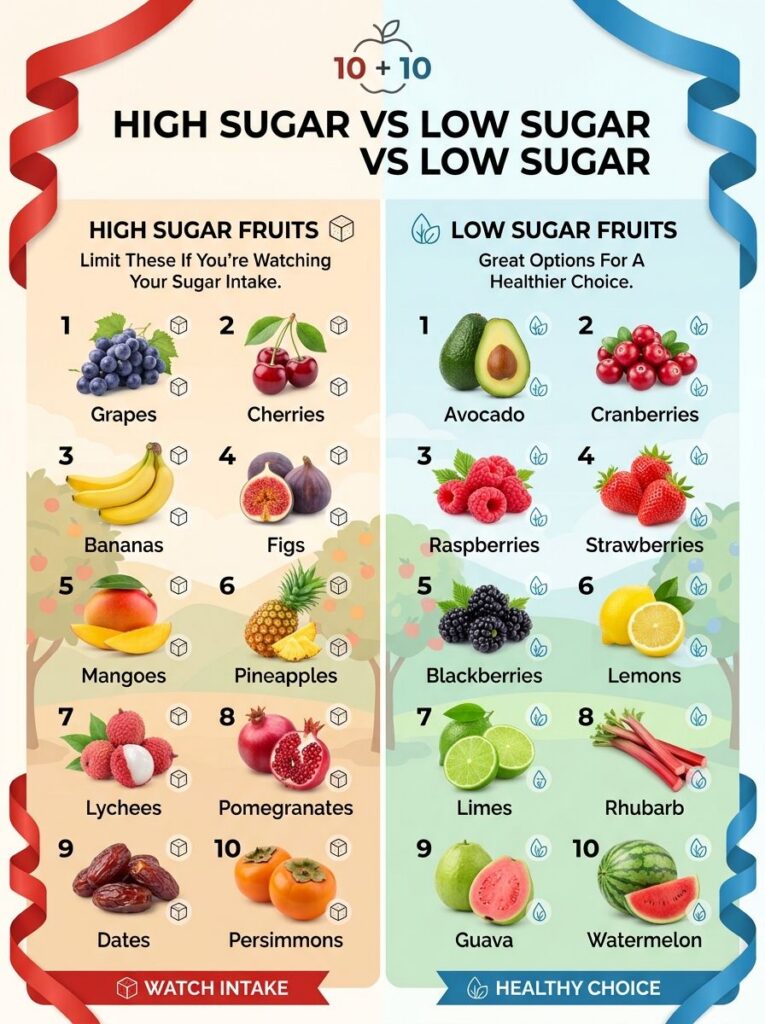
These fruits are packed with natural sweetness and provide wonderful nutrients, but they contain higher levels of natural sugars. If you’re watching your sugar intake, it’s wise to enjoy these in moderation and be mindful of portion sizes. Pairing them with a source of protein or healthy fats (like nuts or yogurt) can also help stabilize blood sugar.
- Mango: A tropical delight rich in Vitamin C and A, but also high in natural sugars. Enjoy a smaller portion as a sweet treat.
- Grapes: Easy to snack on, grapes are high in antioxidants but also concentrated in sugar. Consider them a dessert fruit.
- Cherries: Sweet and juicy, cherries offer anti-inflammatory benefits but come with a notable sugar content per serving.
- Banana: A great source of potassium and energy, but a medium banana can contain around 14-15 grams of sugar. Perfect for a pre-workout snack, but consider half a banana for general snacking.
- Pineapple: This tropical fruit is high in Vitamin C and manganese. Its sweetness comes from a significant sugar content, especially in larger portions.
- Pomegranate: Rich in antioxidants, pomegranates are delicious but their arils pack a punch of natural sugars.
- Figs: Known for their fiber and mineral content, fresh and dried figs are also very high in sugar. Enjoy sparingly.
- Lychee: These small, fragrant fruits are a seasonal treat but are quite sugary.
- Dates: While an excellent source of fiber and minerals, dates are extremely high in natural sugars, especially when dried. Best enjoyed in small quantities as a natural sweetener.
- Watermelon: Refreshing and hydrating, watermelon has a high water content, but also a considerable amount of sugar per large slice.
Low Sugar Fruits: Your Everyday Healthy Choices
These fruits offer fantastic nutritional benefits with a lower sugar load, making them excellent choices for daily consumption, especially if you’re aiming to manage blood sugar or reduce overall sugar intake. They are often high in fiber, vitamins, and antioxidants.
- Avocado: Surprisingly a fruit, avocados are incredibly low in sugar and high in healthy fats, fiber, and potassium.
- Lemon & Lime: Virtually sugar-free, these citrus powerhouses are rich in Vitamin C and perfect for flavoring water or dishes.
- Berries (Strawberries, Blackberries, Blueberries, Raspberries): These vibrant fruits are superstars! They are generally low in sugar, high in fiber, and packed with antioxidants.
- Tomatoes: Yes, tomatoes are fruits! They are very low in sugar and excellent sources of Vitamin C and lycopene.
- Rhubarb: Known for its tartness, rhubarb is very low in sugar and high in fiber. Often used in baking, but delicious in savory dishes too.
- Cantaloupe: A refreshing melon that’s lower in sugar than some other melons, offering Vitamin C and A.
- Papaya: This tropical fruit is relatively low in sugar and a great source of Vitamin C and digestive enzymes.
- Peaches: A sweet summer fruit that is moderate in sugar, making it a good choice for a healthy snack.
- Honeydew Melon: Similar to cantaloupe, honeydew is a good hydrating option with a moderate sugar content.
Practical Tips for Smart Fruit Choices
Making smart fruit choices is all about balance and awareness. Here are some actionable tips:
- Portion Control: Even healthy foods need portion awareness. A single serving of fruit is typically about the size of your fist.
- Eat Whole Fruit: Always choose whole fruits over juices. The fiber in whole fruit is crucial for slowing sugar absorption and providing satiety.
- Combine Wisely: Pair higher-sugar fruits with protein or healthy fats (e.g., banana with almond butter, mango with Greek yogurt) to help stabilize blood sugar.
- Diversify Your Intake: Don’t stick to just one or two fruits. Aim for a wide variety to get a broad spectrum of nutrients.
- Listen to Your Body: Pay attention to how different fruits make you feel, especially if you have specific dietary concerns like diabetes.
- Read Labels: When buying dried fruits or canned fruits, check for added sugars. Opt for unsweetened varieties.
Conclusion
Fruits are an indispensable part of a healthy diet, offering a wealth of vitamins, minerals, and fiber. By understanding the differences in their sugar content, you can make more informed and strategic choices that support your individual health goals. Whether you’re enjoying a juicy mango in moderation or snacking on a handful of berries, you’re nourishing your body with nature’s candy in a way that truly serves your well-being.
Which fruit surprised you most on this list? Share your thoughts in the comments below!