Tired of sharing your bountiful harvests with unwelcome garden guests? Do pesky insects seem to outsmart every conventional method you try? What if I told you that some of the most beautiful and fragrant plants could also be your garden’s best protectors? It’s true! Embracing nature’s own solutions for pest control is not only effective but also incredibly rewarding, adding beauty and fragrance to your outdoor spaces.
As fellow garden enthusiasts, we’ve all faced the frustration of seeing our beloved plants suffer from insect damage. But before you reach for harsh chemicals, let’s explore a simpler, more harmonious approach. Many common herbs and flowers possess natural compounds that act as deterrents, keeping those bothersome bugs at bay without harming beneficial insects or the environment. Think of it as inviting a team of aromatic guardians to stand watch over your leafy treasures!
Why Go Natural with Pest Control?
Choosing natural pest control methods isn’t just a trend; it’s a commitment to a healthier garden ecosystem and a safer home. When you rely on plants to do the dirty work, you’re:
- Protecting Pollinators: Harsh chemicals can harm bees, butterflies, and other essential pollinators, which we desperately need for a thriving garden.
- Building Healthy Soil: Organic methods contribute to richer, more vibrant soil life, which in turn leads to stronger, more resilient plants.
- Ensuring Safe Produce: If you’re growing edibles, knowing your produce is free from synthetic pesticides gives you peace of mind.
- Saving Money: Growing your own pest deterrents often costs less than buying chemical sprays repeatedly.
Your Aromatic Arsenal: Top Bug-Repelling Plants
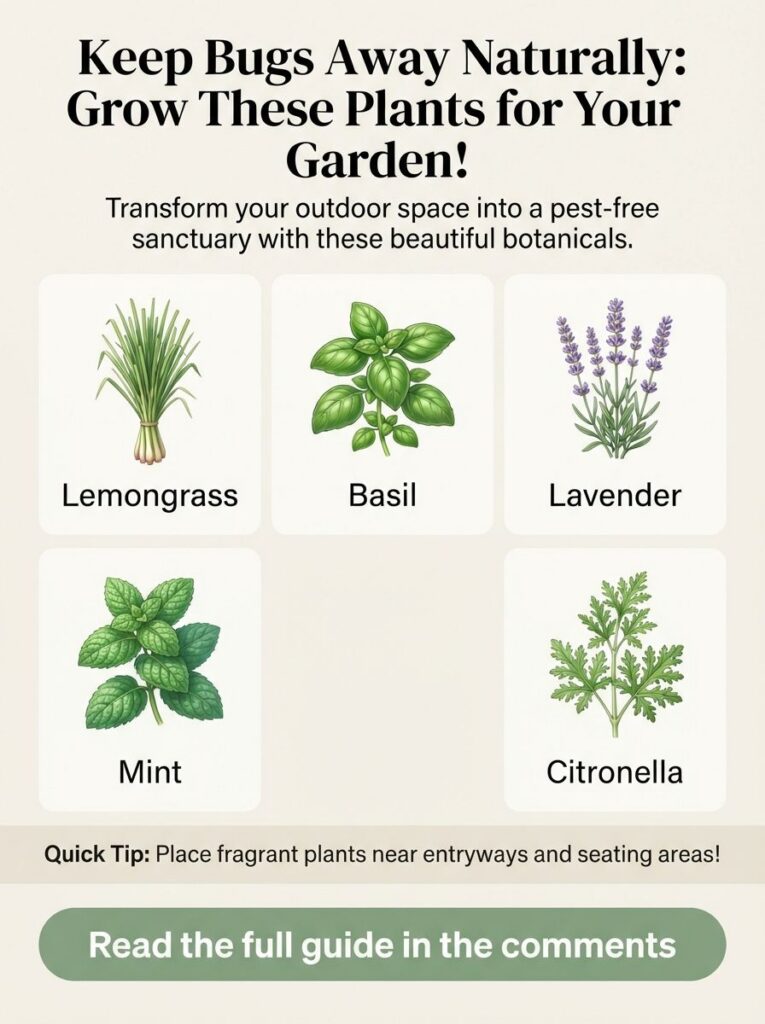
Let’s dive into some superstar plants that can transform your garden into a no-fly zone for many common pests. We’ll talk about how to grow them and where to place them for maximum impact.
1. Lemongrass (Cymbopogon citratus)
You might know lemongrass for its distinctive citrusy scent in Asian cuisine, but did you know it’s a powerhouse against mosquitoes? The same compound that gives it its aroma, citronella oil, is what makes it so effective.
- Bug-Repelling Power: Excellent for deterring mosquitoes, especially in warmer climates.
- Growing Tips: Lemongrass loves full sun and well-drained soil. It’s a tropical grass, so it thrives in warm, humid conditions (USDA Zones 9-11). In colder zones, it can be grown in pots and brought indoors during winter.
- Placement: Plant near patios, doorways, or windows where you want to keep mosquitoes away. Its tall, graceful stalks also make a lovely ornamental grass.
- Extra Perk: Harvest its stalks for delicious teas, soups, and curries!
2. Basil (Ocimum basilicum)
This culinary favorite isn’t just for pesto! Basil is a fantastic companion plant, known to repel several garden nuisances.
- Bug-Repelling Power: Deters flies, mosquitoes, and even tomato hornworms. Different varieties like ‘Cinnamon’ or ‘Lemon’ basil can have even stronger effects.
- Growing Tips: Basil prefers full sun (at least 6 hours) and consistently moist, well-drained soil. Pinch off flower buds to encourage bushier growth and more leaves. (USDA Zones 4-11, usually grown as an annual).
- Placement: Plant basil alongside tomatoes to deter hornworms. Place pots of basil near outdoor eating areas to keep flies and mosquitoes at bay. It also makes a great border plant.
- Extra Perk: A staple in the kitchen for countless dishes, from salads to sauces!
3. Lavender (Lavandula species)
The soothing scent of lavender might be heavenly to us, but many insects find it utterly repulsive. This beautiful plant adds elegance and a calming aroma to any garden.
- Bug-Repelling Power: Repels mosquitoes, moths, fleas, and flies.
- Growing Tips: Lavender thrives in full sun and well-drained soil. It’s drought-tolerant once established and prefers a slightly alkaline soil. Prune after flowering to maintain shape and encourage new blooms. (USDA Zones 5-9, depending on variety).
- Placement: Plant along pathways, near seating areas, or in beds around your home. The fragrant flowers are beautiful in perennial borders.
- Extra Perk: Use dried lavender for sachets, potpourri, or relaxing teas and bath products.
4. Mint (Mentha species)
Mint is incredibly versatile and vigorous, but its strong aroma is a major turn-off for many bugs. Be mindful when planting, as it can spread aggressively!
- Bug-Repelling Power: Deters mosquitoes, ants, flies, and even mice. Spearmint and peppermint are particularly effective.
- Growing Tips: Mint prefers partial shade to full sun and consistently moist soil.
Important: Always grow mint in containers to prevent it from taking over your garden beds, unless you want a full mint patch!
(USDA Zones 3-11). - Placement: Place potted mint plants near doorways, windows, or on picnic tables. Its aggressive spreading habit makes it ideal for containers placed strategically.
- Extra Perk: Fresh mint is fantastic for teas, mojitos, desserts, and savory dishes.
5. Citronella Geranium (Pelargonium citrosum)
Often sold as the