Stomach pain is a common complaint, and while often harmless, it can sometimes be a signal from your body about a more significant health issue. Knowing where your pain is located can offer crucial clues, helping you understand when to manage symptoms at home and when to seek professional medical attention. Our abdomen is a complex area, housing many vital organs, and pinpointing the exact location of discomfort can help narrow down the potential causes.
This comprehensive guide transforms our visual infographic into an in-depth resource, helping you decode what your stomach pain might be telling you. We’ll explore six distinct abdominal regions and the common conditions associated with pain in each, providing you with valuable health insights to better understand your body’s signals.
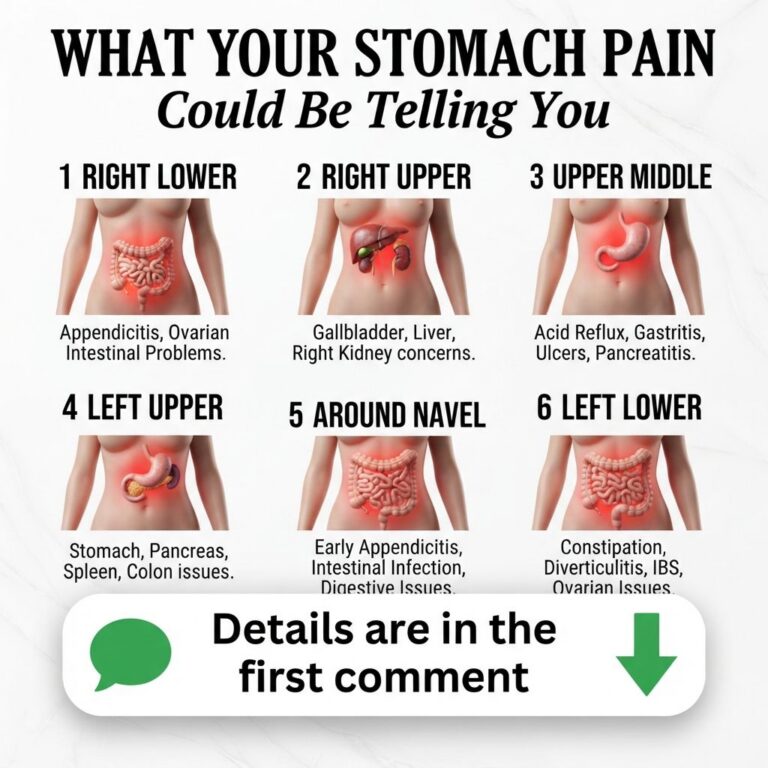
Understanding Your Abdominal Map: 6 Key Regions and Their Signals
To better understand your body, it helps to divide the abdomen into distinct regions. Pain in each area can be a unique indicator of underlying issues, ranging from minor indigestion to conditions requiring urgent care. Here’s a detailed look at what pain in specific areas of your stomach could signify:
1. Right Lower Abdomen: The Appendix and Beyond
Pain in the right lower abdomen is a concern that often warrants prompt attention due to its association with conditions that can escalate quickly. This region is home to several important organs, most notably the appendix and parts of the large and small intestines.
- Appendicitis: This is an inflammation of the appendix, a small finger-shaped pouch that projects from your colon. Classic symptoms often begin with a dull pain near the navel that shifts to the lower right abdomen, becoming sharp and severe. It can also be accompanied by nausea, vomiting, loss of appetite, and a low-grade fever. Appendicitis is a medical emergency requiring prompt diagnosis and often surgical removal of the appendix.
- Ovarian/Intestinal Problems: For individuals with ovaries, pain in this area could also relate to ovarian issues such as an ovarian cyst (a fluid-filled sac that develops on an ovary) or a ruptured cyst, which can cause sudden, sharp pain. Intestinal problems like regional enteritis (Crohn’s disease) or other inflammatory bowel conditions might also manifest pain here, often with changes in bowel habits.
2. Right Upper Abdomen: Liver and Gallbladder Concerns
The right upper quadrant houses crucial organs involved in digestion and detoxification, making pain here a signal that shouldn’t be ignored.
- Gallstones: These are hardened deposits of digestive fluid that can form in your gallbladder, a small organ tucked just beneath your liver. Gallstones can cause sudden, intense pain in the upper right abdomen, often after eating fatty foods. This pain can radiate to your back or right shoulder and may be accompanied by nausea and vomiting.
- Liver Inflammation (Hepatitis): Inflammation of the liver, known as hepatitis, can be caused by viruses, alcohol, or other factors. Symptoms can include pain or tenderness in the upper right abdomen, fatigue, nausea, dark urine, and jaundice (yellowing of the skin or eyes).
3. Left Lower Abdomen: Colon and Ovarian Indications
Pain in the left lower abdomen is commonly linked to issues within the large intestine, though it can also point to gynecological concerns.
- Diverticulitis: This condition occurs when small, bulging pouches (diverticula) in the digestive tract become inflamed or infected. Diverticulitis typically causes persistent pain in the lower left abdomen, often accompanied by fever, nausea, vomiting, and a tender abdomen.
- Ovarian Cysts: Similar to the right side, individuals with ovaries may experience pain due to ovarian cysts in this region. A cyst can cause a dull ache or sharp pain if it ruptures or causes torsion (twisting of the ovary), leading to sudden, severe discomfort.
4. Left Upper Abdomen: Stomach, Spleen, and Pancreas Signals
The left upper abdomen contains several vital organs, making pain in this area potentially indicative of various conditions.
- Gastritis: This refers to inflammation of the stomach lining. It can be caused by infection, injury, regular use of certain pain relievers, or excessive alcohol consumption. Gastritis often causes gnawing or burning pain in the upper abdomen, along with nausea, vomiting, and a feeling of fullness after eating.
- Pancreatitis: Inflammation of the pancreas can cause severe pain in the upper abdomen that often radiates to the back. This pain may worsen after eating and can be accompanied by nausea, vomiting, and fever. Pancreatitis can be acute or chronic and requires medical evaluation.
- Spleen Issues: The spleen, located under the rib cage on the left side, can be a source of pain if it’s enlarged, ruptured, or infected. Spleen pain is usually felt under the left ribs and can be sharp or dull, often worsening with deep breaths.
5. Center Upper Abdomen: Indigestion, Ulcers, and Heartburn
Pain in the central upper part of the abdomen, often referred to as the epigastric region, is very common and can be related to a range of digestive issues.
- Indigestion (Dyspepsia): This is a common condition characterized by discomfort or burning pain in the upper abdomen, often accompanied by bloating, feeling full quickly, and nausea. It’s frequently triggered by certain foods, overeating, or stress.
- Ulcers (Peptic Ulcers): These are open sores that develop on the inside lining of your stomach and the upper portion of your small intestine (duodenum). Ulcer pain is often described as a burning sensation that comes and goes, typically relieved by eating or antacids, but can return.
- Heartburn (Acid Reflux): While primarily felt in the chest, severe acid reflux can cause a burning sensation that radiates into the upper central abdomen, accompanied by a sour taste in the mouth or regurgitation of food.
6. Center Lower Abdomen: Bladder, Uterus, and Pelvic Health
Pain in the center lower abdomen often points towards issues with the bladder or, for individuals with a uterus, reproductive organs.
- Urinary Tract Infections (UTIs): An infection in any part of your urinary system, including the bladder. UTIs can cause lower central abdominal pain or pressure, frequent urge to urinate, painful urination, and cloudy or strong-smelling urine.
- Endometriosis: This condition occurs when tissue similar to the lining inside the uterus (endometrium) grows outside the uterus. Endometriosis can cause chronic pelvic pain, which may worsen during menstrual periods, and lead to heavy bleeding or painful intercourse.
- Pelvic Inflammatory Disease (PID): An infection of the female reproductive organs, often caused by sexually transmitted bacteria. PID can cause lower abdominal pain, fever, unusual vaginal discharge, and painful intercourse or urination.
When to Seek Medical Attention for Stomach Pain
While some stomach pains resolve on their own, certain symptoms warrant immediate medical evaluation. If you experience any of the following, please consult a healthcare professional:
- Severe, sudden, or worsening pain
- Pain accompanied by fever
- Persistent nausea or vomiting
- Blood in your stool or vomit
- Yellowing of the skin or eyes (jaundice)
- Significant abdominal tenderness or rigidity
- Inability to pass stool or gas
- Unexplained weight loss
These symptoms could indicate a serious underlying condition that requires prompt diagnosis and treatment.
Final Thoughts
Your body is always communicating with you, and understanding the language of stomach pain is a vital step toward better health. While this guide offers insights into potential causes based on location, it’s crucial to remember that self-diagnosis can be misleading. Always listen to your body and consider consulting a healthcare professional for an accurate diagnosis and personalized treatment plan, especially if your stomach pain is severe, persistent, or accompanied by other concerning symptoms. Prioritizing your digestive health and overall well-being is an ongoing journey, and being informed is your best defense.
Medical Disclaimer
The information provided in this article is for educational purposes only and is not intended as a substitute for professional medical advice, diagnosis, or treatment. Always seek the advice of your physician or other qualified health provider with any questions you may have regarding a medical condition.