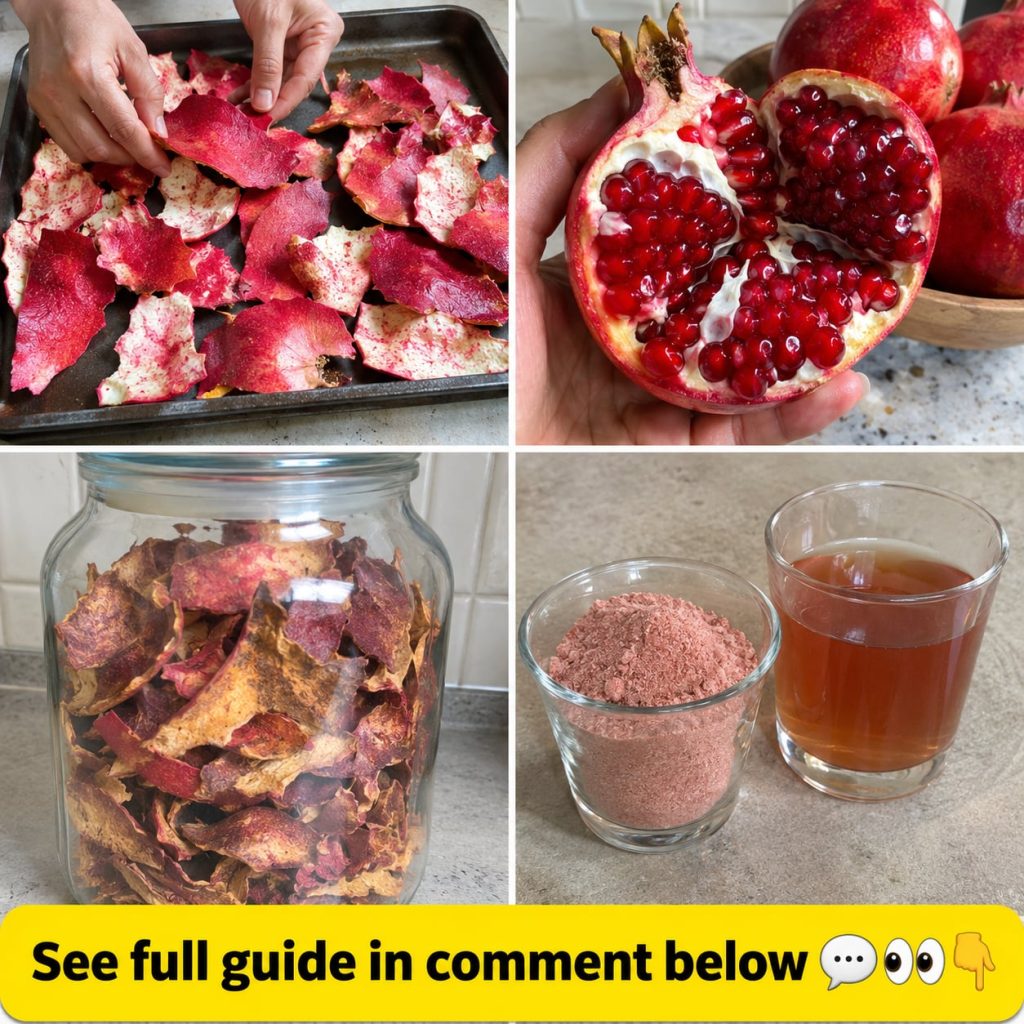
Most people drop pomegranate peels straight into the bin, yet the thick rind is the part many home herbalists save first. Once you know how to dry, store, and prepare it, the peel becomes a practical ingredient for simple homemade remedies.
What Is Pomegranate Peel?
Pomegranate peel is the outer rind of the fruit, usually leathery and bitter. It is the part that holds most of the fruit’s dried plant material. In home preparations, people typically use it as a dried powder, a simmered tea base, or a rinse for hair and skin. Results vary from person to person, so treat it as a simple home method rather than a guaranteed fix.
Ingredients You Need
- 2 to 3 clean pomegranate peels from organic or thoroughly washed fruit
- 2 cups of filtered water for a tea or rinse base
- 1 tablespoon dried peel powder, if you prefer a powder for later use
- Optional: 1 cinnamon stick or 2 cloves for aroma
Approximate Measurements
A single medium pomegranate yields roughly one to two tablespoons of dried peel powder, depending on thickness. For a small batch of tea or rinse, start with about 1 tablespoon of dried peel per 2 cups of water. Adjust gradually once you know how strong you like the preparation.
Formula and Recipe: Simple Pomegranate Peel Infusion
This basic infusion works well for a warm rinse or a short-term tea. Keep batches small so they stay fresh.
- Rinse the peels under running water and scrub off any dirt or wax.
- Pat dry, then chop into small pieces about 1 centimeter wide.
- Bring 2 cups of water to a gentle simmer, not a hard boil.
- Add 1 tablespoon of dried peel or 2 tablespoons of fresh chopped peel.
- Simmer on low for 10 to 15 minutes, then turn off the heat.
- Cover and steep for 5 minutes, then strain through a fine mesh sieve.
- Cool to room temperature before using or storing.
Fresh vs Dried: Which Should You Use?
Both forms work, but they behave differently. Use the table below as a quick reference.
| Version | Best Use | Storage Time | Notes |
|---|---|---|---|
| Fresh peel | Short infusion or rinse | Refrigerate up to 3 days | Moisture spoils quickly |
| Dried peel | Powder or stored tea base | Up to 6 months in a sealed jar | Better for planning ahead |
| Liquid infusion | Rinse or short-term tea | Refrigerate up to 2 days | Make small batches only |
Step-by-Step: Drying and Powdering the Peel
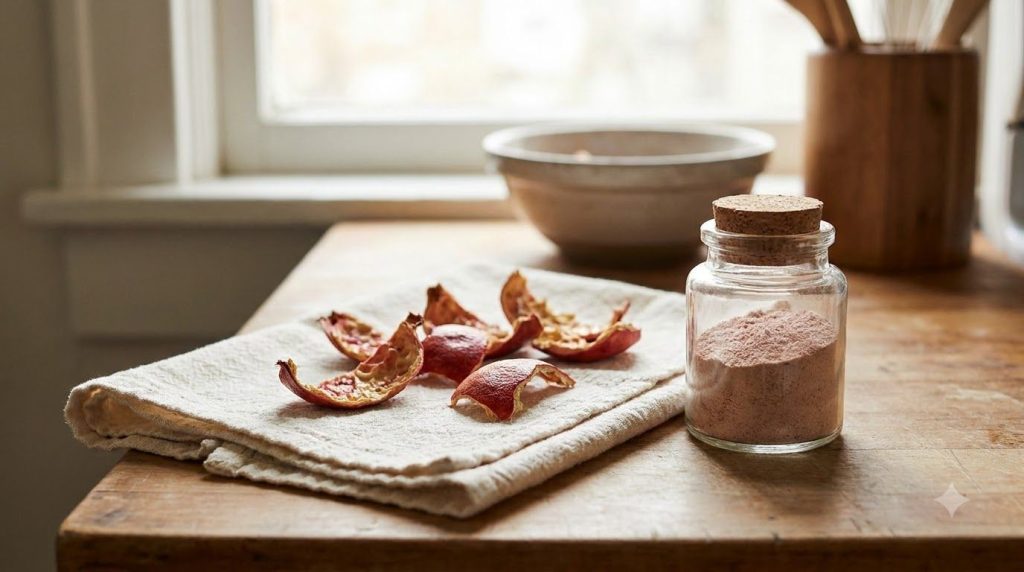
- Wash the peels and cut them into thin strips.
- Spread them on a clean rack or towel in a dry, shaded spot for several days, or use a low setting on a food dehydrator.
- Check that the pieces snap or feel completely brittle with no soft spots.
- Grind in a dry blender or mortar until fine.
- Sieve the powder and store it in a labeled, airtight glass jar.
How to Use It
Most people use pomegranate peel in three simple ways: a warm tea, a diluted rinse for hair, or a gentle mixture for a homemade face mask. Always test a small patch of skin first, especially if you have sensitive skin or allergies to fruit.
How Often to Use It
Keep use occasional and simple. A cup of tea a few times per week or a rinse once or twice a week is a reasonable starting point for most people. Stop if you notice irritation, itching, or any discomfort.
How to Buy and Choose Peels
Choose pomegranates with firm, unbroken rinds and no mold or soft spots. If possible, pick organic fruit, because peels concentrate residues from the outside of the fruit. If the fruit is conventional, wash it thoroughly with water and scrub gently before peeling.
Storage Tips
Fresh peels should go into the refrigerator in a dry container and be used within three days. Dried peel keeps best in a sealed glass jar away from heat, light, and humidity. Never store infusions in a warm place, and discard any liquid that smells sour or looks cloudy.
Quick Tip
Freeze the infusion in ice cube trays if you cannot use it within two days. Thaw one cube at a time, and do not refreeze.
Common Mistakes
- Using damaged, moldy, or heavily waxed peels.
- Boiling the peel hard for a long time, which can make the liquid bitter and harsh.
- Storing wet peels or infusions in a closed jar at room temperature.
- Skipping the drying step, which encourages spoilage.
- Overusing the preparation because you expect faster results.
- Using peels from sprayed fruit without washing them carefully.
Practical Tips
Keep a dedicated jar for peel powder so it does not mix with spices. Label every batch with the date. If you make tea, drink it warm rather than hot, and avoid sweetening it heavily so you can judge the flavor more clearly.
Cautions: Who Should Avoid It
Pomegranate peel is not suitable for everyone. Avoid internal use if you are pregnant, breastfeeding, or taking medication, and check with a qualified healthcare professional first. People with fruit allergies should not use it. Do not apply it to broken or irritated skin. These notes are general safety points, not medical advice.
Quick Summary
- Best preparation: simmered infusion or dried powder.
- Best use case: a simple warm tea or diluted rinse, used occasionally.
- Storage: fresh peel up to 3 days in the fridge, dried powder up to 6 months in a sealed jar.
- When to use: as a short-term home preparation, not a daily habit without guidance.
- What to avoid: moldy peels, long boiling, wet storage, and use on broken skin.
Frequently Asked Questions
Can I use fresh or dried peel?
Yes. Fresh peel suits short-term infusions, while dried peel is better for planning ahead and storing.
How long does pomegranate peel infusion last?
Refrigerate it and use within two days. Freezing extends its life, but use it within a month.
Can I refrigerate the dried powder?
You can, but a cool, dry cupboard in a sealed jar is usually enough. Refrigeration may help in humid climates.
Can I freeze the infusion?
Yes, freeze it in ice cube trays. Thaw only what you need and do not refreeze.
What part of the peel is best?
The inner white pith is often bitter, so many people use the thicker outer rind after trimming away excess white layer.
Can I reuse the peels?
For a second light infusion, you can reuse the peels once, but discard them if they smell sour or look slimy.
When should I avoid it?
Avoid it if you are pregnant, breastfeeding, taking medication, allergic to pomegranate, or have broken skin.
Conclusion
Pomegranate peel is a useful home ingredient when you handle it carefully. Wash it well, dry it completely, keep batches small, and stay cautious about who should use it. A little planning turns a fruit scrap into a simple preparation you can make with confidence.
You may also like: how to dry herbs at home for long-term storage.
Read more: a beginner guide to homemade herbal infusions.
See the full guide: natural rinses for healthy-looking hair.