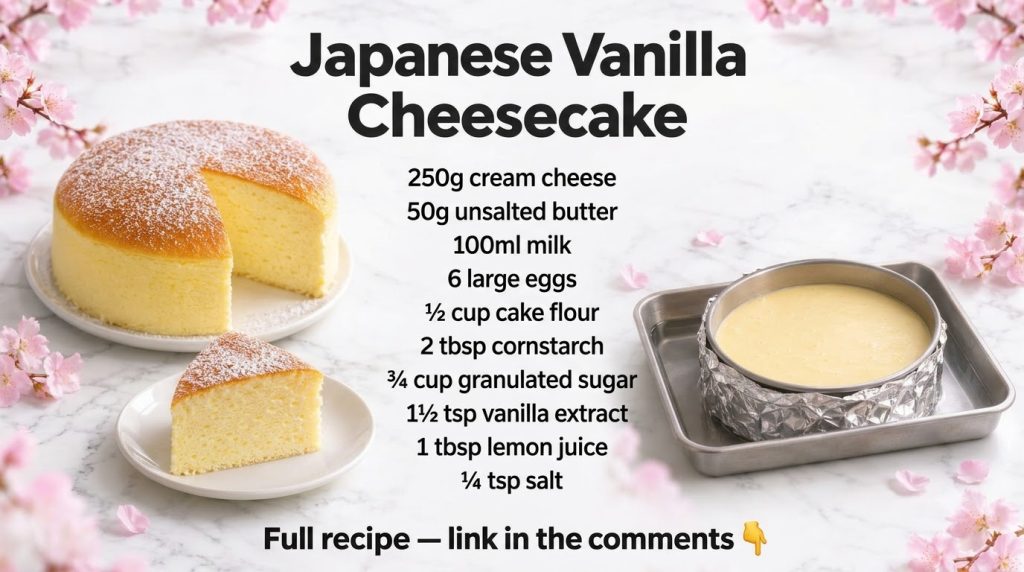
Japanese vanilla cheesecake is the kind of dessert that surprises people the first time they cut into it. Instead of a dense, rich slice, you get a cloud-like texture that wobbles gently on the plate. This Japanese vanilla cheesecake recipe follows the journey shown in the collage, from smooth, pale yellow batter to a golden, jiggly bake dusted with powdered sugar.
In this guide, you will learn how the batter comes together, why a water bath helps keep the texture soft, and how to tell when the cheesecake is ready. It is a simple dessert to make at home, and it works well for any sweet tooth.
What Makes Japanese Vanilla Cheesecake Different
Japanese cheesecake, often called soufflé cheesecake, uses whipped egg whites folded into a base of cream cheese, butter, milk, and egg yolks. The whites add lift, so the cake rises in the oven and turns out light and airy. Vanilla gives the batter a warm, mellow flavor without overpowering the delicate texture.
Ingredients for Japanese Vanilla Cheesecake
Servings: One 8-inch (20 cm) cheesecake, about 8 slices
- 8 oz (225 g) cream cheese, softened to room temperature
- 3 tablespoons (40 g) unsalted butter
- 1/2 cup (120 ml) whole milk
- 1/2 cup (60 g) cake flour, sifted
- 1 teaspoon pure vanilla extract
- 4 large egg yolks, at room temperature
- 5 large egg whites, at room temperature
- 1/2 cup (100 g) granulated sugar, divided
- 1/4 teaspoon cream of tartar
- 1 pinch fine salt
- Powdered sugar, for dusting
Step-by-Step Instructions
- Prepare the pan. Heat the oven to 320°F (160°C). Line the bottom and sides of an 8-inch round pan with parchment paper. Wrap the outside of the pan with two layers of aluminum foil so no water seeps in during the water bath.
- Make the base. Melt the butter and milk together in a saucepan over low heat, or in the microwave in short bursts. Add the cream cheese and whisk until smooth and fully combined.
- Add the flour and yolks. Whisk in the sifted cake flour until no lumps remain. Stir in the vanilla extract, then add the egg yolks one at a time, mixing well after each addition. The batter should look smooth and pale yellow.
- Whip the egg whites. In a clean, dry bowl, beat the egg whites with the cream of tartar and salt until foamy. Gradually add 1/4 cup (50 g) of the sugar and continue beating until stiff, glossy peaks form.
- Fold the batter. Add about one-third of the meringue to the yolk batter and stir it in to loosen the mixture. Then gently fold in the remaining meringue in two additions, using a spatula and a light lifting motion. Stop as soon as no white streaks remain to protect the airy structure.
- Pour and set up the water bath. Pour the batter into the prepared pan and tap it gently on the counter to release large air bubbles. Place the pan in a larger roasting tray and pour hot water into the tray until it reaches about halfway up the sides of the cake pan.
- Bake. Bake for 60 to 70 minutes, until the top is golden brown and the center feels set but still slightly jiggly when the pan is gently shaken. A toothpick inserted near the center should come out with a few moist crumbs.
- Cool gradually. Turn off the oven, crack the door, and leave the cheesecake inside for 20 minutes. This helps prevent cracking. Then remove it from the water bath and let it cool completely on a wire rack.
- Chill and serve. Refrigerate the cheesecake for at least 3 hours before slicing. Dust the top with powdered sugar just before serving for the soft, delicate finish shown in the collage.
Tips for a Fluffy, Jiggly Texture
- Use room-temperature ingredients. Cold cream cheese and eggs can create lumps and make the batter harder to combine.
- Do not overmix the meringue. Beat only until stiff, glossy peaks form. Overbeaten whites become dry and can lead to cracks.
- Fold gently. Gentle folding keeps the air bubbles that create the light, cloud-like texture.
- Protect the pan from water. Double-wrapped foil helps keep the crust from getting soggy.
- Watch for doneness, not just time. Oven temperatures vary, so start checking at 60 minutes.
Storage and Serving Ideas
Store leftover cheesecake covered in the refrigerator for up to 3 days. It is best served chilled or at cool room temperature, and the texture is softest on the day it is baked. Because this dessert contains eggs, dairy, and wheat flour, check ingredient labels and talk with a qualified healthcare professional if you have allergies or dietary restrictions.
Final Thoughts
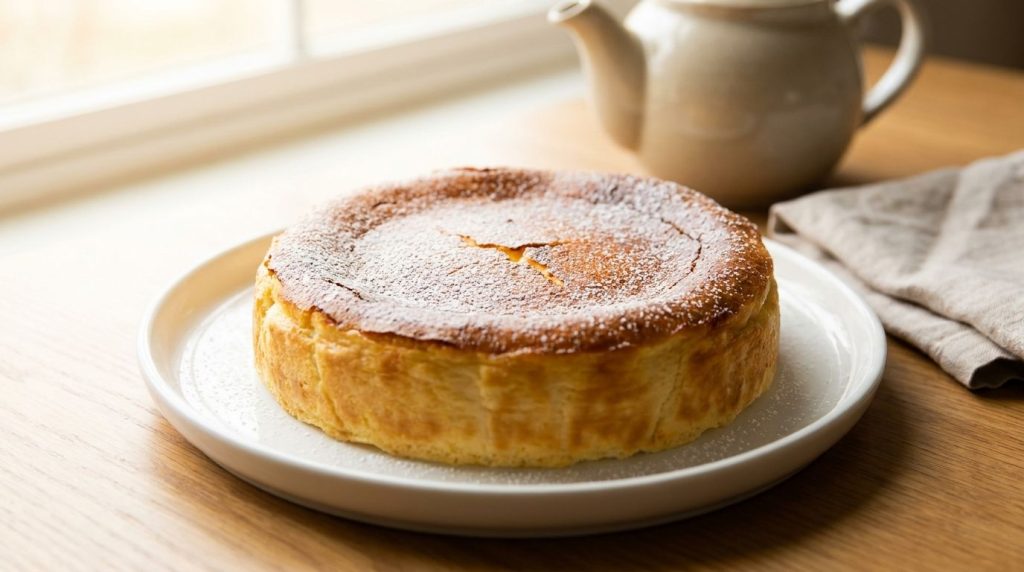
Japanese vanilla cheesecake rewards a little patience. With careful folding, a gentle water bath, and a slow cooldown, you can make a dessert that is light, soft, and beautifully jiggly. Once you have mastered the basics, it becomes a reliable treat for family dinners, celebrations, or a quiet afternoon with a cup of tea.