Most people see hoshigaki hanging under a farmhouse eave and assume the work is simple. The real challenge is timing. One rushed step can leave the batch hard, sticky, or moldy before the sugars settle into that soft, honey-like chew.
What Hoshigaki Is
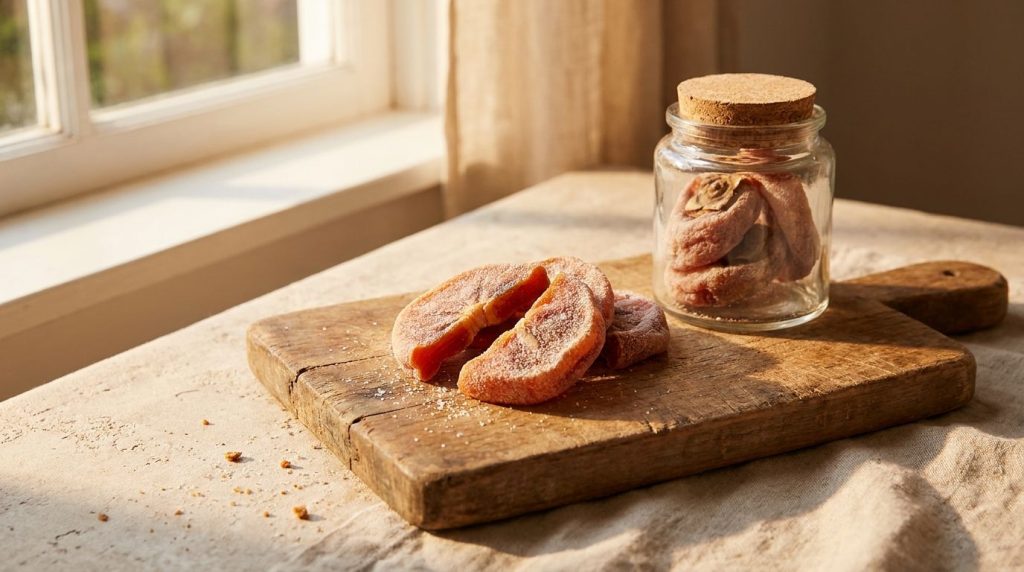
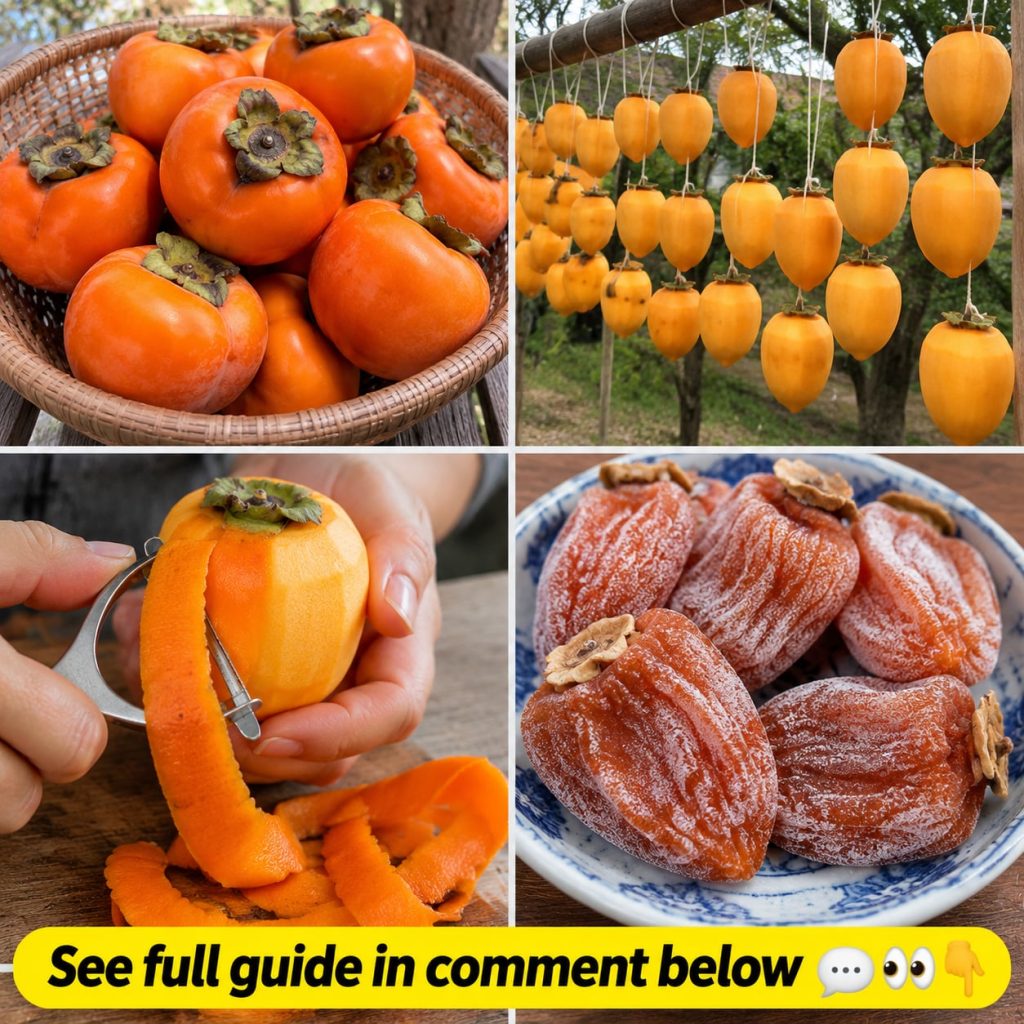
Hoshigaki is a Japanese method of air-drying whole peeled persimmons until they turn chewy and naturally sweet. Traditionally, firm astringent varieties such as Hyakume are used because they hold their shape during the weeks of drying. The result is a dense, amber-colored fruit with a fine white sugar coating on the surface, often called sugar frost.
Ingredients and Approximate Measurements
- 6 to 8 firm astringent persimmons, about 150 to 200 g each
- Natural cotton kitchen string, about 1 meter per fruit
- Clean hands and a sharp paring knife
- A ventilated, dry spot out of direct sun and rain
Choose fruit that is firm but not rock-hard. Soft spots, bruises, or cracked skin will spoil during drying.
Formula and Method
- Wash and dry the persimmons thoroughly.
- Peel each fruit carefully, leaving the stem attached. Keep the skin as smooth as possible.
- Tie string around the stem end, leaving a loop long enough to hang.
- Hang the fruits separately, at least 3 cm apart, so air moves freely around each one.
- Every 3 to 5 days, gently press each fruit between your fingers to shape it and break up soft spots. This is the massage step that helps even drying.
- Continue for about 3 to 5 weeks, until the fruit is firm, dense, and lightly coated with sugar.
Quick Tip: Check the fruit weekly for mold. Remove any fruit with dark, fuzzy patches immediately to protect the rest of the batch.
How to Use Hoshigaki
Eat it as a snack on its own, slice it thinly for cheese boards, or chop it into oatmeal and yogurt. It works well in place of sugar in simple desserts because its natural sweetness is concentrated.
How Often to Eat It
Hoshigaki is calorie-dense and sweet. A small portion of one or two slices a day is a practical way to enjoy it without overdoing sugar intake, especially if you are monitoring blood sugar or calorie intake.
How to Choose Persimmons
Look for fruit with smooth, deep orange skin and a firm texture. Avoid any with splits near the stem, since these often mold during hanging. Ask growers or markets whether the variety is suitable for drying, as eating persimmons and drying persimmons are not always the same.
Fresh vs Dried vs Hoshigaki
| Type | Texture | Best Use | Shelf Life |
|---|---|---|---|
| Fresh astringent persimmon | Soft, juicy | Pulp in baking, smoothies | About 1 week at room temperature |
| Commercial dried persimmon | Chewy, moist | Snacking, trail mix | Several months if sealed |
| Homemade hoshigaki | Dense, sugar-dusted | Slicing, sweet snacks | Up to 2 months refrigerated |
Storage
Once the fruit is firm and dry to the touch, wrap each piece loosely in parchment paper and store it in an airtight container in the refrigerator. Keep it away from strong-smelling foods, because the sugar coating can absorb odors.
Practical Tips
- Hang the fruit in a cool, breezy area with temperatures near 0 to 5 degrees Celsius if possible.
- Use similarly sized persimmons so they dry at the same pace.
- Do not wash the finished fruit before storage. Wipe it gently if needed.
Did You Know? The white coating on hoshigaki is natural sugar that rises to the surface as the fruit dries, not mold.
Common Mistakes
- Hanging fruit too close together, which traps moisture and encourages mold.
- Skipping the massage step, leading to uneven texture.
- Drying in humid or rainy weather.
- Using overripe persimmons that collapse during peeling.
- Storing the finished fruit while it is still soft in the center.
Cautions and Who Should Avoid It
Hoshigaki is concentrated in natural sugar, so people with diabetes, or those tracking sugar intake, should eat it in small portions. Anyone with known sensitivity to persimmons should avoid it. Consult a healthcare professional if you have specific dietary concerns.
Quick Summary
- Best preparation: firm astringent persimmons, peeled and hung whole.
- Best use: snacks, cheese boards, and light sweetening for breakfast bowls.
- Storage: refrigerate in an airtight container once firm.
- When to make it: early to mid autumn in cool, dry weather.
- What to avoid: humid drying spots, crowded hanging, and overripe fruit.
Frequently Asked Questions
Can I use fresh or dried persimmons for hoshigaki?
Use firm astringent persimmons that are not fully ripe. Soft, fully ripe fruit will collapse during drying.
How long does hoshigaki last?
Properly dried and refrigerated hoshigaki typically keeps for up to 2 months.
Can I refrigerate it?
Yes. Refrigeration is the most practical storage method once the fruit is firm.
Can I freeze hoshigaki?
Freezing is possible in airtight packaging, though it may slightly change the texture when thawed.
Why is there white powder on the surface?
This is usually natural sugar crystallizing as moisture leaves the fruit. Fuzzy green or black patches, however, indicate mold.
Can I reuse the string or hanging spot?
Yes, as long as the string is clean and dry. Wipe the hanging area before each new batch.
When should I avoid making hoshigaki?
Avoid it during rainy, humid weather or in warm rooms, since these conditions often cause spoilage.
Conclusion
Hoshigaki rewards patience. With firm fruit, careful spacing, regular shaping, and a dry, breezy spot, you can turn simple persimmons into a naturally sweet snack that lasts through the cooler months.
You may also like: Read more about seasonal persimmon recipes in our full guide to autumn fruit preparation.
Related remedy: See the full guide to making homemade dried fruit at home.
Continue with: Learn how to make it with our step-by-step storage tips for dried fruit.