Free Plant Propagation: How to Grow Roses, Berries, and Herbs from Cuttings
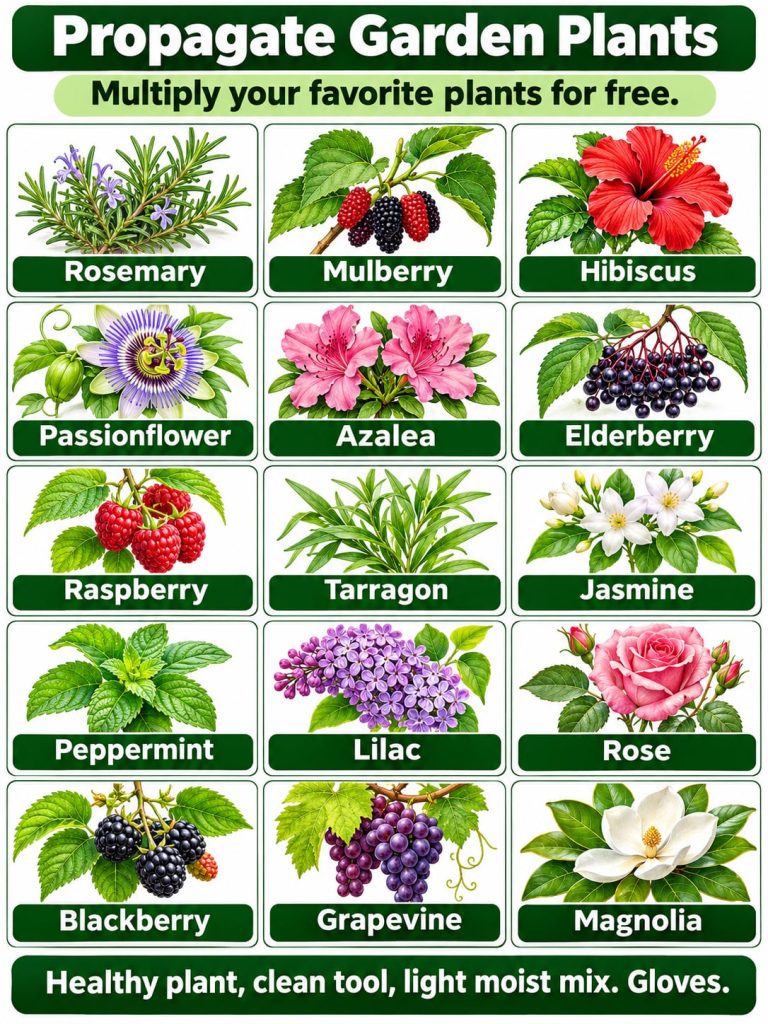
There is something deeply satisfying about watching a single healthy shrub, bush, or herb plant turn into a dozen new ones. Many gardeners assume they need to buy new plants every spring to fill out their beds, borders, and containers. In reality, many of the plants you already love can be multiplied with nothing more than a clean knife, a few small pots, and some patience. Roses, berries, and culinary herbs are all excellent candidates, and each responds to a slightly different timing and technique.
In this guide, you will learn how softwood, semi-hardwood, and hardwood cuttings work, which plants suit each method, and exactly how to take, root, and care for your new plants. Along the way, you will also find the most common mistakes that cause cuttings to rot, and practical ways to adapt the process to your USDA zone and local climate.
The Core Principle: Why Cuttings Work
A cutting is a piece of stem, sometimes with a leaf or two, that is removed from a parent plant and encouraged to grow roots. Because the new plant grows from the parent’s own tissue, it is a clone, meaning it will share the same characteristics as the plant it came from. This is why propagation is the preferred method for named varieties of roses, many herbs, and fruiting shrubs where seed-grown plants may look or taste different.
The key to success is the node, the small swelling on a stem where leaves and buds emerge. Roots form most reliably from nodes, so every cutting should include at least two or three of them. The other key is timing. Stems go through stages of maturity over the growing season, and each stage roots differently. Gardeners often group cuttings into three categories based on how woody the stem has become: softwood, semi-hardwood, and hardwood.
Softwood Cuttings: Fast Growth in Spring and Early Summer
Softwood cuttings are taken from fresh, flexible new growth in spring or early summer. The stem should bend easily and snap cleanly rather than tearing. Softwood cuttings root quickly, often within three to six weeks under good conditions, but they are also the most vulnerable to drying out and rotting. Keeping the humidity high and the cutting shaded during the first weeks is essential.
Mint and basil are classic softwood examples. Cut 3 to 4 inch tips just below a node, strip the lower leaves, and place the stems in a clean glass of water on a bright windowsill that avoids harsh direct sun. Roots often appear in one to two weeks. Mint is hardy across most of the country, often in zones 3 through 10, but it spreads aggressively in garden beds, so grow it in a container sunk into the soil or in its own pot. Basil is a tender annual that cannot survive frost, so treat it as a warm-season plant wherever you live.
Semi-Hardwood Cuttings: The Summer Workhorse
Semi-hardwood cuttings are taken in mid to late summer, after the new growth has partly matured. The base of the stem should feel firm while the tip remains slightly flexible. A reliable test is to bend the stem sharply: if it snaps with a clean crack, it is semi-hardwood. These cuttings root more slowly, usually four to eight weeks, but they tend to be sturdier and easier to keep alive.
Rosemary, lavender, sage, thyme, and blueberries are all well suited to semi-hardwood cuttings. Choose 4 to 6 inch sections from healthy stems, remove the lower leaves, dip the cut end in rooting hormone if you have it, and insert the cutting into a pot of moist, gritty mix such as equal parts perlite and peat or coir. Rosemary is most reliably hardy in zones 8 through 10, and it may survive short cold snaps in zone 7 with mulch and shelter. Lavender is commonly grown in zones 5 through 9, depending on the species and variety.
Hardwood Cuttings: Dormant-Season Multiplication
Hardwood cuttings are taken from mature, fully woody stems during the dormant season, usually late fall through late winter. They are thicker, about the diameter of a pencil, and 8 to 12 inches long. This method is simple, inexpensive, and requires very little daily attention, which makes it ideal for busy gardeners. The tradeoff is patience: many hardwood cuttings take several months to root and may not show growth until the following spring.
Currants, gooseberries, grapes, and many blackberry and blueberry types can be propagated this way. Make cuts just below a node, bundle cuttings together, and bury about two-thirds of each stem in a trench of loose, well-drained soil in a shaded corner of the yard. Keep the soil lightly moist through winter. Currants and gooseberries are generally hardy across zones 3 through 8, so this method works well in colder regions as long as the cuttings stay below the frost line.
Plant-by-Plant Guide: Roses, Berries, and Herbs
Roses
Roses are among the most rewarding plants to propagate, but success depends on the rootstock. Many commercial hybrid tea and grafted roses are joined to a different rootstock, and cuttings from the top portion often do not root true. Own-root roses, including many old garden roses and some shrub roses, are far more reliable. Take semi-hardwood cuttings in late summer, about 6 inches long, with three to five nodes. Remove the bottom leaves and most of the top foliage to reduce water loss. Expect roots in about four to eight weeks, and plant the new rose outdoors in fall or the following spring. Hardiness varies widely by variety, so check your local garden center or extension service for winter tolerance in your zone.
Berries
Berries offer different propagation methods depending on the species. Blueberries root well from semi-hardwood cuttings taken in summer, planted in an acidic medium such as peat-based mix, with a pH near 4.5 to 5.5 for best results. Currants and gooseberries root easily from hardwood cuttings. Blackberries can be propagated from hardwood cuttings or by tip layering, where the arching cane tip is buried in soil until it roots. Blackberries are generally hardy in zones 5 through 9, while blueberry hardiness depends on whether you grow highbush, lowbush, or rabbiteye types. Always check the species before choosing a method.
Herbs
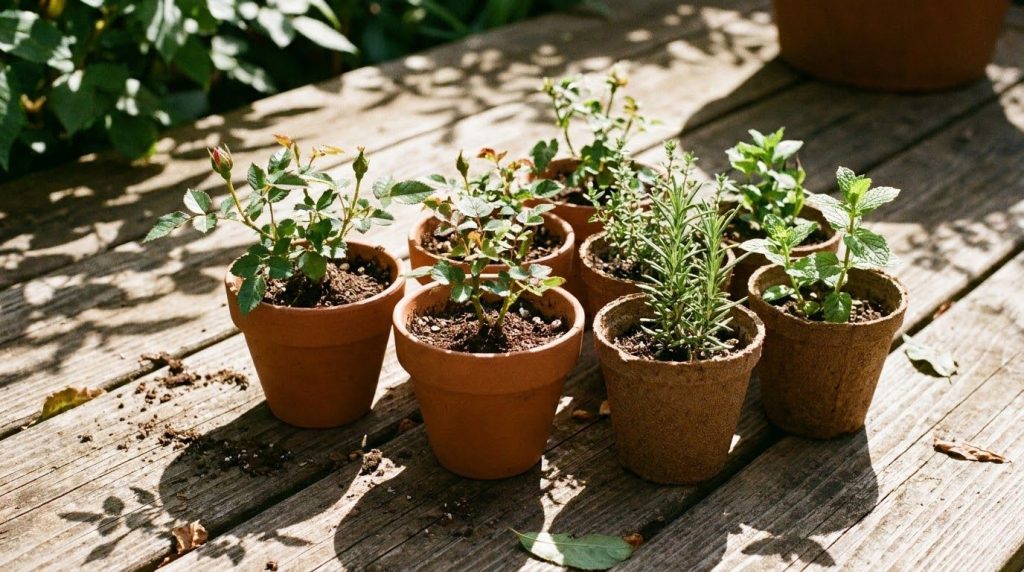
Culinary herbs are some of the most accessible plants to propagate. Rosemary and sage respond best to semi-hardwood cuttings, while thyme and oregano often root from softwood tips. Mint and basil are excellent for water propagation. Once roots are about one inch long, transplant your herbs into pots with drainage holes, using a light, well-drained mix. Pinch the tips of young herbs once they reach about 4 inches to encourage bushier growth and a bigger harvest later.
Step-by-Step: Making and Rooting a Cutting
- Choose a healthy, pest-free parent plant and select stems with at least two or three nodes.
- Cut just below a node using clean, sharp bypass pruners or a knife. Sterilize tools with rubbing alcohol before you begin.
- Remove the lower leaves so that no foliage will sit below the soil or water line. Keep two to four leaves at the top if the stem is small.
- Optional: dip the cut end in rooting hormone. This can speed rooting, especially for roses and semi-hardwood cuttings, but many herbs and mint root well without it.
- Insert the cutting about one-third to one-half of its length into moist, sterile, gritty mix. For water propagation, keep the nodes submerged and change the water every two to three days.
- Cover the cutting with a clear plastic bag or dome to hold humidity, but vent it daily to prevent mold.
- Check for resistance after two to three weeks by giving the cutting a gentle tug. When it resists, roots are forming.
Common Mistakes and How to Avoid Them
- Taking cuttings at the wrong stage. Softwood tips that are too soft will wilt, and hardwood sections taken in summer rarely root. Use the bend test to match the stem to the method.
- Letting the cutting dry out. Wrap cuttings in damp paper towels during transport and keep them shaded until planted.
- Overwatering. Soggy media causes stem rot, which appears as a blackened, mushy base. Use a gritty mix and water only when the top quarter inch feels dry.
- Too little light. Cuttings need bright, indirect light to produce energy for roots. Long, pale stems with small leaves usually mean insufficient light.
- Planting too late. Transplant rooted cuttings before they become root-bound, and harden them off gradually before moving them outdoors.
Adjusting for Your Climate and USDA Zone
USDA hardiness zones measure winter cold tolerance, not summer heat, humidity, or rainfall. In zones 3 through 5, focus on hardwood and semi-hardwood propagation in late summer and protect young plants through their first winter with mulch or an unheated cold frame. In zones 6 through 8, you have more flexibility, and softwood cuttings can be taken in spring with excellent success. In zones 9 through 11, many herbs and roses root quickly year-round, but high summer heat can cause cuttings to wilt, so provide afternoon shade. Your local cooperative extension service can help you confirm frost dates, soil temperatures, and cultivar-specific hardiness.
Conclusion
Propagating roses, berries, and herbs from cuttings is one of the most practical ways to build a productive garden without spending much money. Start with one easy herb such as mint or rosemary, then try a rose or currant once you feel confident reading the stem and timing your cuttings. Keep notes on what you took, when, and how long it rooted, because those records will make next season even more successful. Now it is your turn: take your first cutting this week, and tell us which plant you are hoping to multiply next.