Most people walk past this plant without a second thought. It grows along roadsides, in vacant lots, and at the edges of vegetable beds, and its large trumpet flowers look harmless enough. The real risk sits inside the spiky seed pod, and every part of the plant contains compounds that can seriously harm people and pets.
What Is Datura, Also Called Jimsonweed?
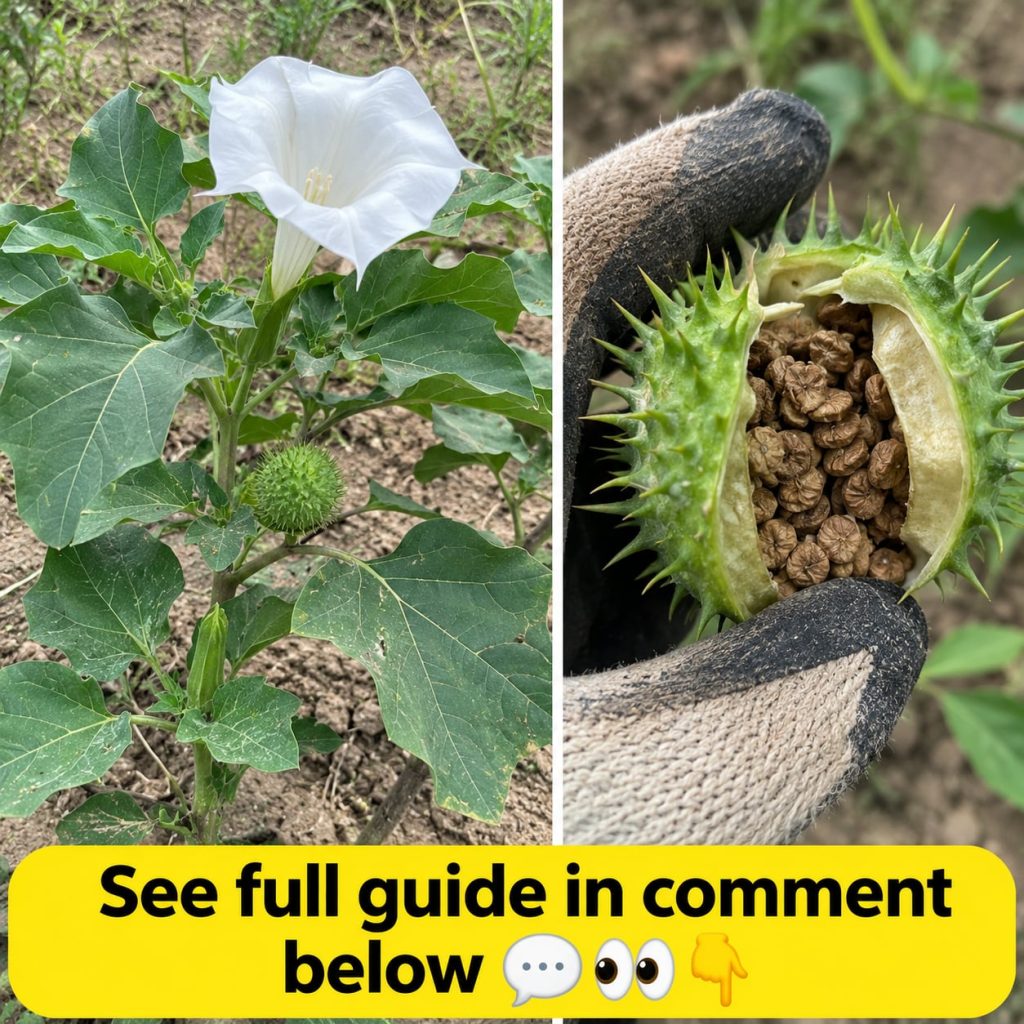
Datura stramonium, known as jimsonweed, thornapple, or devil’s trumpet, is a fast-growing annual in the nightshade family. It has coarse, toothed leaves, funnel-shaped white or purple flowers that often open in the evening, and round green seed pods covered in sharp spines. Every part of the plant contains tropane alkaloids such as atropine and scopolamine, which affect the nervous system. Because it looks like an ordinary weed, accidental exposure happens more often than most people expect.
Why It Is Not a Safe Home Remedy
Some online posts promote datura as a natural tea, tincture, poultice, or smoke. These methods are not safe. The concentration of active compounds changes with growing conditions, plant part, and season, so there is no reliable way to measure a safe amount at home. Even a small quantity can cause serious symptoms. This article does not provide preparation steps, and no part of this plant should be eaten, smoked, brewed, or applied to skin.
Warning: there is no safe home dose for datura. If you have already taken or handled it, contact poison control or emergency services right away.
Parts of the Plant and Their Risk Level
Use this quick-reference table to understand where the danger is highest. All parts should be treated as toxic.
| Plant part | Visual clue | Risk level | What to do |
|---|---|---|---|
| Seeds | Dark, kidney-shaped, inside spiny pods | Very high | Never touch with bare hands or handle near food |
| Seed pods | Round, green, covered in sharp spines | High | Wear gloves and bag before disposal |
| Flowers | Large white or purple trumpets | High | Avoid contact and keep away from children |
| Leaves and stems | Coarse, toothed, foul-smelling when crushed | Moderate to high | Do not chew or crush; remove with gloves |
| Roots | Thick, fleshy, below soil level | High | Do not dig up with bare hands |
How to Identify It Safely
- Coarse, irregularly toothed leaves with a strong, unpleasant odor when bruised.
- Funnel-shaped flowers, usually 6 to 9 cm long, white or pale purple.
- Round green pods covered in sharp spines that split open when dry.
- Grows quickly in disturbed soil, along paths, and in areas with full sun.
When in doubt, leave the plant alone and ask a local extension office or botanical resource for confirmation.
Symptoms of Poisoning
Datura poisoning can appear within an hour. Common signs include dry mouth, blurred vision, dilated pupils, a rapid heartbeat, flushed or hot skin, difficulty urinating, confusion, agitation, and hallucinations. In severe cases, seizures, breathing problems, and loss of consciousness can occur. Children and pets are especially vulnerable because of their body size.
If you suspect exposure, call your local emergency number or poison control immediately. Do not wait for symptoms to become severe, and do not try to induce vomiting unless a medical professional instructs you to.
Safe Handling in the Garden
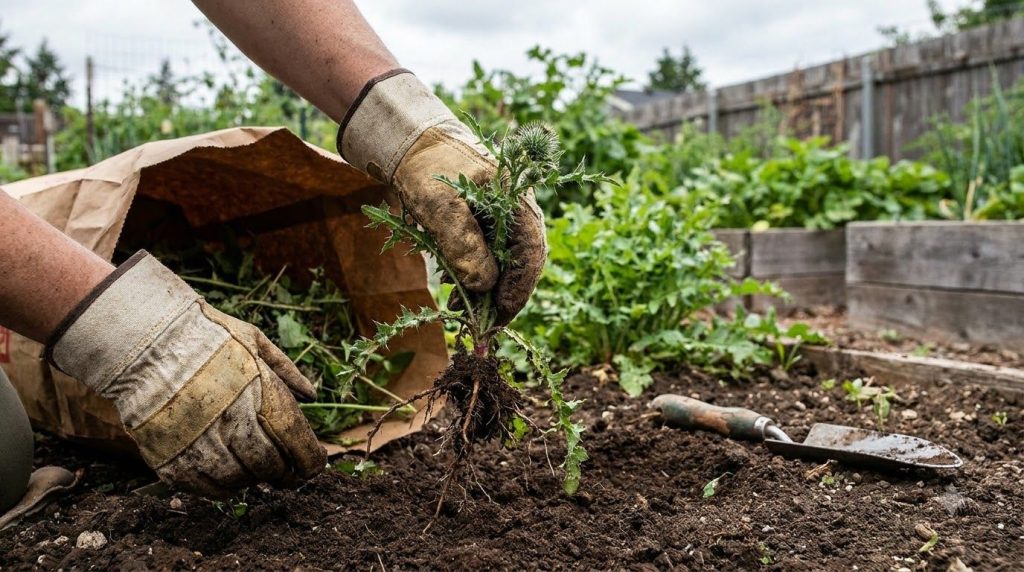
- Wear gloves and long sleeves when working near wild plants.
- Remove datura before seed pods form, ideally in early summer.
- Place pulled plants in a sealed bag and dispose of them with household waste, not compost.
- Wash hands and tools thoroughly after handling.
- Keep children and pets away from the work area until it is clean.
Common Mistakes
- Assuming a plant is safe because it grows wild or is sold online as a natural product.
- Touching seed pods barehanded, since spines and seeds can cause injury and exposure.
- Composting pulled plants, which can spread seeds and keep the problem growing.
- Confusing datura with edible plants that have similar leaves, especially in early growth.
- Ignoring mild symptoms in children or pets, which can worsen quickly.
Cautions: Who Should Be Most Careful
Children, pets, foragers, gardeners who work without gloves, and anyone taking medications that affect the nervous system should take extra care around this plant. Pregnant or breastfeeding people should avoid all contact and seek advice from a healthcare provider if exposure occurs.
Quick Summary
- Best use: none. Datura is not a safe remedy in any form.
- Identify it by spiny green pods, large trumpet flowers, and coarse leaves.
- Handle only with gloves and remove it before seed pods form.
- Dispose of it in sealed bags, not compost.
- Avoid all ingestion, smoking, brewing, and skin application.
- Call poison control immediately if exposure is suspected.
FAQ
Can I use datura as a tea or herbal remedy?
No. There is no safe home preparation or dose, and ingestion can cause serious poisoning.
Is it safe to touch the plant with bare hands?
It is not recommended. Sap and seeds can irritate the skin, and the seeds are especially hazardous.
Can I dry the seed pods and store them?
No. Dried seeds and pods remain toxic and should be sealed and disposed of safely.
How do I know if a plant is datura?
Look for spiny pods, trumpet flowers, and coarse, foul-smelling leaves. If you are unsure, contact a local plant identification service before touching it.
Is datura dangerous to pets?
Yes. Dogs, cats, livestock, and other animals can be poisoned, so remove plants from areas they can reach.
Should I remove it from my garden?
Yes, if it appears. Remove the whole plant with gloves before seed pods develop to prevent it from spreading.
Conclusion
Jimsonweed looks ordinary, but its spiny pods and toxic compounds make it one of the plants most worth avoiding. Learn to recognize it, protect children and pets, and handle it only with gloves when removal is necessary.
You may also like: How to Identify Common Poisonous Garden Plants.
Read more: Safe Plant Habits for Families Who Garden at Home.