Discover popular mushroom varieties, their unique flavors, and the nutrition they bring to your plate. Learn simple ways to cook them and enjoy more mushrooms at home.
Why Mushrooms Deserve a Spot on Your Plate
Most people know the classic white button and cremini mushrooms. But the mushroom aisle holds a whole world of flavors, textures, and culinary uses. Mushrooms are low in calories, easy to cook, and versatile enough for almost any meal.
This guide is for anyone who wants to eat more vegetables, cook with more variety, or simply try something new. You will learn about popular mushroom types, their basic nutrition, possible wellness support, and easy ways to cook them.
Popular Mushroom Varieties to Try
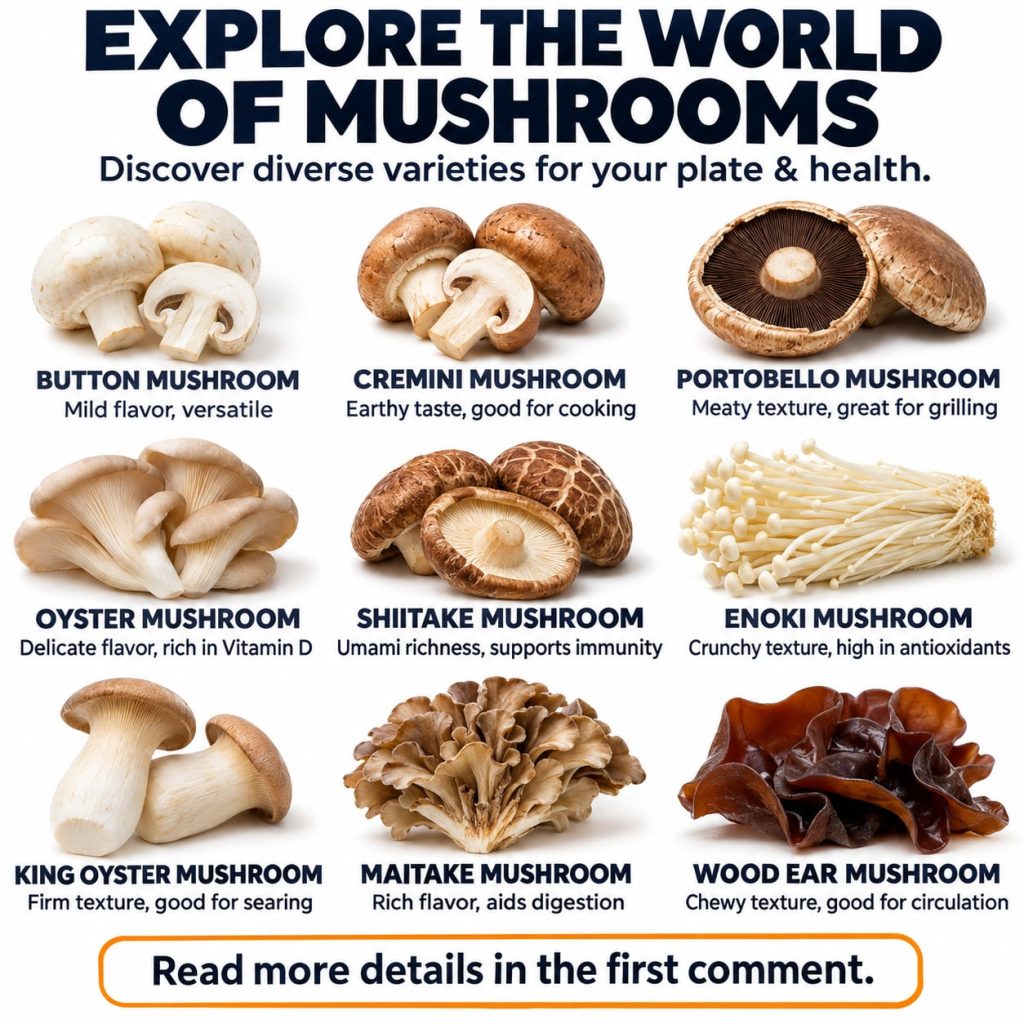
Each mushroom has its own personality. Some are meaty and rich, while others are delicate and light. Here are a few favorites worth trying.
Quick Guide to Common Varieties
| Mushroom | Flavor | Texture | Best Uses |
|---|---|---|---|
| Portobello | Earthy and savory | Dense and meaty | Grilled caps, burgers, stuffed mushrooms |
| Shiitake | Rich and smoky | Chewy | Stir-fries, soups, broths |
| Oyster | Mild and slightly sweet | Soft and tender | Sauteed dishes, pasta, tacos |
| Enoki | Light and fresh | Crisp and thin | Salads, soups, hot pot, garnish |
| Maitake | Nutty and woodsy | Frilly and firm | Roasting, sauteing, grain bowls |
| Lion’s Mane | Seafood-like and mild | Tender with a shreddy feel | Pan-seared steaks, crab-style dishes |
Portobello: The Meaty Favorite
Portobello mushrooms are simply mature cremini. Their large caps hold up well to high heat, which makes them a great stand-in for meat in sandwiches and fajitas.
Enoki: The Delicate Choice
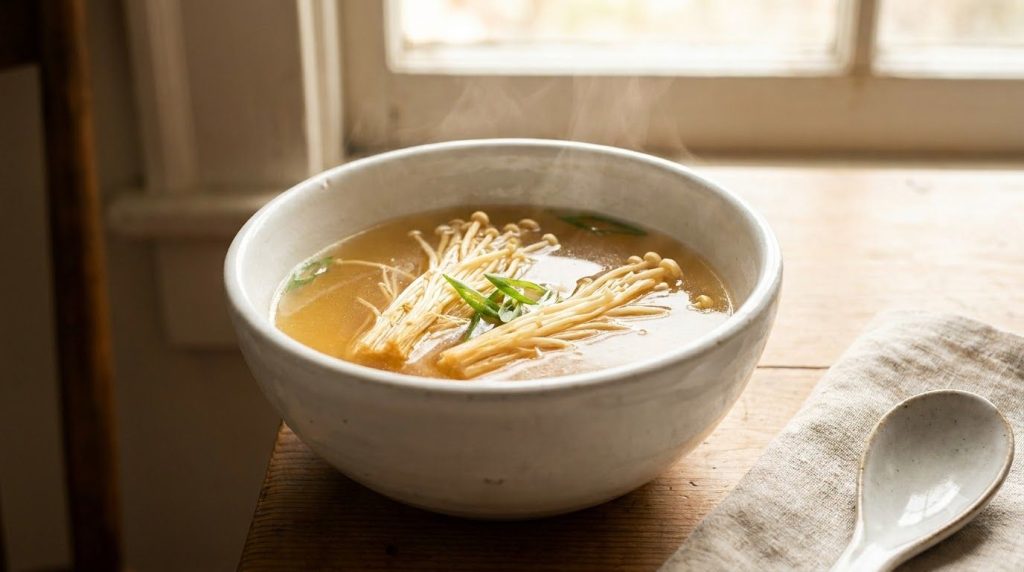
Enoki grow in thin, long clusters. They add a gentle crunch to salads and soups. Add them near the end of cooking so they keep their texture.
Basic Nutrition Facts
Mushrooms are naturally low in calories and fat. They also offer useful amounts of certain nutrients. Values vary by type and serving size, so treat the following as general guidance.
- Low in calories, with most cooked varieties offering roughly 15 to 30 calories per cup.
- Provide small amounts of fiber, which supports digestion.
- Contain B vitamins, including riboflavin and niacin, that help your body turn food into energy.
- Offer minerals such as potassium and selenium.
- Some mushrooms grown under UV light can contain vitamin D, a nutrient many people do not get enough of.
Potential Wellness Support
Research suggests some mushrooms contain compounds such as beta-glucans, which are being studied for their role in immune health. Shiitake and maitake are often mentioned in this research.
Mushrooms are best viewed as a nourishing food rather than a treatment. Their greatest everyday benefit may be that they add flavor and variety to vegetable-rich meals.
How to Cook Mushrooms for the Best Flavor
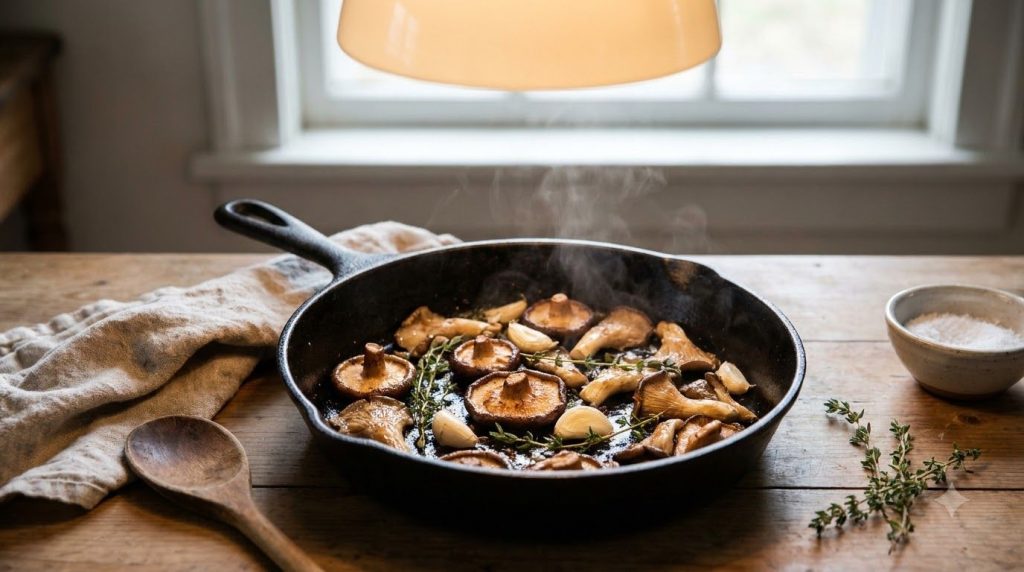
Mushrooms contain a lot of water. Cooking them the right way helps them brown and taste rich instead of soggy.
- Wipe mushrooms with a damp paper towel instead of soaking them in water.
- Heat a large skillet over medium-high heat and add a little olive oil.
- Spread the mushrooms in a single layer and avoid crowding the pan.
- Let them sit for several minutes until the bottoms turn golden brown.
- Stir, season with salt and pepper, and cook until tender.
Important Safety Notes
Never eat wild mushrooms unless they have been identified by a trained expert. Some wild types look similar to toxic ones, and mistakes can be serious. Buy mushrooms from grocery stores, reputable markets, or trusted growers. Some people, such as those with mushroom allergies or those taking certain medications, should check with a healthcare professional before adding new varieties in larger amounts.
Practical Tips for Trying New Mushrooms
- Start with one new variety each week to build your favorites list.
- Swap half the ground meat in tacos or pasta sauce for finely chopped cremini or portobello.
- Store mushrooms in a paper bag or original container in the refrigerator.
- Use mushroom stems in broths or soups instead of throwing them away.
- Add a handful of sliced mushrooms to scrambled eggs for extra flavor and texture.
Frequently Asked Questions
Are mushrooms healthy to eat every day?
Many people enjoy mushrooms as part of a balanced diet. A varied eating pattern with vegetables, fruit, whole grains, and protein is the best approach for most people.
Which mushroom is the most nutritious?
No single mushroom is best for everything. Each type offers a slightly different nutrient profile, so variety is a smart goal.
Can I eat mushrooms raw?
Many cultivated mushrooms can be eaten raw in salads, but cooking can make them easier to digest for some people. Enoki and button mushrooms are common raw choices.
How long do fresh mushrooms last?
Fresh mushrooms usually last about five to seven days in the refrigerator when stored properly. Check for slimy spots or a strong smell before using them.
Are dried mushrooms as good as fresh?
Dried mushrooms keep for a long time and add intense flavor. Rehydrate them in warm water before cooking, and save the soaking liquid for soups or sauces.
Do mushrooms help with weight management?
Because mushrooms are low in calories and filling, they can fit well into weight-conscious meals. They work best as part of an overall eating plan with regular activity.
Conclusion
Mushrooms offer far more than a basic side dish. From hearty portobellos to delicate enoki, each variety brings its own flavor and texture to your kitchen. Try one new type this week and see which one becomes your favorite. For more ideas, explore related guides such as:
- High Protein Vegetarian Dinner Ideas
- Healthy Stir-Fry Recipes for Busy Weeknights
- Best Vegetables to Add to Your Meals
- Easy Meal Prep Tips for Beginners
This content is for educational purposes only and should not be considered medical advice. Consult a qualified healthcare professional for personalized dietary recommendations.