Tough grime on sinks, drains, and kitchen surfaces often needs more than a quick wipe. A fizzing cleaner can loosen buildup by lifting dirt and scrubbing it away, and you probably already have the two main ingredients in your kitchen.
This guide walks you through a simple baking soda and white vinegar fizz cleaner. The powder and liquid react right away, creating bubbles that help lift residue from the surface. It is a practical, budget-friendly option for routine cleaning, and it works best when you use it for the right jobs.
What You’ll Need
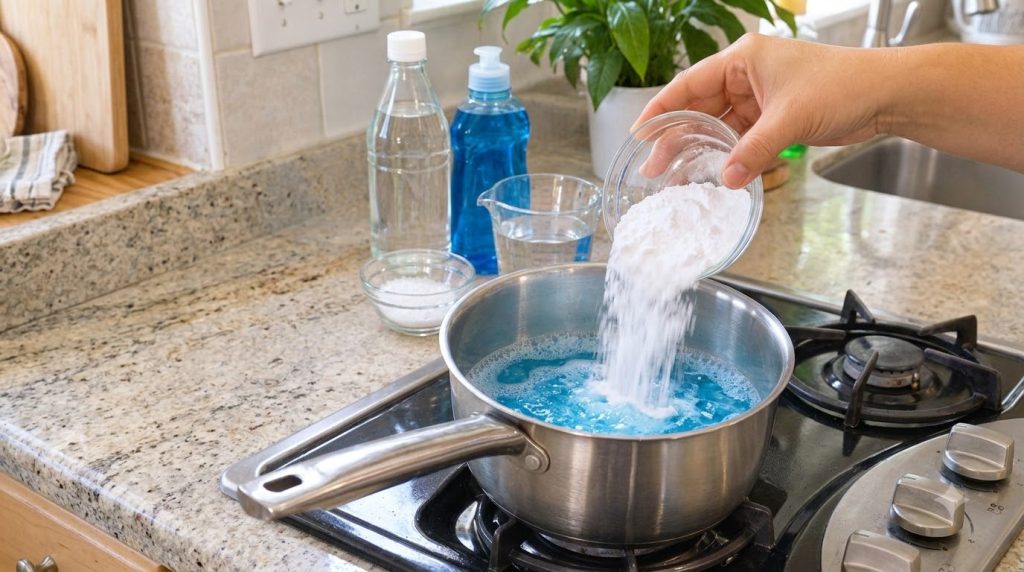
Cleaning Ingredients
- 1/2 cup baking soda (sodium bicarbonate)
- 1/2 cup plain white vinegar (5% acidity)
- 1 cup warm water (optional, for a gentler spray solution)
- 1 teaspoon liquid dish soap (optional, helps cut grease)
Substitutes
- Instead of white vinegar: fresh lemon juice (about 1/2 cup) works for light cleaning and leaves a fresher scent. Avoid it on surfaces that stain easily.
- Instead of white vinegar for a mild, odor-free option: 1 teaspoon citric acid dissolved in 1/2 cup warm water.
- Instead of dish soap: a few drops of unscented castile soap.
Tools
- Small glass or ceramic bowl
- Measuring cups and spoons
- Spray bottle (optional)
- Soft sponge or old toothbrush
- Microfiber cloths
- Rubber gloves and safety glasses
Why This DIY Can Be Useful
Baking soda is a mild alkaline powder. It gently scrubs surfaces and helps neutralize odors. White vinegar is mildly acidic, and when the two meet they produce carbon dioxide bubbles. Those bubbles help loosen soap scum, light grease, and food residue from sink basins, tile grout, and drains.
The mixture is most effective as a cleaning aid, not as a heavy-duty solution. It will not remove deep stains or disinfect surfaces on its own.
How to Make It
- Choose a clean, dry bowl. Make sure it is large enough to hold the mixture without spilling when it fizzes.
- Measure the baking soda into the bowl first.
- If you are making a paste for scrubbing, add the dish soap and stir until combined.
- For a spray version, pour the vinegar and warm water into a spray bottle and shake gently. Add the dish soap if using.
- Use the mixture right after preparing it. The fizzing starts quickly, and the reaction is strongest when fresh.
Do not heat the mixture in a pot or on a stovetop. Heating can cause rapid foaming and splashing. Do not seal it in a closed container, because the carbon dioxide can build pressure.
How to Use It
For Sinks and Tile
- Wet the surface lightly with warm water.
- Sprinkle a thin layer of baking soda over the dirty area.
- Spray or drizzle vinegar over the powder. Let it fizz for 2 to 3 minutes.
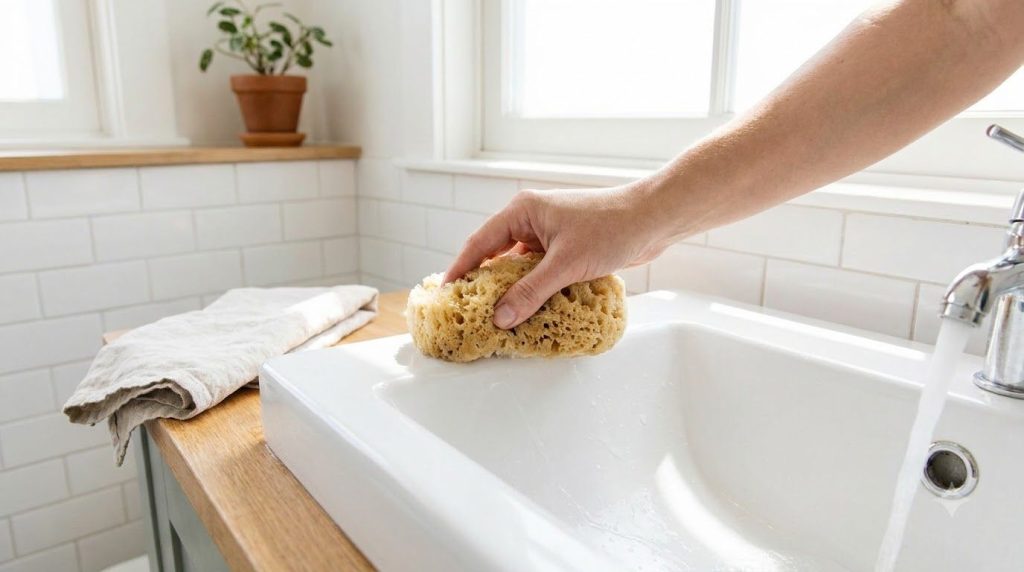
- Scrub gently with a sponge or toothbrush, focusing on grout lines and rims.
- Rinse with warm water and dry with a microfiber cloth.
For Drains
- Pour 1/2 cup of baking soda directly into the drain.
- Follow with 1/2 cup of white vinegar. Cover the drain with a stopper or cloth for about 15 minutes so the bubbles stay in the pipe.
- Flush with a pot of hot water. Repeat once if the drain still runs slowly.
What to Expect
You should see bubbling and a slightly gritty texture as the baking soda reacts. The fizz helps loosen light grime, soap residue, and minor buildup. Expect the best results on everyday messes that have not dried for a long time.
Stubborn stains, hard water deposits, and heavy grease may need repeated treatments or a stronger cleaner recommended for that surface.
Helpful Tips
- Clean the surface with a damp cloth first to remove loose crumbs and dust. The reaction works better on a clean area.
- Use a toothbrush for grout lines and faucet bases.
- Make small batches so the mixture stays fresh.
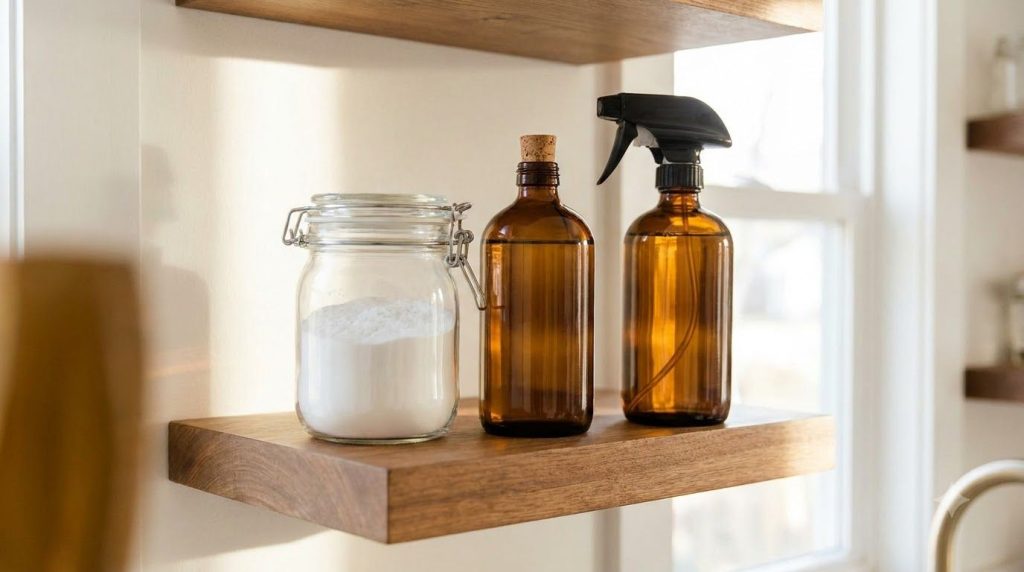
- Keep the baking soda dry in a sealed container until you need it.
Important Notes and Safety
- Never mix this cleaner with bleach, ammonia, or other commercial cleaning products. Mixing them can release harmful gases.
- Do not use vinegar on natural stone such as marble, granite, or limestone. The acid can etch and dull the surface.
- Avoid vinegar on waxed wood, unsealed grout, and cast iron or aluminum that you want to keep intact.
- Patch test any surface in a hidden spot first.
- Wear gloves and safety glasses, and open a window for ventilation.
- Rinse surfaces thoroughly after cleaning to prevent residue buildup.
- Label any stored spray bottle clearly, and use it within a few days.
- Keep the mixture away from children and pets.
If you are unsure about a product or surface, check the manufacturer’s instructions before cleaning.