Every gardener knows the joy of walking out to the vegetable bed and finding a basket-worthy harvest waiting. But many people are surprised to learn that how often you pick can matter just as much as how well you plant. Harvesting little and often is a simple habit that many experienced growers rely on to keep their plants productive through the season.
Why Daily Picking Can Help Plants Produce More
Many vegetables are designed to set seed once their fruit matures. When ripe produce is left on the plant for too long, the plant may shift its energy toward seed development instead of making new flowers and fruit. Regular picking removes mature vegetables before they become overgrown, which encourages the plant to keep flowering and producing. This is especially true for fast-growing crops like zucchini, green beans, cucumbers, and peas.
Frequent harvesting also keeps leaves and stems in good shape. Tender lettuce and basil, for example, become bitter or tough when they are left to bolt, and cutting them regularly encourages fresh, leafy growth.
Vegetables That Respond Well to Daily Picking
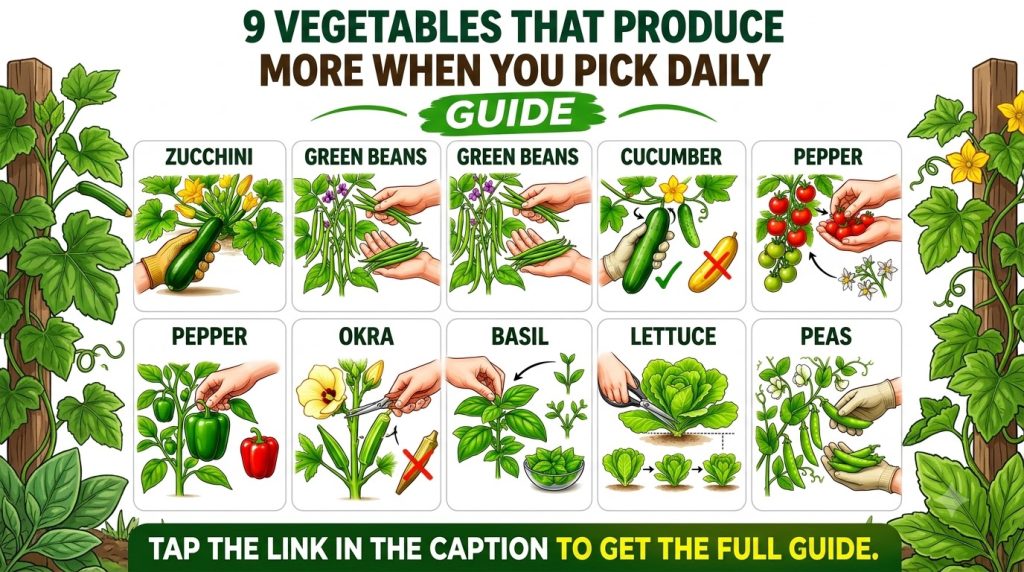
The vegetables shown in this guide are among the most rewarding to harvest often. Each one benefits in a slightly different way:
- Zucchini: Pick when fruits are young and tender, usually at about 15 to 20 centimeters long, before they become large and seedy.
- Green beans: Harvest pods while they are firm and snap easily. Picking regularly often keeps plants flowering for longer.
- Cucumbers: Gather fruits when they are medium-sized and deep green. Overripe cucumbers can slow the vine down.
- Peppers: Remove fruit as soon as it reaches a usable size, even if it is not fully colored, to support more blooms.
- Okra: Pick pods every day or two once they are about 7 to 10 centimeters long, as they grow quickly and become fibrous when oversized.
- Cherry tomatoes: Harvest fruit as it turns color, which keeps clusters from becoming heavy and can reduce cracking or splitting.
- Basil: Snip stems just above a leaf pair. This encourages bushier growth instead of flowering.
- Lettuce: Harvest outer leaves first and let the center keep growing for a continuous supply.
- Peas: Pick pods when they are plump but still tender, checking the plants often during peak season.
How to Harvest the Right Way
Good technique protects your plants and makes daily picking easier. Try these practical habits:
- Harvest in the cool part of the morning, when plants are well hydrated and produce is crisp.
- Use clean, sharp scissors or pruners rather than pulling or twisting, which can damage stems and branches.
- Check plants every day or two, since many crops can grow from small to oversized quickly in warm weather.
- Handle fragile produce gently and store it in a cool, shaded spot until you are ready to use it.
- Keep a simple harvest log to track which plants need attention most often.
Common Mistakes to Avoid
Even with the best intentions, a few habits can slow down your harvest. Letting fruit hang past its prime is the most common issue, followed by picking too rarely during hot weather. Overwatering right before harvest can also make some fruits split, so keep watering consistent instead. Finally, avoid harvesting when plants are wet from rain or dew, as this can spread disease between plants.
Building a Simple Daily Harvest Routine
Turning harvesting into a daily habit is easier than it sounds. Pair it with another routine you already enjoy, such as morning coffee or an evening stroll through the garden. Over time, you will start noticing small changes in your plants, like new flower buds forming or fresh leaves unfolding, which makes gardening even more rewarding.
Remember that results vary with climate, soil, sunlight, and plant variety, so observe your own garden and adjust as you learn. With consistent attention and gentle care, daily picking can be a practical way to enjoy fresher produce and a more productive garden all season long.