June is one of the most rewarding months for gardeners who want a second wave of fresh produce. Spring crops may be finishing, the soil is warm, and many seeds sprout quickly when sown directly into the ground. This guide walks you through the basics of direct sowing in June, which crops tend to do well, and how to plan a simple summer harvest.
Why Direct Sowing Works Well in June
Direct sowing means planting seeds straight into the garden bed rather than starting them indoors and transplanting later. In June, many warm-season crops prefer soil temperatures that are naturally rising, so seeds often germinate with less fuss. Direct sowing also avoids transplant stress, which can slow down root systems and delay harvest.
Warm soil, longer days, and regular rainfall or watering can create ideal conditions for a second planting. Keep in mind that results depend on your local climate, so check your regional frost dates and average summer temperatures before you begin.
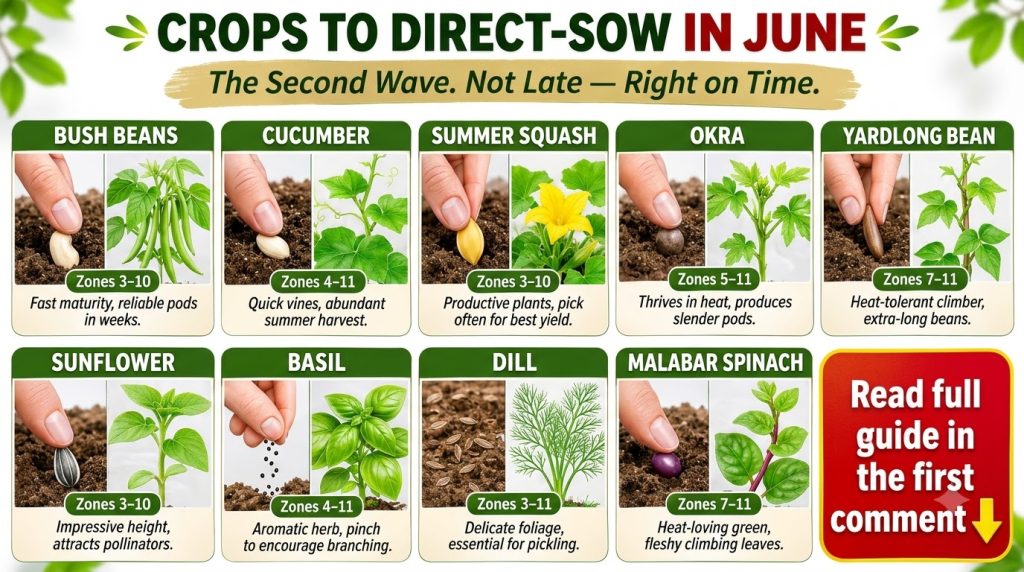
Crops That Often Thrive When Sown in June
Many gardeners choose a mix of fast-growing vegetables, leafy greens, and herbs for a late-spring or early-summer sowing. The following crops are commonly direct-sown in mid-season, though timing can vary by region:
- Bush beans: Quick to germinate in warm soil and productive over several weeks.
- Summer squash and zucchini: Sow seeds in mounds or rows with plenty of space to spread.
- Cucumbers: Provide a trellis or support to keep vines tidy and fruit clean.
- Carrots: Sow a small batch every few weeks for a steady supply of roots.
- Beets: Thin seedlings so each plant has room to form a good root.
- Radishes: A fast crop that is ready in about a month, ideal for filling gaps.
- Basil: Sow in a sunny spot and pinch growing tips to encourage bushy growth.
- Lettuce and leafy greens: Choose a spot with some afternoon shade in hot weather.
Individual days to maturity and germination times vary by variety, so read the seed packet for the most accurate guidance.
Simple Steps for a Successful Direct Sowing Session
- Prepare the bed: Loosen the soil, remove weeds, and mix in compost to improve texture and fertility.
- Water before sowing: Moist soil helps seeds make contact and begin germinating.
- Sow at the right depth: A general rule is to plant seeds about two to three times as deep as their diameter, but always follow the packet.
- Label your rows: Labels help you tell seedlings apart from weeds during the first weeks.
- Keep the surface moist: Light, frequent watering is important until seedlings appear.
- Thin and mulch: Thin crowded seedlings and add mulch to hold moisture and reduce weeds.
Tips for Keeping Your Second Wave Healthy
Summer gardens can face heat stress, pests, and uneven watering. Mulching, consistent irrigation, and companion planting can help support healthy growth. For example, planting basil near tomatoes or marigolds near vegetables is a popular companion planting practice, though results can vary. Inspect plants regularly, and remove pests by hand when you can. Organic approaches like handpicking, row covers, and healthy soil are good starting points for most home gardens.
Planning Your Summer Garden Calendar
Keep a simple garden journal to record sowing dates, varieties, and harvest notes. Over time, this record becomes a valuable guide for future seasons. Stagger your sowings every two to three weeks for crops like beans, carrots, and lettuce so your harvest arrives in steady waves rather than all at once.
June is a friendly reminder that gardening is a learning process. Start with a few crops you enjoy eating, observe how they respond to your soil and weather, and expand your plot as your confidence grows. With a little planning, your second wave of planting can bring fresh flavor well into the season.