Many gardeners assume every seed should be soaked before planting. In reality, soaking helps some seeds and is unnecessary or even counterproductive for others. Learning which is which can save time, reduce seed waste, and give your garden a steadier start.
What Dry Planting Means
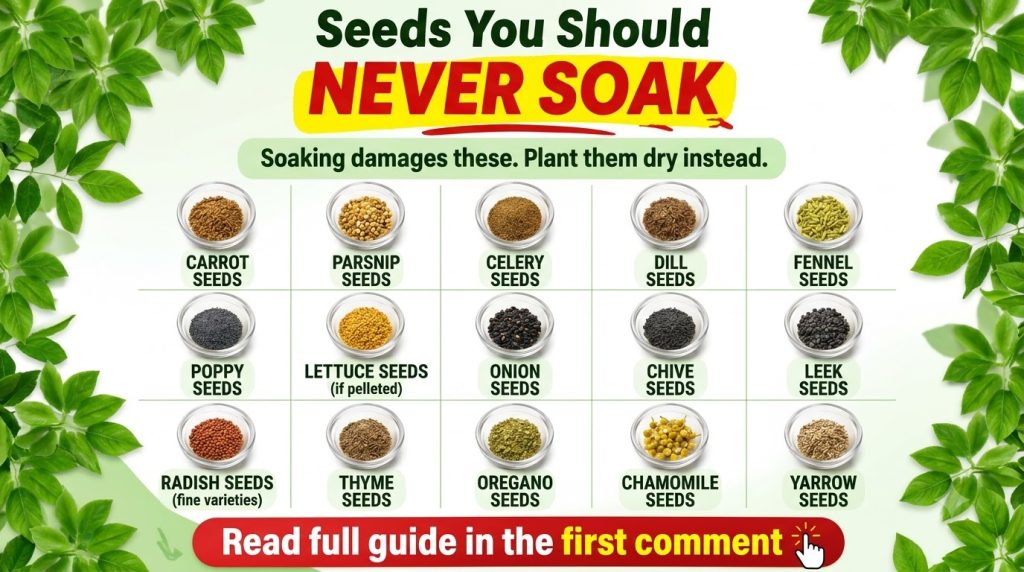
Dry planting means sowing seed directly into moist soil or seed-starting mix without a pre-soak. Many small seeds are commonly sown this way. Their tiny size means they can dry out quickly, and soaking them can make them slippery, clumpy, and difficult to space evenly.
Seeds Gardeners Often Sow Without Soaking
The following groups are often sown dry, though you should always check the guidance for your specific variety:
- Carrots: very fine seeds that can wash away or form a crust when wet, so keep the surface evenly moist instead.
- Lettuce: fine seeds that generally germinate best when sown shallowly and kept consistently damp.
- Basil and many herbs: small seeds that do well with light surface sowing.
- Radishes: quick to germinate and well suited to direct sowing in prepared beds.
When Soaking Can Still Help
Larger seeds with harder coats, such as some beans and peas, are often soaked for a few hours before planting to encourage faster germination. Timing matters. Soak only as long as your seed packet or a reliable growing guide recommends, because prolonged soaking can cause seeds to rot.
Tips for Successful Dry Sowing
- Prepare a fine, well-drained seedbed or seed-starting mix.
- Sow at the depth listed on the packet, which is usually about two to three times the seed’s width.
- Keep the surface moist with a fine mist rather than heavy watering.
- Label rows or trays so you can track varieties and sowing dates.
Common Mistakes to Avoid
Sowing too deeply, letting the soil dry out during germination, and using a strong jet of water that washes seeds away are frequent causes of poor results. Patience also matters, since some seeds take a week or more to emerge.
Final Thoughts
Knowing which seeds to soak and which to sow dry is one of the simplest ways to improve your garden results. Check your seed packets, observe how your seeds respond, and keep notes each season. If you have a favorite dry-planting tip, feel free to share it with fellow gardeners in the comments.