Which veggie packs more nutrients, zucchini or bell pepper? Both are staples in many kitchens, and both can fit well into a healthy eating routine. The answer depends on what you want from your meal. Here is a simple breakdown to help you choose.
Why This Comparison Matters
Zucchini and bell peppers are easy to find, mild in flavor, and very versatile. They work in stir-fries, salads, omelets, and roasted sheet pan dinners. Because both are low in calories, they are a popular choice for anyone building lighter meals.
This guide is for home cooks who want to eat more vegetables, people trying to add variety to their plates, and families looking for simple ways to boost nutrition.
Nutrition Comparison at a Glance
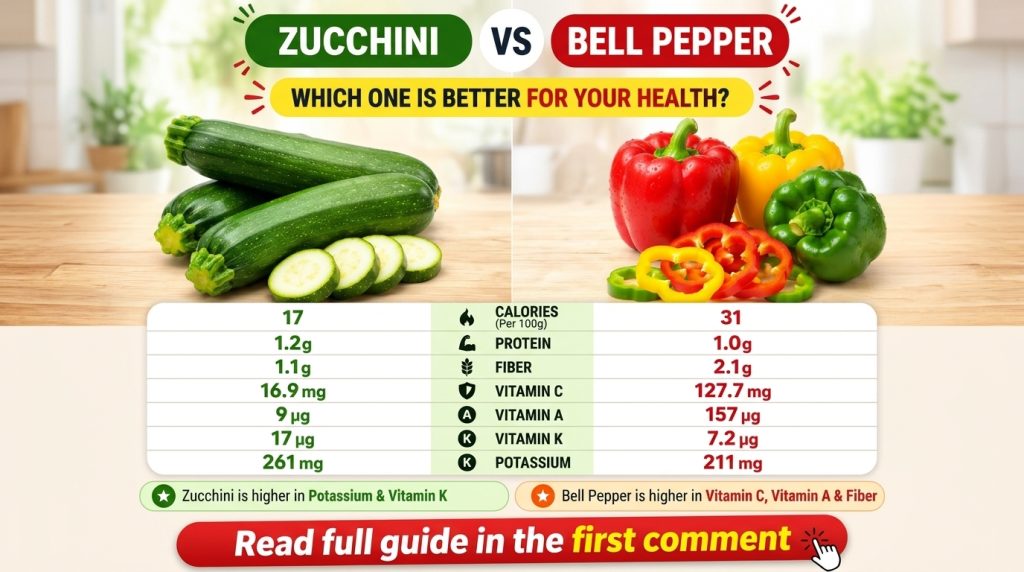
The values below are approximate for about 100 grams (roughly 3.5 ounces) of raw vegetable. Actual numbers vary with variety, size, and ripeness.
| Nutrient | Zucchini (green, raw) | Red Bell Pepper (raw) |
|---|---|---|
| Calories | About 17 | About 31 |
| Protein | About 1.2 g | About 1 g |
| Carbohydrates | About 3.1 g | About 6 g |
| Fiber | About 1 g | About 2.1 g |
| Vitamin C | About 18 mg | About 128 mg |
| Vitamin A | Small amount | Higher amount |
| Potassium | About 260 mg | About 211 mg |
Where Zucchini Shines
- It is one of the lowest-calorie vegetables you can buy.
- It provides a good amount of potassium for its size.
- Its mild taste and soft texture make it easy for picky eaters.
- It cooks quickly and blends well into sauces and baked goods.
Where Bell Peppers Shine
- Red bell peppers are especially rich in vitamin C, often more than an orange per serving.
- They provide carotenoids, plant compounds that the body can turn into vitamin A.
- They offer more fiber and carbohydrates, which can make them a more filling snack.
- Their natural sweetness adds color and flavor without much added sugar.
So, Which One Wins?
For the most vitamin C and vitamin A, bell peppers take the lead, especially the red and yellow varieties. For the lowest calories and a lighter bite, zucchini is the winner. Honestly, the best choice is often both. Eating a variety of vegetables gives you a wider range of nutrients than relying on just one.
Practical Tips for Using Both
- Add diced bell peppers and zucchini to scrambled eggs for a colorful breakfast.
- Roast them together on one sheet pan with olive oil, salt, and herbs.
- Grate zucchini into turkey or bean burgers to add moisture and vegetables.
- Choose red or yellow peppers when you want the most vitamin C.
- Store zucchini in the refrigerator and use it within about a week for the best texture.
- Keep bell peppers in the crisper drawer to help them stay crisp longer.
Healthy Swaps to Try
- Swap half the pasta in a dish for spiralized zucchini noodles.
- Use diced bell peppers in place of some of the rice in fried rice.
- Replace chips with sliced bell pepper strips and a yogurt-based dip.
Frequently Asked Questions
Is zucchini healthier than bell pepper?
Neither is healthier overall. Zucchini is lower in calories, while bell peppers offer more vitamin C and vitamin A. Both are nutritious choices.
Which has more vitamin C?
Red bell peppers usually contain the most vitamin C of the two. Green bell peppers also contain a good amount, but less than the ripe red ones.
Can I eat zucchini and bell peppers every day?
Yes, most people can enjoy them daily as part of a varied diet. Rotating different vegetables helps you get a broader range of nutrients.
Do I need to peel zucchini or bell peppers?
No. Zucchini skin is edible and contains fiber. Bell pepper skin is also edible, though some people prefer to remove it after roasting for a softer texture.
Are bell peppers good for weight management?
They are low in calories and add volume to meals, which may help you feel satisfied. Pairing them with lean protein and whole grains can make a balanced plate.
Which is better for kids?
Zucchini has a mild flavor that many children accept easily. Sweet bell peppers are also popular with kids, especially when served raw with a dip.
Conclusion
Zucchini and bell peppers both deserve a spot in your kitchen. Bell peppers lead in vitamin C and vitamin A, while zucchini keeps calories low. Mix them into your weekly meals to enjoy the benefits of both. If you enjoyed this comparison, explore more healthy food guides and easy recipes on our site.
This content is for educational purposes only and should not be considered medical advice. Consult a qualified healthcare professional for personalized dietary recommendations.