Few breakfasts are as simple as a boiled egg, yet getting the yolk just right can feel surprisingly tricky. Some people love a runny, golden center for dipping toast. Others prefer a jammy middle that is creamy but not wet, or a firm yolk that crumbles easily into salads. The good news is that you can get any of these results with a little timing know-how.
This guide is for anyone who wants to cook eggs more confidently, from busy parents making quick breakfasts to home cooks who enjoy experimenting in the kitchen. You will learn how timing affects texture, how egg size changes the clock, and a simple method you can repeat every time.
Why Boiled Eggs Are Worth Mastering
Eggs are a versatile, affordable source of high-quality protein. A medium egg typically provides around six grams of protein and contains nutrients such as choline and vitamin D. Because they are simple to prepare, boiled eggs are an easy way to add a filling food to meals without much fuss.
Research suggests that protein-rich breakfasts may help some people feel fuller for longer. Learning to cook eggs well makes it easier to enjoy them regularly, which fits well into a balanced eating pattern.
Timing Guide for Your Favorite Yolk Texture
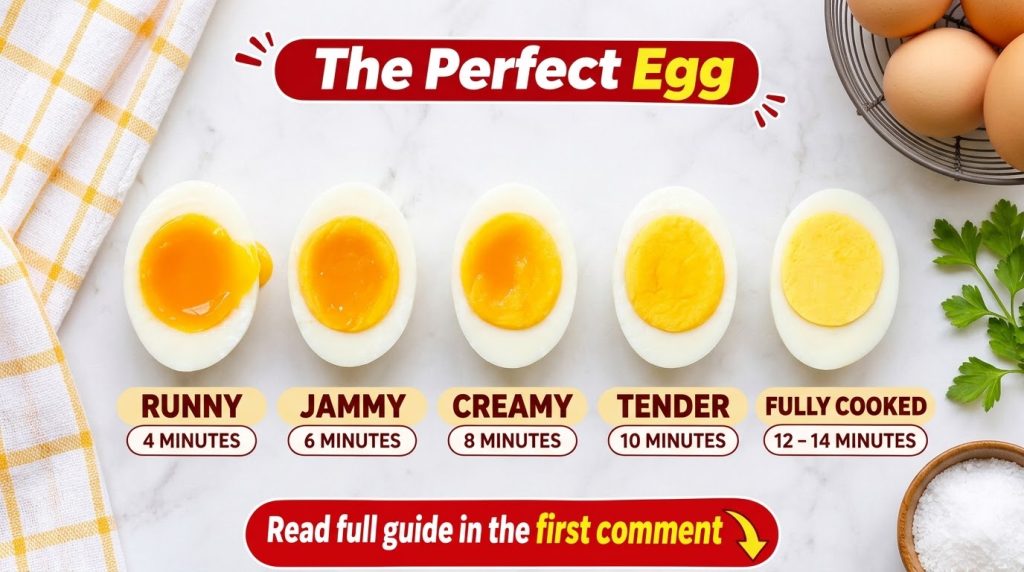
These times are approximate and start once the water reaches a full boil. Eggs straight from the refrigerator take a little longer than those left at room temperature.
- Runny yolk (about 6 minutes): The white is set, while the yolk stays liquid and glossy. Great for dipping toast soldiers.
- Jammy yolk (about 6 to 7 minutes): The center is soft, thick, and spoonable. Perfect on rice bowls or avocado toast.
- Soft-set yolk (about 8 minutes): The yolk is mostly set with a slightly tender center. A nice middle ground for salads.
- Fully cooked yolk (about 10 to 12 minutes): The yolk is firm and pale yellow throughout. Ideal for egg salad or deviled eggs.
Step-by-Step Method for Consistent Results
- Place eggs in a single layer in a saucepan and cover them with cold water by about one inch.
- Bring the water to a rolling boil over medium-high heat.
- Lower the heat slightly so the water simmers gently, then set your timer using the guide above.
- Prepare a bowl of ice water while the eggs cook.
- Transfer the eggs to the ice bath for at least five minutes. This stops the cooking and makes peeling easier.
- Peel gently under cool running water, starting at the wider end where the air pocket sits.
Common Mistakes to Avoid
- Starting with eggs that are too cold, which can cause uneven results.
- Skipping the ice bath, so the yolk keeps cooking and may turn gray-green on the outside.
- Cooking at a hard, violent boil, which can crack shells and toughen whites.
- Forgetting that large or extra-large eggs may need an extra minute.
Practical Tips
- Make a batch of eggs on Sunday and refrigerate them in their shells for up to one week for quick grab-and-go breakfasts.
- Add a teaspoon of vinegar to the water if you want to reduce leaks from cracked shells.
- Pair your eggs with vegetables, whole grains, or fruit to create a balanced plate.
- Use older eggs, which are often easier to peel than very fresh ones.
Healthy Ways to Enjoy Boiled Eggs
Boiled eggs are delicious on their own with a pinch of black pepper, but they also shine in simple meals. Try slicing a jammy egg over a bowl of greens and roasted chickpeas, or mashing a soft-set egg with plain Greek yogurt, mustard, and chives for a lighter egg salad.
Who Should Be Careful
Most healthy adults can enjoy eggs as part of a varied diet. Runny yolks carry a small risk of foodborne illness, so people who are pregnant, older, or have weakened immune systems may prefer fully cooked yolks. If you have concerns about cholesterol or food safety, talk with your healthcare provider about what fits your needs.
Frequently Asked Questions
How long should I boil an egg for a runny yolk?
Around six minutes after the water reaches a full boil usually gives a runny yolk with a set white. Egg size and starting temperature can shift the time slightly.
Why do my boiled eggs have a green ring around the yolk?
That ring forms when eggs are overcooked or cooled slowly. An ice bath after cooking helps prevent it.
Should I start eggs in hot or cold water?
Either works. Starting in cold water is common and gives more predictable timing, while adding eggs to boiling water can make peeling a bit easier for some cooks.
How do I know if a boiled egg is still good?
Cooked eggs should be refrigerated and eaten within about one week. If an egg smells off or looks unusual, throw it away.
Can I freeze boiled eggs?
Freezing is not recommended for whole boiled eggs because the whites become rubbery. Chopped eggs in a dish may freeze better, but texture can change.
Do boiled eggs help with weight management?
Eggs are filling and nutrient-dense, so they can fit into a weight-conscious eating plan. Results vary, and overall eating habits matter most.
Conclusion
Perfect boiled eggs come down to timing, a gentle boil, and a quick ice bath. Once you know your favorite yolk texture, you can make it again and again with confidence. Explore more healthy breakfast and recipe ideas on our site to keep your meals interesting.
This content is for educational purposes only and should not be considered medical advice. Consult a qualified healthcare professional for personalized dietary recommendations.