Vitamin C is one of those nutrients we often hear about, but it is easy to forget when we are busy planning meals. It supports normal immune function, helps your body make collagen for healthy skin and connective tissue, and helps your body absorb iron from plant foods. The good news is that you do not need supplements to get enough. Many colorful fruits and vegetables are excellent sources.
In this guide, you will learn which foods are richest in vitamin C, how much they contain, and simple ways to add them to your everyday meals. Whether you are packing school lunches or looking for a quick snack, these ideas can help.
Why Vitamin C Matters for Everyday Health
Your body cannot make vitamin C on its own, so you need to get it from food every day. It acts as an antioxidant, which means it helps protect cells from everyday wear and tear. Research suggests that a steady intake of vitamin C-rich foods is part of a balanced diet for good health.
Who Benefits Most from Vitamin C-Rich Foods
- Busy families looking for simple, healthy snacks
- People who eat mostly plant-based meals
- Anyone who wants to improve iron absorption from beans, lentils, and leafy greens
- Readers interested in healthy skin and wound healing
Top Vitamin C Foods Ranked
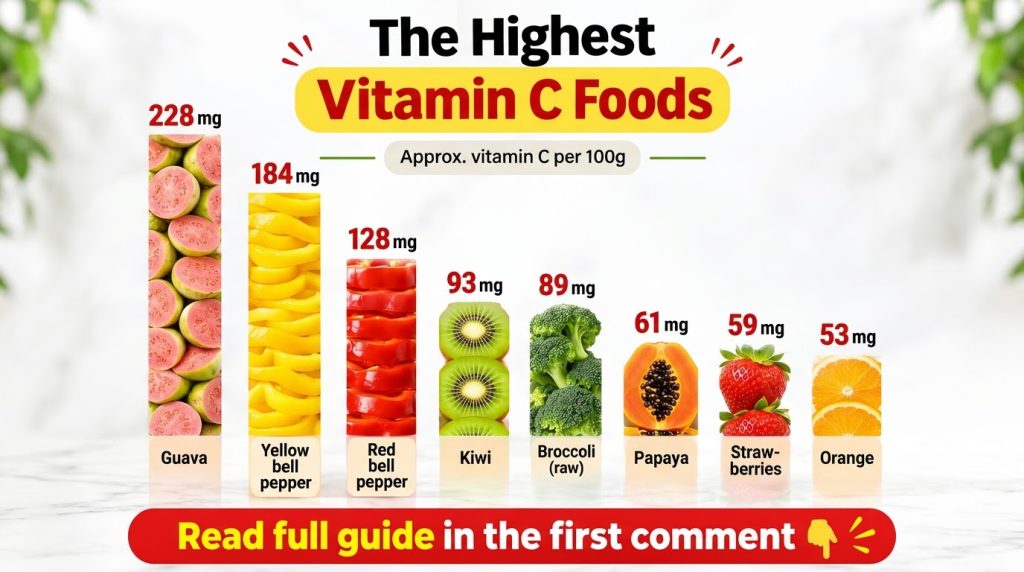
The values below are approximate and based on typical amounts per 100 grams of raw food. Actual numbers can vary based on ripeness, variety, and growing conditions.
| Food | Approx. Vitamin C (per 100g) | Approx. Calories | Approx. Fiber | Main Benefit |
|---|---|---|---|---|
| Guava | About 228 mg | About 68 | About 5.4 g | Highest natural vitamin C source |
| Red bell pepper | About 128 mg | About 31 | About 2.1 g | Low calorie and colorful |
| Kiwi | About 93 mg | About 61 | About 3 g | Fiber and vitamin K |
| Broccoli | About 89 mg | About 34 | About 2.6 g | Vitamin K and folate |
| Papaya | About 61 mg | About 43 | About 1.7 g | Digestive-friendly fruit |
| Strawberries | About 59 mg | About 32 | About 2 g | Easy sweet snack |
| Oranges | About 53 mg | About 47 | About 2.4 g | Classic and affordable |
A Closer Look at the Top Choices
- Guava: Often the richest source per serving, with a tropical, slightly sweet flavor.
- Red bell pepper: Packs more vitamin C than an orange, and it is great raw in salads.
- Kiwi: A small fruit with plenty of fiber, perfect for breakfast bowls.
- Broccoli: Works well steamed, roasted, or added to stir-fries.
- Papaya, strawberries, and oranges: Easy, familiar options that fit almost any budget.
How to Eat More Vitamin C Every Day
Small changes add up. You do not need to eat everything on the chart. Pick two or three foods you enjoy and rotate them through the week.
- Add sliced red bell pepper to your lunch wrap or eggs.
- Top your morning yogurt or oatmeal with kiwi or strawberries.
- Toss broccoli florets into pasta, soups, or rice bowls.
- Keep cut fruit in the fridge so it is ready for a quick snack.
- Pair vitamin C foods with beans or lentils to support iron absorption.
Practical Tips for Keeping Vitamin C in Your Food
Vitamin C is sensitive to heat, light, and air. A few simple habits can help you keep more of it.
- Eat raw fruits and vegetables when possible, or cook them briefly.
- Steam broccoli or stir-fry peppers for a short time instead of boiling them for long periods.
- Store fresh produce in the fridge and use it within a few days.
- Cut fruit right before serving to reduce exposure to air.
- Choose a variety of foods, since no single food supplies everything you need.
Common Mistakes to Avoid
- Relying only on juice, which often has less fiber and can add extra sugar.
- Overcooking vegetables until they lose their color and texture.
- Assuming high-dose supplements are always better than food.
Frequently Asked Questions
How much vitamin C do adults need each day?
Most adults need roughly 75 to 90 milligrams per day, according to general U.S. guidance. Your exact needs can depend on age, health, and other factors.
Is it better to get vitamin C from food or supplements?
Food is usually the best starting point because it also provides fiber, water, and other nutrients. Supplements may be useful in some cases, but it is wise to check with a healthcare professional first.
Do oranges have the most vitamin C?
Oranges are well known for vitamin C, but guava, red bell peppers, and kiwi typically contain more per 100 grams.
Does cooking destroy vitamin C?
Some vitamin C is lost during cooking, especially with long heating times. Quick steaming, roasting, or eating foods raw can help you keep more.
Can I get enough vitamin C from vegetables alone?
Yes, many vegetables are excellent sources. Red bell peppers, broccoli, and leafy greens can easily meet a large part of your daily needs.
Are there any risks to eating too much vitamin C from food?
Eating vitamin C-rich foods is generally safe for most people. Very high supplement doses can cause stomach upset, so talk with a healthcare professional before taking high-dose products.
Conclusion
Vitamin C is easy to enjoy when you choose colorful produce you actually like. Guava, red bell peppers, kiwi, broccoli, and strawberries are all delicious options. Start with one or two new ideas this week and see what your family enjoys. If you want more practical nutrition guides, explore our related articles below.
Related Article Ideas
- High Protein Breakfast Ideas for Busy Mornings
- Healthy Smoothie Recipes Packed with Fruit
- Best Foods for Gut Health
- Easy Vegetable Side Dishes for Weeknights
This content is for educational purposes only and should not be considered medical advice. Consult a qualified healthcare professional for personalized dietary recommendations.
Social Sharing Details
Pinterest Title: Top Vitamin C Foods to Eat Every Day
Facebook Caption: Which vitamin C food is your favorite? From guava to kiwi, these colorful picks are easy to add to your meals. Save this guide and share your go-to snack below!
Meta Title: Vitamin C Foods: Top Sources for Daily Immune Support