Iron is a mineral your body needs to carry oxygen through your blood, and many people don’t get as much as they think. The good news is that what you eat alongside iron-rich foods can make a real difference in how much your body actually absorbs. In this guide, you’ll learn which food pairings can help, which habits may get in the way, and how to build simple meals that make the most of your iron.
Why Iron Absorption Matters
Iron comes in two main forms. Heme iron, found in meat, poultry, and fish, is absorbed fairly easily. Non-heme iron, found in plant foods like spinach, beans, lentils, and quinoa, is harder for the body to absorb. Because most plant-based iron falls into the second group, pairing it wisely becomes especially helpful.
Pair Iron Foods With Vitamin C
Vitamin C is one of the best-studied helpers for non-heme iron. Research suggests that eating vitamin C-rich foods at the same meal may increase how much iron your body takes in. Think of it as a simple upgrade you can add to almost any plate.
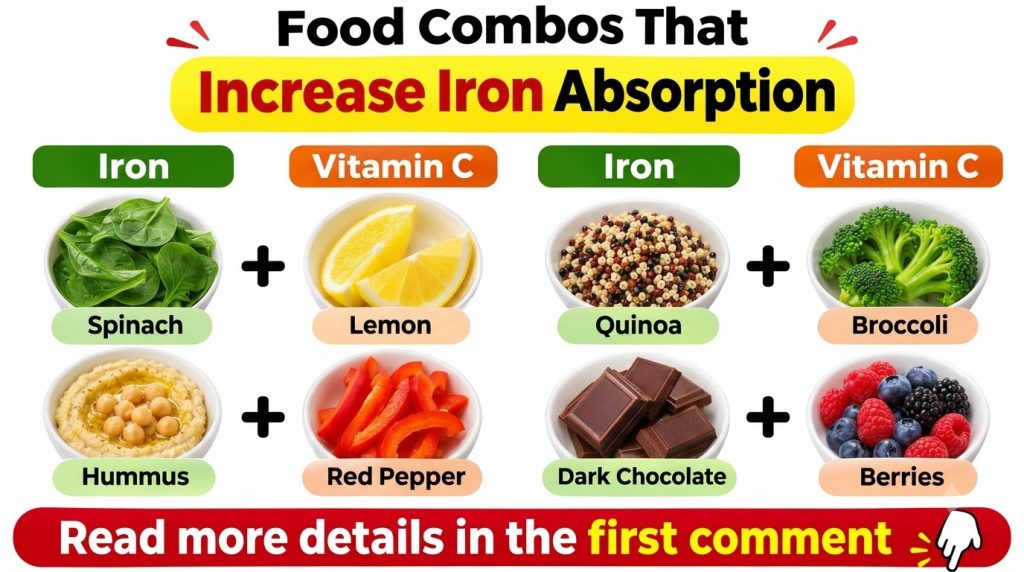
Spinach and Lemon
Squeeze fresh lemon juice over a spinach salad or sauteed greens. The lemon adds vitamin C, and the flavor makes leafy greens easier to enjoy.
Quinoa and Red Peppers
Toss cooked quinoa with diced red bell pepper, which is one of the richest everyday sources of vitamin C.
Hummus and Broccoli
Serve chickpea hummus with broccoli florets or raw vegetable sticks. Broccoli adds vitamin C, and chickpeas bring plant iron to the plate.
Mixed Berries
Berries such as strawberries and blueberries offer vitamin C. Add them to oatmeal, yogurt, or a breakfast bowl with iron-fortified cereal or seeds.
Quick Pairing Guide
| Iron Source | Vitamin C Partner | Why It Works |
|---|---|---|
| Spinach | Fresh lemon juice | Lemon adds vitamin C to a leafy green rich in plant iron |
| Quinoa | Red bell pepper | Peppers offer a high amount of vitamin C per serving |
| Chickpeas (hummus) | Broccoli | Broccoli adds vitamin C alongside a plant-based iron source |
| Fortified cereal or seeds | Strawberries or blueberries | Berries make a simple, colorful addition to breakfast |
Habits That Can Get in the Way
Some everyday habits may reduce iron absorption when they happen at the same meal. Keeping them separate can help.
- Tea and coffee, which contain compounds that may reduce iron uptake
- Large amounts of dairy or calcium supplements eaten with iron-rich foods
- Relying only on plant iron without any vitamin C at the table
About Dark Chocolate and Berries
Berries are a good source of vitamin C, so they work well in an iron-friendly meal. Dark chocolate is a different story. It is rich in plant compounds that may slightly reduce iron absorption when eaten alongside an iron-rich meal. Enjoy dark chocolate for its flavor and antioxidants, but it’s best to have it between meals rather than as a booster for iron.
Practical Tips for Better Iron Intake
- Add a squeeze of lemon or lime to beans, lentils, and leafy greens.
- Include a vitamin C food, such as peppers, citrus, or broccoli, in iron-rich meals.
- Drink tea or coffee between meals instead of with them.
- Cook in cast iron pans when possible, since small amounts of iron may transfer into food.
- Soak and sprout beans and grains to help reduce compounds that limit absorption.
Frequently Asked Questions
Does vitamin C really help iron absorption?
Yes, research consistently shows that vitamin C can increase absorption of non-heme iron from plant foods when eaten in the same meal.
Can I take iron supplements with orange juice?
Many people do, since vitamin C can support absorption. Ask your healthcare professional about the right timing and dose for your needs.
Which foods should I avoid with iron-rich meals?
Tea, coffee, and large amounts of dairy may reduce absorption if eaten at the same time. Spacing them apart is an easy fix.
Is spinach a good source of iron?
Spinach contains iron, but its absorption is limited by natural compounds called oxalates. Pairing it with vitamin C can help.
Do I need to track my iron every day?
Most people don’t need to track iron daily. If you’re concerned about your iron levels, a healthcare professional can recommend a proper test.
Can plant-based eaters get enough iron?
Yes, many plant-based eaters meet their needs by eating a variety of iron-rich foods with vitamin C sources throughout the day.
Conclusion
Small pairing choices can make your meals work harder for you. Add vitamin C foods to iron-rich dishes, keep tea and coffee between meals, and enjoy dark chocolate as a treat rather than an iron boost. For more ideas, explore our guides on high-protein vegetarian meals, healthy breakfast bowls, and foods for energy. Happy cooking!
This content is for educational purposes only and should not be considered medical advice. Consult a qualified healthcare professional for personalized dietary recommendations.