Calcium is one of the most talked-about minerals, and for good reason. It helps build and maintain strong bones and teeth, and it also plays a role in muscle movement, nerve signals, and healthy blood vessels. Many adults do not get as much as they need, so knowing where to find it can make a real difference.
This guide is for anyone who wants to eat more calcium from everyday foods. Whether you enjoy dairy, prefer plant-based meals, or simply want more variety on your plate, you will find easy options here. You will also learn how to combine them into simple meals.
Why Calcium Matters
Your body stores most of its calcium in your bones. Throughout life, it is constantly being renewed. Getting enough calcium from food supports bone strength, which is especially important as we age. Research suggests that a steady intake through the day works better than one large amount at once.
Most adults are generally advised to aim for about 1,000 to 1,200 milligrams per day, depending on age and sex. Your exact needs may vary, so check with a healthcare professional if you have specific concerns.
Top Calcium-Rich Foods
Here are some popular sources. Values are approximate and can vary by brand and preparation.
| Food | Serving | Approx. Calcium | Main Benefit |
|---|---|---|---|
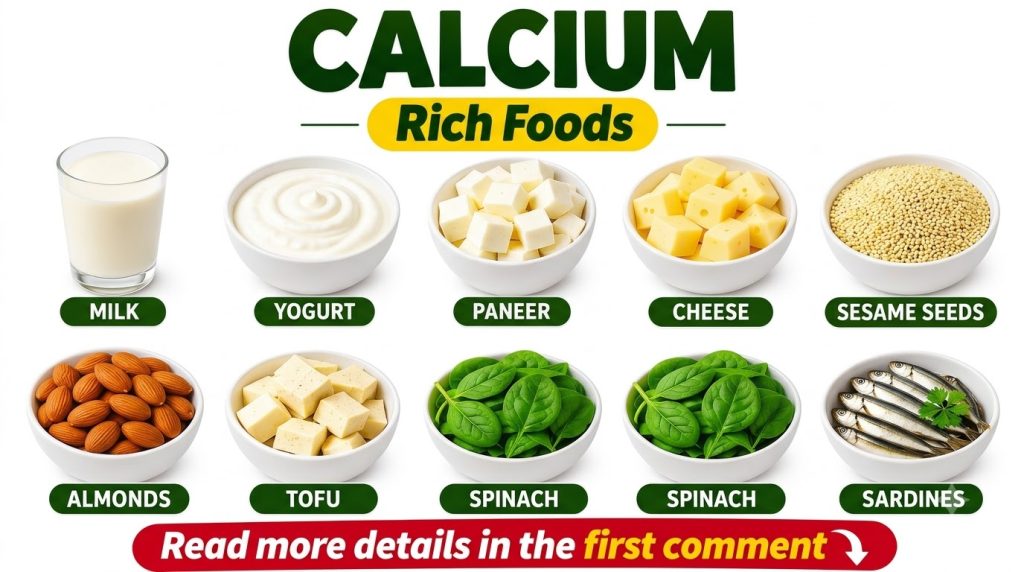
| Milk (low-fat) | 1 cup | About 300 mg | Easy to drink, adds protein |
| Plain yogurt | 1 cup | About 300 to 400 mg | Calcium plus probiotics in many brands |
| Canned sardines with bones | 3 oz | About 300 mg | Also provides omega-3 fats |
| Firm tofu (calcium set) | 1/2 cup | About 250 to 400 mg | Plant-based and versatile |
| Cooked spinach | 1 cup | About 245 mg | Rich in vitamins and fiber |
| Cheese (hard) | 1.5 oz | About 300 mg | Compact, flavorful source |
| Almonds | 1 oz | About 75 mg | Healthy fats and crunch |
| Sesame seeds | 1 tablespoon | About 90 mg | Easy to sprinkle on meals |
| Cooked kale | 1 cup | About 180 mg | Good source of vitamin K |
Dairy Sources
Milk, yogurt, and cheese are some of the most reliable calcium sources. Choosing plain yogurt lets you control sugar, and adding fruit or nuts keeps it satisfying. Paneer, a fresh cheese, also offers a good amount of calcium for vegetarian meals.
Plant-Based Sources
Tofu made with calcium sulfate, almonds, sesame seeds, and leafy greens can help you meet your needs without dairy. Look for calcium on the tofu label, since not all tofu is processed the same way.
Fish with Bones
Canned sardines and salmon with soft, edible bones are surprisingly rich in calcium. They also add protein and healthy fats, making them a smart addition to lunches and quick dinners.
Simple Ways to Eat More Calcium
- Start your day with yogurt, fruit, and a sprinkle of sesame seeds.
- Add shredded cheese or paneer to salads and vegetable wraps.
- Blend a cup of milk or fortified soy milk into smoothies.
- Toss a handful of almonds into oatmeal or trail mix.
- Stir-fry tofu and greens together for a filling dinner.
- Mash sardines onto whole-grain toast with lemon and pepper.
Helpful Tips for Getting Enough Calcium
- Spread your intake across meals instead of relying on one big serving.
- Pair calcium foods with vitamin D sources, such as eggs, fortified milk, or time in morning sunlight, since vitamin D supports calcium absorption.
- Limit very salty and heavily processed foods, which can affect how your body handles calcium.
- Remember that spinach contains calcium, but its oxalates reduce how much your body absorbs, so it should not be your only source.
- Read labels on plant milks and tofu to check for added calcium.
Who Should Pay Extra Attention
Growing children, teens, older adults, and people who avoid dairy often benefit from planning their calcium intake more carefully. Pregnant and breastfeeding individuals also have higher needs. If you have a medical condition or take medications that affect bone health, speak with your doctor or a registered dietitian.
Frequently Asked Questions
Can I get enough calcium without dairy?
Yes, many people do. Tofu made with calcium, almonds, sesame seeds, leafy greens, and fortified plant milks can all contribute. Planning a few of these foods each day makes it easier.
Is it better to get calcium from food or supplements?
Food is usually the best first choice because it provides other nutrients too. Supplements may be recommended in some cases, but ask a healthcare professional before starting one.
Does spinach count as a good calcium source?
Spinach contains calcium, but your body absorbs only a small portion of it. Kale and other greens are often better choices for absorbable calcium.
How much calcium should I eat in a day?
Many adults aim for about 1,000 to 1,200 milligrams daily. Needs vary by age, sex, and life stage, so personal guidance is helpful.
Can too much calcium be harmful?
Getting extra calcium from food is generally safe for most people. Very high supplement doses can cause problems, so it is wise to talk with a healthcare provider before taking large amounts.
Are sardines with bones safe to eat?
Canned sardines and salmon with soft bones are safe and nutritious for most people. Check the label for ingredients and sodium content.
Conclusion
Calcium is easy to work into everyday meals once you know your favorite sources. Dairy, fortified plant foods, tofu, leafy greens, nuts, seeds, and canned fish all have a place on your plate. Start with one or two new options this week and build from there. For more ideas, explore our guides on high protein breakfast ideas, healthy smoothie recipes, best foods for strong bones, and simple meal prep tips for busy weeknights.
This content is for educational purposes only and should not be considered medical advice. Consult a qualified healthcare professional for personalized dietary recommendations.