Good nutrition starts with the foods you choose every day. Some nutrients play a big role in how you feel, and many people don’t get enough of them. In this guide, we’ll look at four key nutrients: omega-3 fats, zinc, magnesium, and iron. You’ll learn where to find them and how to add them to everyday meals.
Why These Four Nutrients Matter
Each of these nutrients helps your body do important work. They support areas like heart health, immune function, muscle and nerve function, and energy levels. Think of them as team players. Your body needs all of them in the right amounts.
Omega-3 Fats: Good Fats for Heart Health
Omega-3 fats are healthy fats that many people don’t get enough of. Research suggests that eating fish or plant sources of omega-3 regularly is associated with heart health.
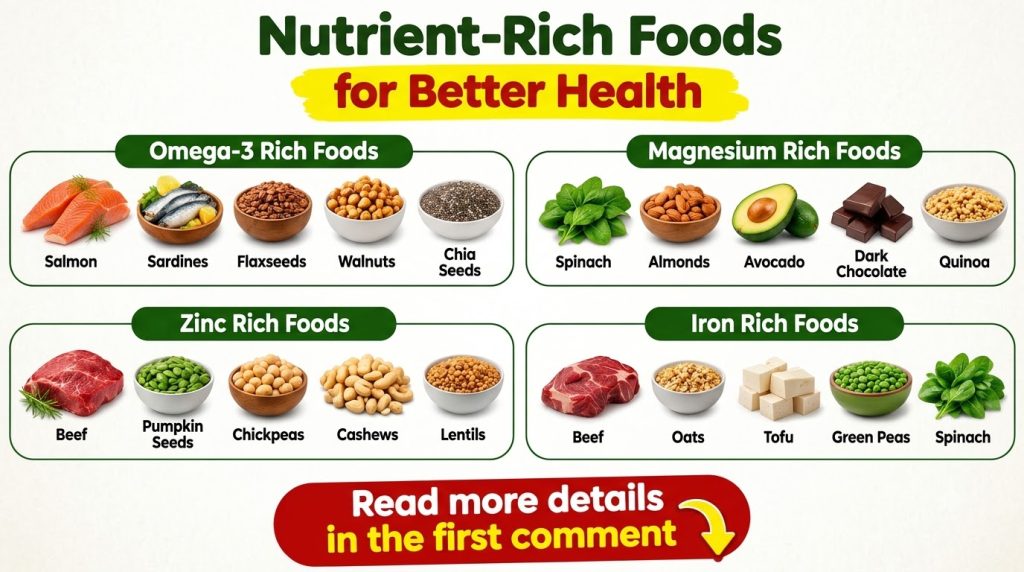
Top Food Sources
- Salmon and other fatty fish
- Walnuts
- Chia seeds
- Ground flaxseed
- Edamame
Zinc: Supports Immunity and Healing
Zinc helps your immune system work well and supports wound healing. It also plays a role in how your body makes proteins and DNA.
Top Food Sources
- Oysters
- Lean beef
- Pumpkin seeds
- Chickpeas
- Yogurt
Magnesium: A Helper for Muscles and Nerves
Magnesium takes part in hundreds of processes in the body. It supports normal muscle function, nerve signals, and healthy bones. Many everyday foods contain it, so you can get plenty from a varied diet.
Top Food Sources
- Spinach and other leafy greens
- Almonds
- Black beans
- Pumpkin seeds
- Avocado
Iron: Essential for Energy
Iron helps your blood carry oxygen throughout your body. Without enough iron, you may feel tired or weak. Plant-based iron is easier to absorb when you eat it with vitamin C.
Top Food Sources
- Lentils
- Red meat and poultry
- Tofu
- Fortified breakfast cereal
- Spinach
Quick Food Comparison
| Nutrient | Easy Food Sources | Main Benefit |
|---|---|---|
| Omega-3 | Salmon, walnuts, chia seeds | Supports heart health |
| Zinc | Pumpkin seeds, chickpeas, beef | Supports immunity |
| Magnesium | Almonds, black beans, spinach | Supports muscles and nerves |
| Iron | Lentils, tofu, fortified cereal | Supports energy and oxygen transport |
Easy Ways to Add More to Your Plate
- Sprinkle chia seeds or ground flaxseed on oatmeal or yogurt.
- Add lentils or black beans to soups, salads, and tacos.
- Keep a jar of almonds or pumpkin seeds as a snack.
- Pair iron-rich foods with citrus, peppers, or tomatoes.
- Choose fish twice a week when it fits your budget.

Practical Tips
- Eat a variety of colorful foods each day.
- Use canned beans or lentils to save time in the kitchen.
- Store nuts and seeds in the fridge to keep them fresh.
- Read labels on fortified foods to see how much iron or zinc they provide.
Frequently Asked Questions
Do I need supplements for these nutrients?
Most people can meet their needs through food. Some people may need supplements, but a healthcare professional should guide that choice.
Are plant sources of omega-3 as good as fish?
Plant sources like walnuts and flaxseed provide ALA, a form of omega-3. Fish provides EPA and DHA, which the body uses in different ways. Both can fit into a healthy diet.
Why does vitamin C matter for iron?
Vitamin C helps your body absorb iron from plant foods. Pairing lentils with bell peppers or citrus is a simple way to do this.
Can I get enough zinc without eating meat?
Yes, many plant foods contain zinc, including beans, nuts, seeds, and whole grains. Planning meals carefully helps.
How much magnesium do I need each day?
Needs vary by age, sex, and health status. Check with a healthcare professional for personal guidance.
Can too much iron be harmful?
Yes, too much iron can cause problems for some people. Avoid high-dose iron supplements unless a doctor recommends them.
Conclusion
Omega-3, zinc, magnesium, and iron are valuable nutrients that fit easily into a balanced diet. Start with one or two new foods this week and build from there. Explore more healthy eating guides on our site for recipe ideas and nutrition tips.
This content is for educational purposes only and should not be considered medical advice. Consult a qualified healthcare professional for personalized dietary recommendations.