Walking into a grocery store without a plan can make healthy eating feel harder than it needs to be. A simple list built around a few food groups takes the guesswork out of shopping and helps you put balanced meals on the table all week.
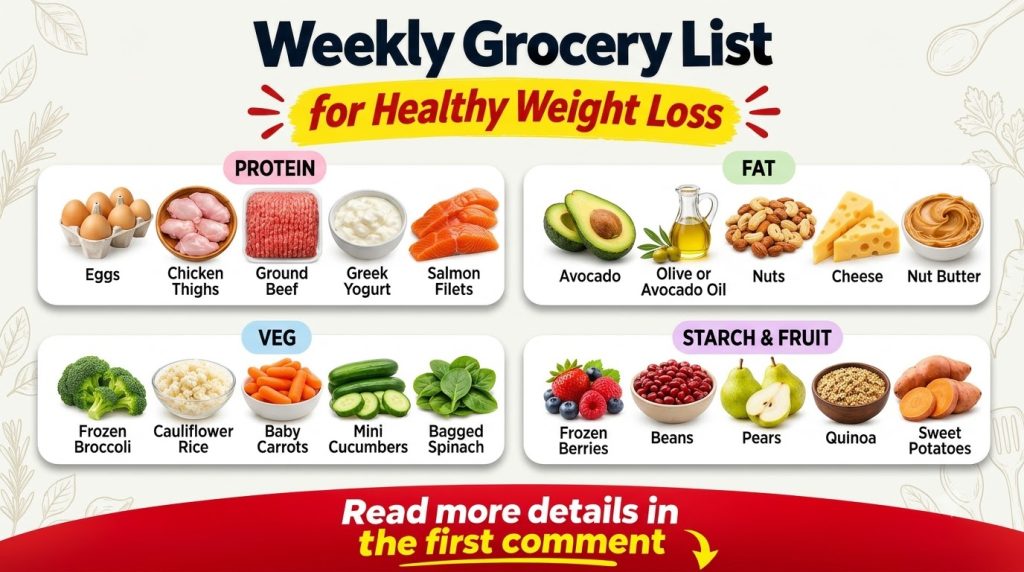
This guide walks you through a practical healthy grocery list. It covers protein, healthy fats, vegetables, and smart starches and fruit. Whether you want to lose weight gradually or simply eat better, these staples make shopping easier.
Why a Healthy Grocery List Helps
A written list keeps your cart focused on whole foods. It also reduces impulse buys of heavily processed snacks. Many people find that planning meals ahead leads to more home cooking and fewer last-minute takeout orders.
Lean Proteins to Keep on Hand
Protein helps you feel full and supports muscle health. Research suggests that eating enough protein at each meal can make it easier to stick with a balanced eating pattern. Good everyday choices include:
- Eggs and egg whites
- Plain Greek yogurt
- Skinless chicken breast and turkey
- Lentils, chickpeas, and black beans
- Tofu and tempeh
- Fish such as salmon, cod, or canned tuna
Healthy Fats for Flavor and Fullness
Fats are essential for your body, and they also make meals taste great. Choosing unsaturated fats from whole foods is a good habit. Consider adding these to your list:
- Extra virgin olive oil
- Avocados
- Natural peanut butter or almond butter with no added sugar
- Nuts and seeds such as walnuts, almonds, and chia seeds
Portion sizes still matter, since fats are calorie-dense. A small spoonful of nut butter or a few slices of avocado can go a long way.
Vegetables for Color and Fiber
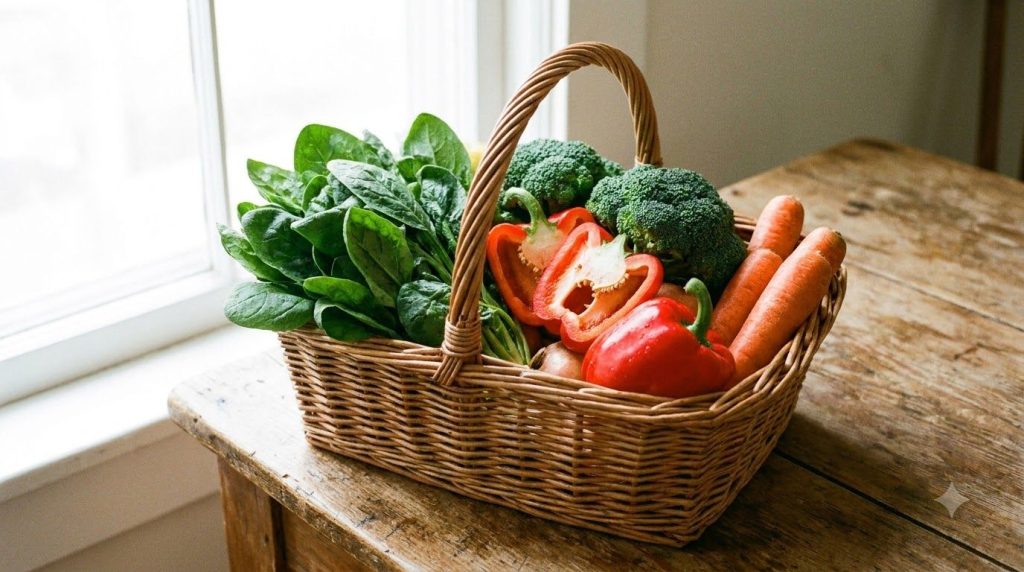
Vegetables provide fiber, vitamins, and minerals with relatively few calories. Aim for a variety of colors each week. Useful picks include:
- Leafy greens like spinach, kale, and romaine
- Broccoli, cauliflower, and Brussels sprouts
- Bell peppers, carrots, and zucchini
- Tomatoes, cucumbers, and onions
Fruits and Smart Starches
Fruit adds natural sweetness and fiber. Whole grains give you steady energy and help keep you full between meals.
- Berries such as blueberries, strawberries, and raspberries
- Pears, apples, and oranges
- Oats and brown rice
- Quinoa and whole-wheat pasta
- Sweet potatoes and whole-grain bread
Sample Weekly Shopping Plan
| Category | Examples | Why It Helps |
|---|---|---|
| Protein | Eggs, Greek yogurt, lentils | Supports fullness and muscle health |
| Healthy Fats | Olive oil, avocado, nuts | Adds flavor and satisfying texture |
| Vegetables | Spinach, broccoli, peppers | Provides fiber and micronutrients |
| Fruits and Starches | Berries, pears, oats, brown rice | Offers natural sweetness and lasting energy |
Practical Shopping Tips
- Plan three or four dinners before you shop.
- Shop the perimeter of the store first, where fresh foods are often found.
- Buy frozen vegetables and fruit for longer-lasting options.
- Check labels for added sugar and sodium.
- Prep vegetables and portion snacks soon after you get home.
Frequently Asked Questions
Is frozen produce as healthy as fresh?
Yes, frozen fruits and vegetables are often picked at peak ripeness and frozen quickly. They can be a nutritious and budget-friendly choice.
How much protein should I eat in a day?
Needs vary by age, body size, and activity level. A healthcare professional or registered dietitian can help you find the right amount for you.
Are healthy fats bad for weight loss?
Healthy fats are part of a balanced diet. Watching portion sizes helps keep calories in a comfortable range.
What if my family does not like vegetables?
Try roasting them, adding them to sauces, or blending them into soups. Letting kids help choose produce can also build interest.
Can I eat carbs and still eat healthy?
Yes. Whole grains, fruits, and starchy vegetables can fit well into a healthy eating plan when you choose them mindfully.
How often should I update my grocery list?
Many people find it helpful to review their list weekly. Adjust based on what your household enjoys and what you already have at home.
Conclusion
A healthy grocery list is a simple tool that makes nutritious eating easier. Focus on lean protein, healthy fats, colorful vegetables, and whole fruits and grains. Looking for more ideas? Explore our guides on healthy breakfast ideas, high protein meal prep, and gut-friendly foods to keep building your routine.
This content is for educational purposes only and should not be considered medical advice. Consult a qualified healthcare professional for personalized dietary recommendations.