Magnesium is one of those nutrients you rarely think about, yet your body uses it for hundreds of jobs. It helps support muscle function, nerve signals, and healthy blood sugar levels. The good news is that you can get plenty of it from everyday foods you may already have in your kitchen.
In this guide, you will learn which foods are rich in magnesium, how they compare, and simple ways to add more of them to your meals.
Why Magnesium Matters
Magnesium plays a role in energy production, bone health, and normal muscle and nerve activity. Many adults do not get as much as they need from their diet, according to nutrition researchers.
Eating a variety of whole foods is the easiest way to boost your intake. Nuts, seeds, leafy greens, and beans are especially helpful.
Top Magnesium-Rich Foods
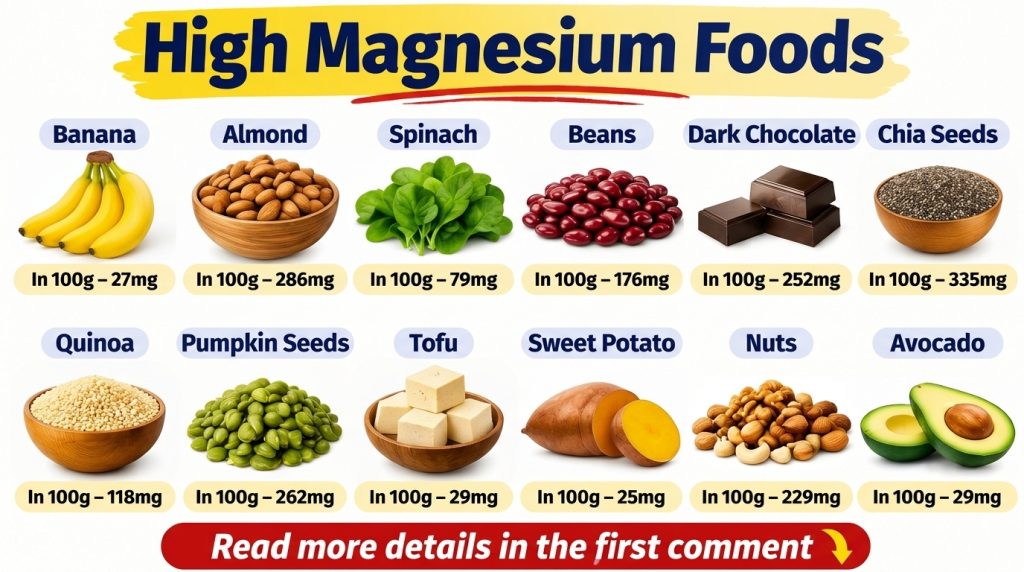
Here are some popular foods with notable magnesium content. Values are approximate and can vary by brand, variety, and preparation.
| Food | Approximate Magnesium (per 100g) | Main Benefit |
|---|---|---|
| Pumpkin seeds | About 590 mg | Very concentrated source for snacks and salads |
| Chia seeds | About 335 mg | Easy to stir into yogurt or oatmeal |
| Almonds | About 270 mg | Crunchy snack with healthy fats |
| Dark chocolate (70 to 85% cacao) | About 230 mg | Rich flavor when enjoyed in small portions |
| Quinoa (raw) | About 200 mg | Versatile whole grain alternative to rice |
| Spinach | About 79 mg | Leafy green that fits into almost any meal |
| Avocado | About 29 mg | Creamy base for healthy spreads and dressings |
Quick Look at Almonds and Spinach
Almonds provide about 270 mg of magnesium per 100g, while spinach offers about 79 mg. Both are easy to include, and they work well together in a salad topped with a small handful of nuts.
Simple Ways to Eat More Magnesium
- Sprinkle pumpkin or sunflower seeds over salads, soups, or roasted vegetables.
- Stir chia seeds into overnight oats or yogurt for an easy breakfast boost.
- Add a handful of spinach to smoothies, omelets, or pasta sauce.
- Swap white rice for quinoa or brown rice a few times each week.
- Keep unsalted almonds in your bag or desk drawer for a satisfying snack.
- Choose dark chocolate with high cacao content and enjoy a small square after dinner.
Who May Benefit Most From Extra Magnesium
Older adults, people who eat mostly processed foods, and those who exercise intensely may have higher needs. Some people also have health conditions that affect absorption. A healthcare professional can help you decide whether your diet is meeting your needs.
Practical Tips for Success
- Build meals around whole foods like beans, seeds, nuts, and leafy greens.
- Start small by adding one magnesium-rich food to your daily routine.
- Choose unsalted nuts and seeds to keep sodium in check.
- Pair spinach with a healthy fat, such as olive oil, to make meals more satisfying.
- Keep a few favorites on hand so healthy choices are always easy.
Frequently Asked Questions
Which food has the most magnesium?
Pumpkin seeds are one of the most concentrated sources of magnesium among common foods. A small handful can make a meaningful contribution to your daily intake.
Can I get enough magnesium from food alone?
For most people, a varied diet with nuts, seeds, beans, and whole grains can provide a good amount of magnesium. Your needs depend on age, sex, and health status.
Are spinach and almonds good sources of magnesium?
Yes. Almonds are a concentrated source, and spinach offers a useful amount, especially when eaten regularly as part of a balanced diet.
Is dark chocolate really a good source?
Dark chocolate with high cacao content contains a fair amount of magnesium. Because it also contains sugar and calories, enjoying it in small portions is a good approach.
Can cooking reduce magnesium in vegetables?
Some magnesium can be lost when vegetables are boiled and the water is discarded. Steaming, roasting, or adding leftover cooking liquid to soups can help keep more of it.
Should I take a magnesium supplement?
Supplements are not right for everyone. Talk with a qualified healthcare professional before starting one, especially if you take medications or have kidney concerns.
Conclusion
Boosting your magnesium intake can be simple and delicious. Almonds, spinach, seeds, beans, and whole grains all make it easy to eat more of this important mineral. Try one or two swaps this week and notice how they fit into your routine. Explore more healthy food guides on our site for new recipe and nutrition ideas.
This content is for educational purposes only and should not be considered medical advice. Consult a qualified healthcare professional for personalized dietary recommendations.