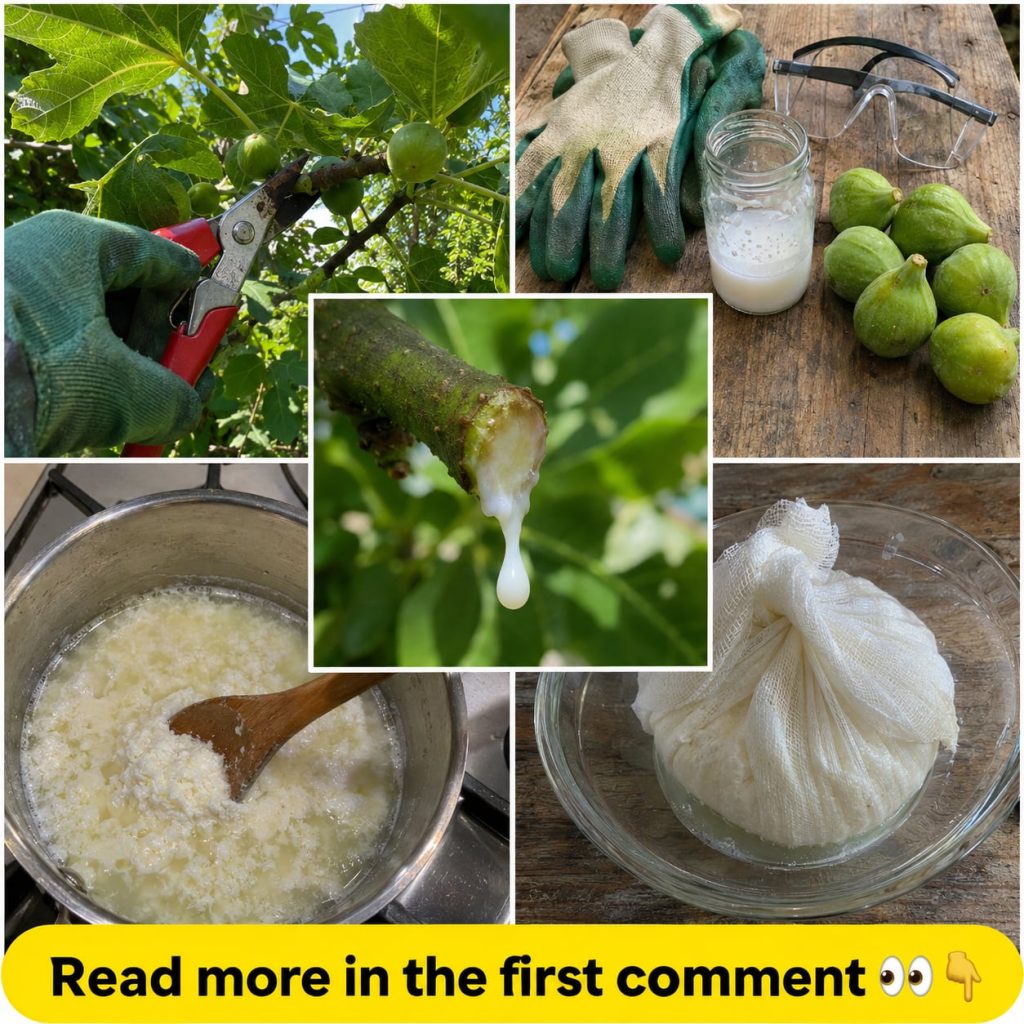
Most people snap a fig twig and never think twice about the milky drop that follows. That liquid is fig latex, and it is one of the most misunderstood substances in the garden. Some traditional cheese makers used fig latex to curdle milk, which is why the idea of fig tree milk transforming warm milk got so much attention. The practical lesson is different: the sap stays on the tree, while fig leaves can give warm milk a gentle, green, nutty flavor you can safely make at home.
What Is Fig Tree Milk?
Fig tree milk is the white latex that flows from leaves, stems, and unripe fruit when they are cut. It contains plant enzymes, including ficin, which can break down proteins. That is the same reason it can curdle milk. For home cooking, this makes raw sap a poor choice for drinks. It can also irritate the skin and mouth, and some people develop redness after handling it.
Quick Tip: If you prune a fig tree, wear gloves and wash your hands and tools afterward. Wipe any sap off surfaces before it dries.
Ingredients
- 2 fresh, clean, undamaged fig leaves (or 1 dried fig leaf)
- 1 cup whole milk, or unsweetened oat milk
- 1 cinnamon stick (optional)
- 2 thin slices fresh ginger (optional)
- 1 teaspoon raw honey or maple syrup (optional)
Approximate Measurements
Use about 2 medium fresh leaves per cup of milk. Leaves vary in size, so start with less and taste after 5 minutes. Keep sweeteners to 1 teaspoon per cup. Too many leaves can make the drink bitter and grassy.
Formula and Quick Recipe
| Element | Amount for 1 Cup | Purpose |
|---|---|---|
| Fresh fig leaves | 2 medium | Green, nutty aroma |
| Whole milk or oat milk | 1 cup | Base liquid |
| Cinnamon stick | 1 small | Warm spice note |
| Honey or maple syrup | 1 tsp | Gentle sweetness |
Step-by-Step Method
- Rinse the fig leaves under cool water and pat them dry.
- Tear the leaves into smaller pieces so they release more aroma.
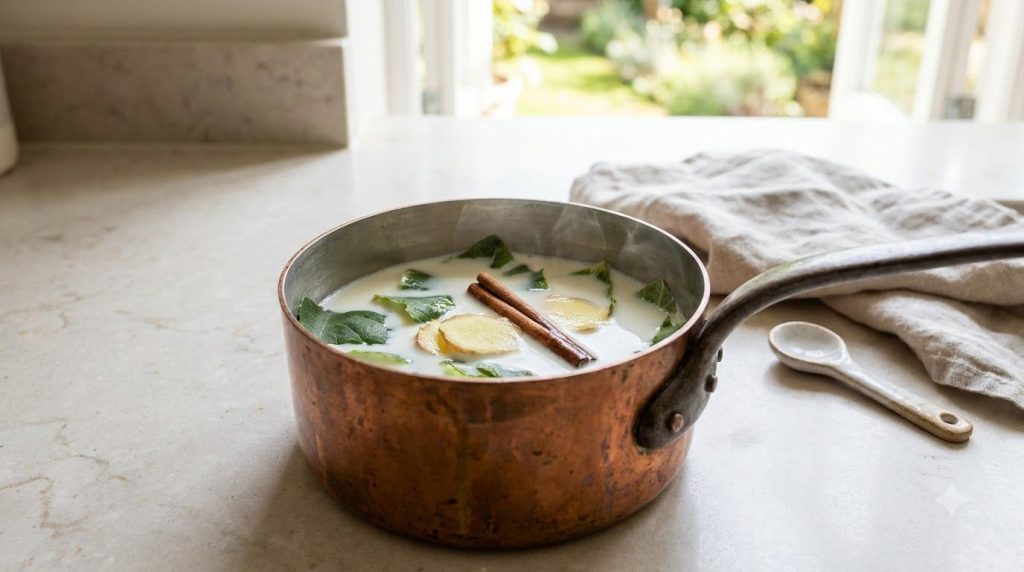
- Pour the milk into a small saucepan and add the leaves, cinnamon, and ginger.
- Warm over medium-low heat until steam rises. Do not let it boil.
- Steep off the heat for 8 to 10 minutes.
- Strain through a fine sieve and stir in honey if you want sweetness.
How to Use It
Serve the milk warm in the evening as a simple drink. You can also use it as a base for oatmeal or chai-style tea. Before you pour, taste a small spoonful. It should smell green and mild, not sharp.
How Often to Use It
Most people enjoy this drink once or twice a week. Start with one cup and see how your body responds. Stop if you notice stomach discomfort, itching, or any unusual reaction.
How to Choose Fig Leaves
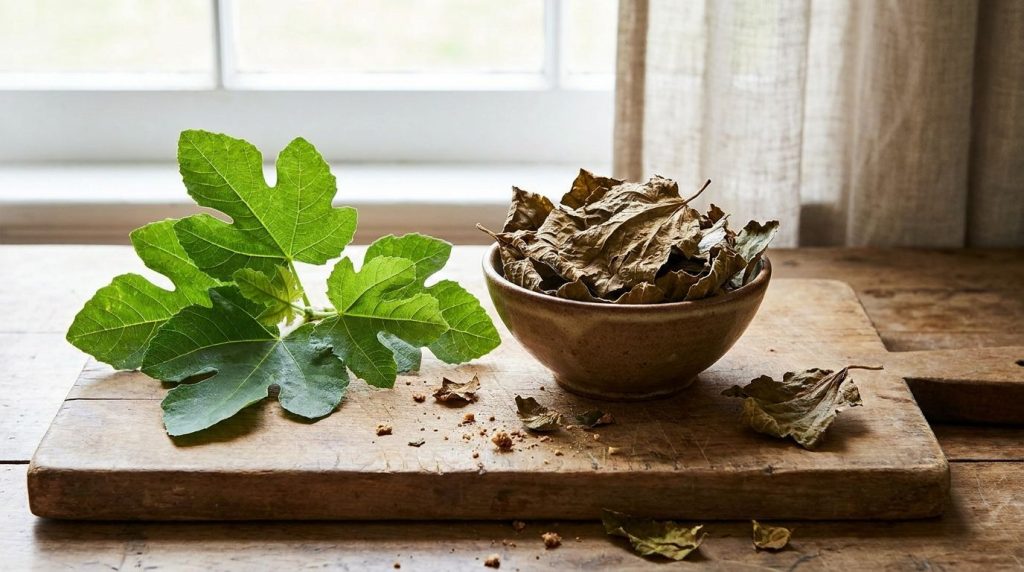
Choose leaves that are bright green, firm, and free of spots, holes, or visible spray residue. Pick from a tree you know has not been treated with chemicals. Grocery sources of fresh leaves are rare, so many people use dried leaves from specialty herb shops or grow their own tree.
Storage
Use fresh leaves within one day. Keep them wrapped in a dry paper towel in the refrigerator. Dried leaves should be stored in an airtight jar away from light and moisture. Finished milk should be refrigerated and used within 24 hours.
Fresh vs Dried vs Sap
| Option | Best Use | Shelf Life | Safety Note |
|---|---|---|---|
| Fresh leaves | Warm milk, tea | 1 day refrigerated | Rinse well |
| Dried leaves | Convenient infusions | 6 to 12 months | Check for mold |
| Raw sap | Not for drinks | Not recommended | Irritating, avoid |
Practical Tips
- Use leaves from the middle of the tree, not the oldest or yellowing ones.
- Keep the heat low to protect the milk texture.
- Strain well so no leaf fragments remain.
Common Mistakes
- Using sap instead of leaves, which can irritate the mouth and throat.
- Boiling the milk, which can make it bitter and separate.
- Steeping too long, which adds a grassy taste.
- Using leaves from sprayed or damaged trees.
Cautions and Who Should Avoid It
Do not drink fig latex or use it on broken skin. People with latex sensitivity, allergies to figs or birch pollen, or sensitive skin should avoid fresh leaves and test a small amount first. Pregnant or breastfeeding women, children, and anyone taking medication should check with a qualified health professional before adding new herbal drinks to their routine.
Quick Summary
- Best preparation: warm milk steeped with fresh or dried fig leaves.
- Best use case: a mild, cozy evening drink.
- Storage: fresh leaves one day, dried leaves in an airtight jar, finished milk 24 hours.
- Avoid: raw fig sap, boiling, and damaged or sprayed leaves.
FAQ
Can I use fresh or dried fig leaves?
Both work. Fresh leaves are brighter, while dried leaves are easier to store and use.
Can I drink the milky sap?
No. Fig sap is irritating and should not be consumed.
How long does the milk last?
Refrigerate it and use within 24 hours.
Can I freeze fig leaves?
Fresh leaves do not freeze well. Dry them instead.
Can I reuse the leaves?
One reuse is possible for a lighter flavor, but the aroma will be weaker.
Who should avoid it?
People with latex sensitivity, fig allergies, or medical conditions should check with a professional first.
Read more: learn how to dry fig leaves at home in our full guide.
You may also like: our guide to simple homemade herbal teas.
Continue with: our practical overview of natural remedies and kitchen storage.
Conclusion
The milky secret of the fig tree is best respected, not swallowed. Keep the sap on the branch, and use clean fig leaves for a gentle, aromatic warm milk. Start small, store carefully, and let the leaves do the work.