Healthy soil is the foundation of a thriving garden. Whether you are growing tomatoes on a balcony, filling flower beds, or planning a larger vegetable plot, the quality of your soil shapes how well your plants grow. Animal manure is one of the oldest and most widely used organic soil amendments, and when it is handled correctly, it can add valuable organic matter and nutrients to your garden.
Why Animal Manure Helps Your Garden
Manure improves soil structure. Organic matter helps sandy soil hold water and helps heavy clay soil drain better and feel lighter to work. It also feeds the living organisms in the soil, such as earthworms and beneficial microbes, which play a key role in breaking down nutrients so plants can absorb them.
Manure also supplies nutrients such as nitrogen, phosphorus, and potassium, although the amounts vary widely by animal, diet, and bedding. Because nutrient levels differ, it is best to think of manure as a slow-release soil builder rather than a quick fix.
Choosing the Right Manure for Your Plants
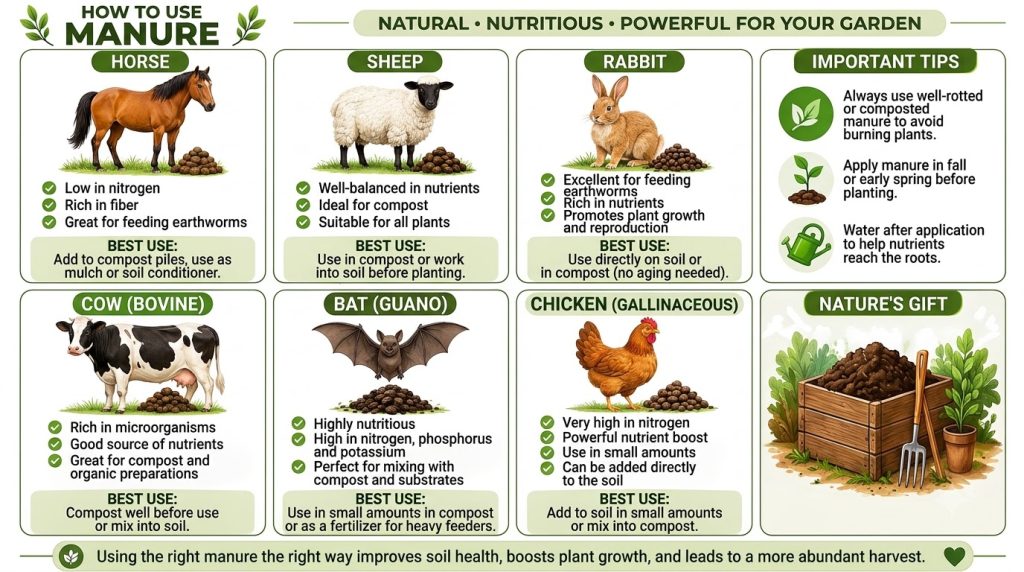
Each type of manure has its own strengths. Here is a simple guide to the most common options:
- Horse manure: Usually mixed with straw or bedding. It works well for improving soil texture, but it should be composted until it is well broken down before use to reduce weed seeds and help prevent heating or burning.
- Cow manure: A gentle, reliable choice for beds and borders. Aged or composted cow manure is ideal for vegetables and flowers.
- Sheep manure: Often sold as small pellets that are easy to spread. It is a good option for vegetable gardens and lawns when it is applied in moderation.
- Rabbit manure: Generally considered one of the gentlest options, and it can often be used in small amounts with less aging than other manures. It is a favorite for container plants and seedlings when well-mixed into potting mix.
- Chicken manure: Rich in nutrients and very concentrated. It should always be composted or heavily diluted, and it is best used sparingly around heavy feeding crops.
- Bat guano: A specialty amendment, prized by many growers for its concentrated nutrients. Use it in small quantities and follow the product instructions carefully.
Important Tips Before You Start
Using manure successfully comes down to a few simple habits:
- Compost first when possible. Composting manure for several months kills many weed seeds and pathogens and reduces the risk of burning plant roots.
- Apply in moderation. A layer of about 2 to 5 centimeters worked into the top soil is a common starting point for beds, but always adjust based on your soil test and plant needs.
- Keep manure away from edible parts. Avoid letting fresh manure touch leafy greens and root crops, and wash all harvested produce thoroughly.
- Mix it in well. Work manure into the soil rather than leaving it piled on the surface, especially before planting.
- Wash your hands. Always wash your hands after handling manure, and wear gloves when you work with it.
Plant Care Ideas to Try This Season
Start small. Add a thin layer of well-aged manure to one vegetable bed or a few flower borders, then observe how your plants respond over a full growing season. Pair manure with mulch to help retain moisture, and consider a simple soil test to guide your next steps. Over time, you will develop a feel for what your garden needs.
Final Thoughts
Animal manure can be a wonderful addition to an organic garden when you choose the right type, use it in the right amount, and give it time to mature. With a little planning, you can build richer soil, support healthier plants, and enjoy a more productive and beautiful garden.