Banana peels are one of the most common kitchen scraps, yet they often end up in the trash. With a little patience, they can be turned into a simple homemade liquid feed that many gardeners use to give their plants a gentle nutrient boost. This guide explains how to make banana peel water, how to use it safely, and what results you can realistically expect.
What Banana Peel Fertilizer Can and Cannot Do
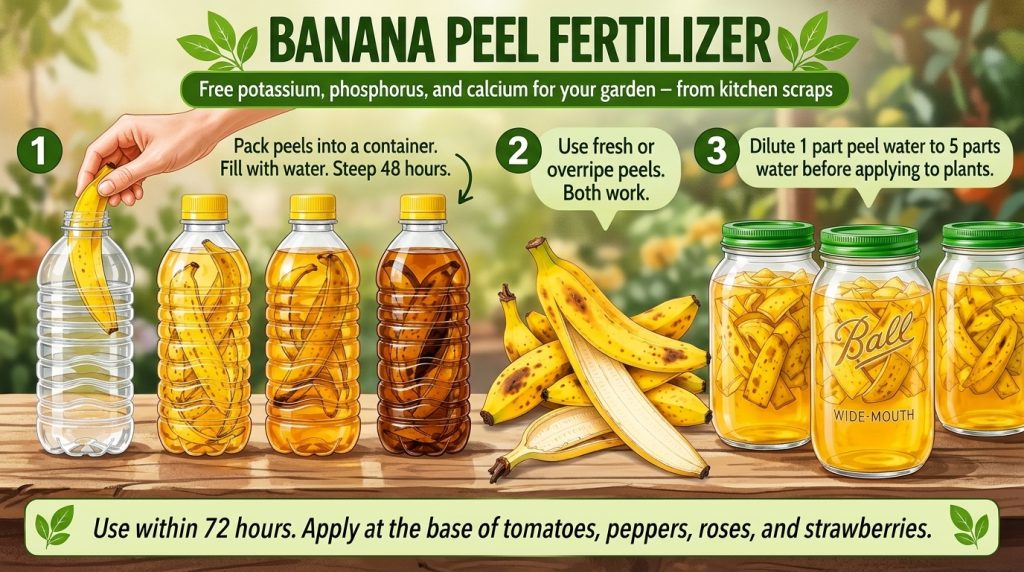
Banana peels contain potassium, along with smaller amounts of phosphorus, magnesium, and other minerals. Homemade banana peel water is best thought of as a mild, organic supplement rather than a complete fertilizer. It works well as one part of a healthy routine that also includes good soil, consistent watering, adequate sunlight, and regular additions of compost.
What You Will Need
- Two to four ripe or slightly overripe banana peels, chopped into small pieces
- A clean glass jar or bottle with a lid
- About two cups of water, preferably rainwater or dechlorinated tap water
- A fine strainer or cheesecloth
- A clean container for storing the finished liquid
Step-by-Step: Making Banana Peel Water
- Chop the banana peels into small pieces. Smaller pieces release nutrients more easily.
- Place the pieces in your jar and cover them with water, leaving some space at the top.
- Loosely cover the jar and set it in a shaded spot away from direct sun. Let it steep for three to seven days, stirring once a day if you remember.
- When the liquid has darkened and the peels look soft, strain out the solids. You can add the spent peels to your compost pile.
- Store the strained liquid in a clean, covered container in the refrigerator if you will not use it within a few days.
How to Use It Safely
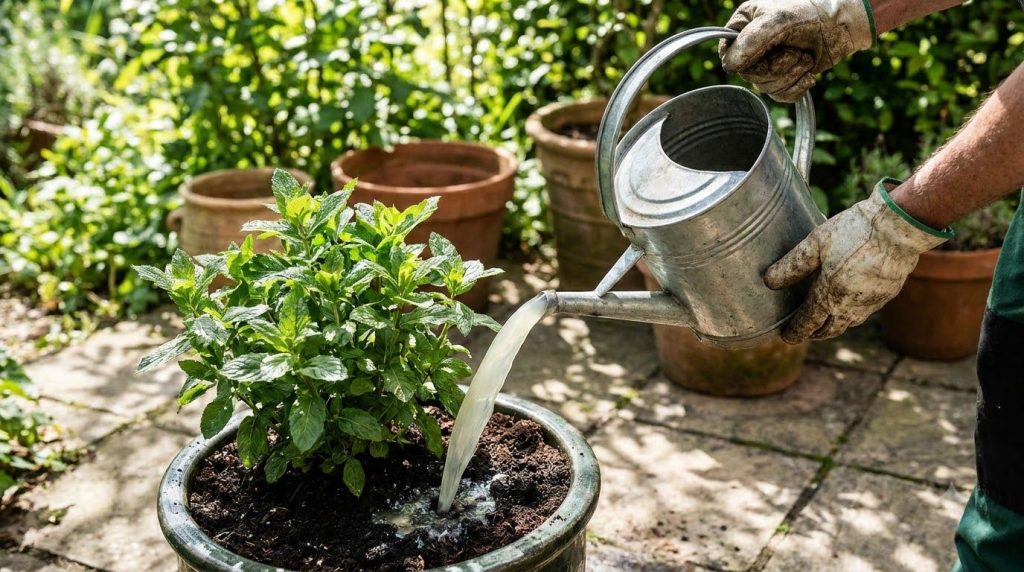
Banana peel water should always be diluted before it touches your plants. A useful rule is to mix the strained liquid with water until it looks like a light tea color. Pour it around the base of the plant, avoiding heavy splashes on leaves. Apply it every two to four weeks during the active growing season, and skip it during the dormant months.
Tips for Better Results
- Use fresh peels from organic bananas when possible, since pesticide residue can end up in the liquid.
- Pair the liquid with compost and mulch to build healthy soil over time.
- Test on one plant first to see how it responds before using it across your garden.
- Label your container with the date so you know how long it has been stored.
Common Mistakes to Avoid
Using the liquid undiluted can burn roots and leave an unpleasant smell around your garden beds. Letting the mixture sit for too long in warm weather can also cause strong odors and mold. If the liquid smells sour, looks fuzzy, or has an off color, discard it and start a fresh batch.
Final Thoughts
Making banana peel fertilizer is a simple, low-cost way to reduce kitchen waste and add a gentle source of potassium to your plant care routine. It will not replace a balanced fertilizer or fix poor soil on its own, but used thoughtfully alongside good gardening habits, it can be a satisfying part of an organic approach to growing flowers, vegetables, and indoor plants.