Fluffy Potato Bread Buns: Your New Favorite Sandwich Bun
Potato bread buns are soft, slightly sweet, and sturdy enough to hold a juicy burger or a stack of deli meat without falling apart. Adding cooked potato to the dough gives the crumb a tender, cloud-like texture that lasts longer than a basic white roll. If you want a homemade bun that works for everyday sandwiches, this is a great recipe to keep in your rotation.

Why You’ll Love This Recipe
- Soft texture: The cooked potato keeps the crumb moist and tender for days.
- Simple ingredients: You likely have everything you need in your pantry and fridge.
- Versatile: These buns work for burgers, sliders, chicken sandwiches, and breakfast sandwiches.
- Make-ahead friendly: You can shape the buns in advance and store them for later.
Ingredients
- 1 medium russet potato (about 8 oz / 225 g), peeled and cut into small cubes
- 1 cup (240 ml) warm potato cooking water, plus more if needed
- 2 1/4 tsp (7 g, or 1 packet) active dry yeast
- 1 tbsp (12 g) granulated sugar
- 3 cups (375 g) all-purpose flour, plus extra for kneading
- 1 tsp (6 g) fine sea salt
- 3 tbsp (43 g) unsalted butter, softened
- 1 large egg, at room temperature
- 1 egg beaten with 1 tbsp (15 ml) milk, for egg wash (optional)
Ingredient Notes
Russet potatoes are starchy and mash well, which helps the dough stay soft. Waxy potatoes can work, but the texture may be slightly denser. The potato cooking water adds moisture and a little flavor, so save it before draining. If it has cooled too much, warm it gently until it feels comfortably warm to the touch, not hot.
Butter adds richness and softness. Use softened butter so it blends smoothly into the dough. You can swap in the same amount of vegetable oil for a slightly less rich bun.
Equipment You’ll Need
- Medium saucepan
- Potato masher or fork
- Large mixing bowl
- Stand mixer with a dough hook, or a sturdy spatula and clean hands
- Baking sheet lined with parchment paper
- Pastry brush (for egg wash)
- Kitchen scale (optional, but helpful for accuracy)
How to Make Fluffy Potato Bread Buns
- Cook the potato. Place the cubed potato in a saucepan and cover with water by about an inch. Bring to a boil, then simmer for about 10 to 15 minutes, until a fork slides in easily. Drain, reserving 1 cup (240 ml) of the cooking water. Mash the potato until smooth and let it cool until warm, not hot. You should have about 1 cup of mashed potato.
- Activate the yeast. In a small bowl, combine the reserved warm potato water, sugar, and yeast. Stir gently and let it sit for about 5 minutes. It is ready when the surface looks foamy or bubbly.
- Mix the dough. In a large bowl or mixer bowl, combine 2 1/2 cups (310 g) of the flour and the salt. Add the mashed potato, yeast mixture, egg, and softened butter. Mix until a shaggy dough forms.
- Knead. Knead by hand for about 8 to 10 minutes, or use a dough hook on medium-low for about 6 to 8 minutes. Add the remaining flour a tablespoon at a time if the dough is very sticky. The dough is ready when it feels smooth, soft, and springs back slightly when poked.
- First rise. Place the dough in a lightly oiled bowl, cover it, and let it rise in a warm spot for 60 to 90 minutes, or until doubled in size. Rise times vary depending on your kitchen temperature.
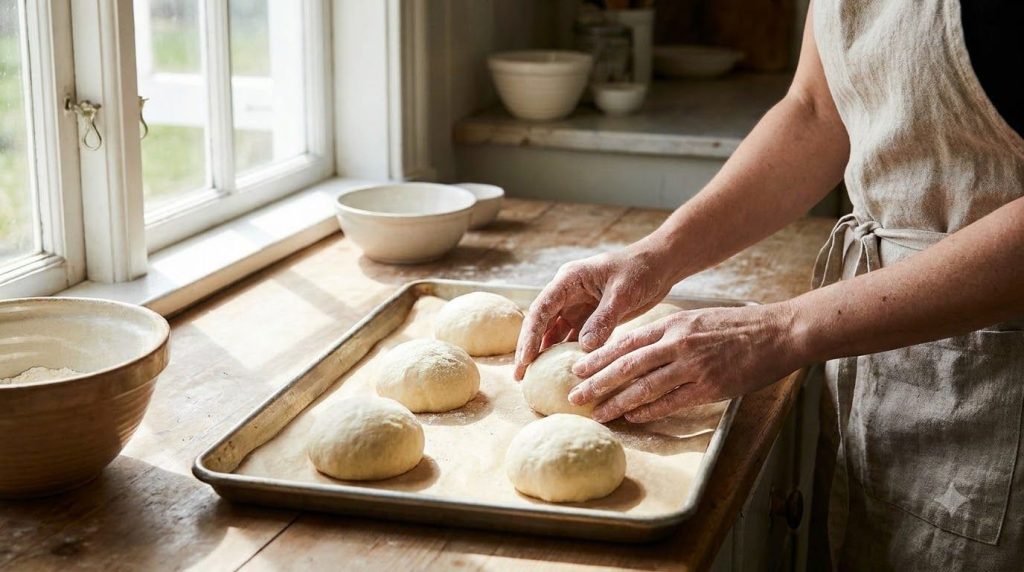
- Divide and shape. Punch down the dough gently and divide it into 8 equal pieces, each about 70 to 75 g. Roll each piece into a ball by tucking the edges underneath. Place the buns on a parchment-lined baking sheet with a few inches of space between them.
- Second rise. Cover the buns loosely and let them rise for 30 to 45 minutes, until puffy and nearly touching. Gently press a finger into one bun. If the dent slowly springs back, they are ready.
- Bake. Preheat your oven to about 375°F (190°C). Brush the buns with egg wash if you like a shiny, golden crust. Bake for about 15 to 18 minutes, until deep golden brown. An instant-read thermometer inserted into the center should read about 190°F (88°C) for fully baked buns.
- Cool. Transfer the buns to a wire rack and let them cool for at least 15 minutes before slicing. Cooling helps the interior set so the crumb stays soft.
Pro Tips for the Best Results
- Save more potato water than you think you need. Dough hydration varies with flour and potato size.
- Let the mashed potato cool to warm before adding yeast, since very hot potato can harm the yeast.
- Weigh your flour if you can. Scooping flour by the cup often adds too much and makes buns dry.
- Use the windowpane test. Stretch a small piece of dough thinly; if it stretches without tearing, the gluten is developed.
- Shape the buns with a little tension on the surface to help them rise upward instead of spreading flat.
- Keep the buns covered during rising so the surface does not dry out and form a tough skin.
Common Mistakes to Avoid
- Dough that is too dry: Add potato water one tablespoon at a time. The dough should feel soft and slightly tacky, not stiff.
- Buns that do not rise: Check that the yeast was foamy before adding it. Old yeast or potato water that is too hot can prevent a good rise.
- Dense buns: Under-kneading or rushing the rise can make the crumb tight. Give the dough enough time to double.
- Dry buns: Overbaking is the usual cause. Pull them from the oven once they are golden and sound hollow when tapped on the bottom.
Variations and Substitutions
- Sweeter buns: Increase the sugar to 2 tablespoons for a softer, more dessert-like bun.
- Seeded tops: Sprinkle sesame or poppy seeds over the egg wash before baking.
- Herb buns: Add 1 tablespoon of chopped fresh chives or rosemary to the dough.
- Dairy-free option: Replace the butter with a plant-based butter alternative and use a plant-based milk in the egg wash.
- Larger rolls: Divide the dough into 6 pieces and bake for a few extra minutes.
Serving Suggestions
These buns are excellent with classic burgers, chicken salad, turkey and cheese, or fried eggs with bacon. Serve them warm with butter for a simple side at dinner. They also pair well with tomato soup, a crisp green salad, or a bowl of chili.
Storage and Reheating
Store cooled buns in an airtight container or zip-top bag at room temperature for up to 2 days. For longer storage, keep them in the refrigerator for up to 4 days, though they may firm up faster. To freeze, wrap cooled buns tightly and freeze for up to 3 months. Thaw at room temperature, then warm in a low oven for a few minutes or toast slices if desired.
Frequently Asked Questions
Can I make the dough ahead of time?
Yes. After kneading, you can refrigerate the dough for up to 24 hours. Let it sit at room temperature for about 30 minutes before shaping so it becomes easier to work with.
Can I use leftover mashed potatoes?
Yes, as long as they are plain. Use about 1 cup of mashed potatoes without butter, cream, or heavy seasoning. You may need slightly less or more liquid, so adjust as you knead.
Why did my buns turn out dense?
Dense buns usually come from too little kneading, too much flour, or a rise that was cut short. Measure carefully and let the dough fully double before shaping.
Can I use instant potato flakes instead of a fresh potato?
This recipe is written for fresh potato, so results may differ. Fresh potato gives the most reliable texture and moisture.
How do I know when the buns are done?
They should be deep golden brown on top and feel light when lifted. An instant-read thermometer should read about 190°F (88°C) in the center.
Recipe Card
Recipe Name: Fluffy Potato Bread Buns
Short Description: Soft, tender homemade potato bread buns that are ideal for burgers and everyday sandwiches.
Prep Time: About 30 minutes
Cook Time: About 15 to 18 minutes
Total Time: About 2 to 3 hours, including rising
Servings: 8 buns
Course: Bread, Side Dish
Cuisine: American
Cooking Method: Baking
Ingredients:
- 1 medium russet potato (about 8 oz / 225 g), peeled and cubed
- 1 cup (240 ml) warm potato cooking water
- 2 1/4 tsp (7 g) active dry yeast
- 1 tbsp (12 g) granulated sugar
- 3 cups (375 g) all-purpose flour
- 1 tsp (6 g) fine sea salt
- 3 tbsp (43 g) unsalted butter, softened
- 1 large egg
- 1 egg beaten with 1 tbsp (15 ml) milk, optional
Instructions: Cook and mash the potato, activate the yeast in the warm potato water, mix and knead the dough, let it rise until doubled, shape into 8 buns, rise again, then bake at about 375°F (190°C) for 15 to 18 minutes until golden.
Notes: Weighing flour gives the most consistent results. Rise times depend on kitchen temperature. Bake times are estimates and may vary by oven.
Storage: Store at room temperature for up to 2 days, refrigerate for up to 4 days, or freeze for up to 3 months.
Nutrition: Nutrition information is not provided for this recipe.
Tell Us What You Think
Have you tried these potato bread buns? Leave a comment below and let us know how they turned out and what fillings you used.