Homemade mayonnaise is smoother and fresher than most jarred versions, and it takes only a few minutes once you know the method. This version uses hard-boiled egg yolks as the base, which makes it a gentler option for anyone who prefers not to work with raw eggs. The result is rich, creamy, and mildly tangy, and it works well on sandwiches, in egg or potato salad, and as a quick dip.
Once you have made it a time or two, you can adjust the tang and seasoning to suit your taste.
Why You’ll Love This Homemade Mayonnaise
- Quick to make: Once the eggs are cooked and cooled, the mayo comes together in about 5 minutes.
- Simple ingredients: You likely have most of what you need already: eggs, oil, lemon juice or vinegar, mustard, and salt.
- Versatile: Use it as a sandwich spread, a base for dressings, or a dip for vegetables.
- Easy to customize: Change the acidity, seasoning, or herbs to match what you are serving.
Ingredients for Boiled Egg Mayonnaise
- 2 large eggs, hard-boiled and cooled (use the yolks only)
- 3/4 cup (180 ml) neutral oil, such as canola, vegetable, or light olive oil
- 1 tablespoon (15 ml) fresh lemon juice or white vinegar
- 1/2 teaspoon (2.5 g) Dijon mustard
- 1/4 teaspoon (1.5 g) fine salt, plus more to taste
Ingredient Notes
The cooked yolks give the mayo its body and mild richness. Mash them very well before adding anything else, since lumps will not disappear once the oil goes in. Mustard helps stabilize the mixture and adds a subtle sharpness. Lemon juice or vinegar brightens the flavor and balances the oil. Use a neutral oil so the mayo tastes clean. Extra virgin olive oil can taste strong and bitter in a condiment like this, so if you want olive oil flavor, mix a small amount into a neutral oil.
Equipment You’ll Need
- Small saucepan
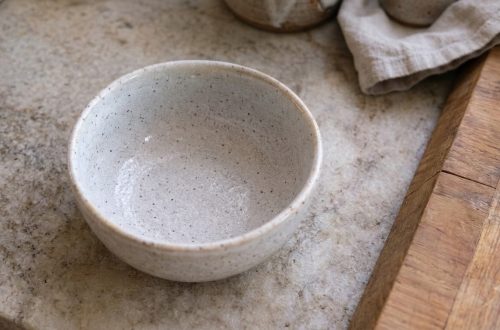
- Small bowl
- Fork or small whisk
- Measuring cups and spoons
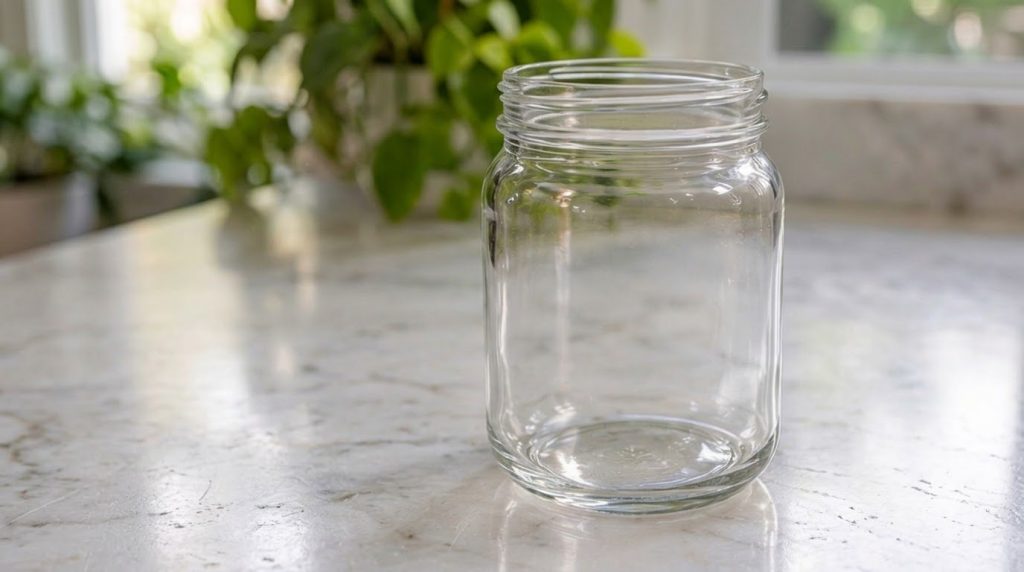
- Glass jar with a lid for storage
How to Make Easy Homemade Mayonnaise
- Boil the eggs. Place the 2 eggs in a small saucepan and cover them with cold water by about 1 inch. Bring to a boil, then reduce to a gentle simmer and cook for about 10 minutes.
- Cool the eggs. Move the eggs to a bowl of ice water for about 5 minutes. Peel them and cut each egg in half lengthwise. Remove the yolks and set the whites aside for another use. The yolks should be firm, dry, and fully cool before you continue.
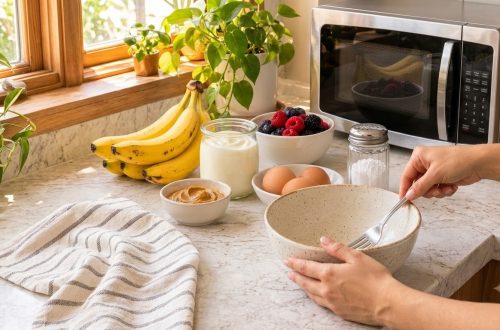
- Mash the yolks. Put the yolks in a small bowl and press them with a fork for about 1 minute. They should look like a smooth, crumbly paste with no visible lumps.
- Add the flavorings. Stir in the Dijon mustard, lemon juice or vinegar, and salt until the mixture looks uniform and slightly loose.
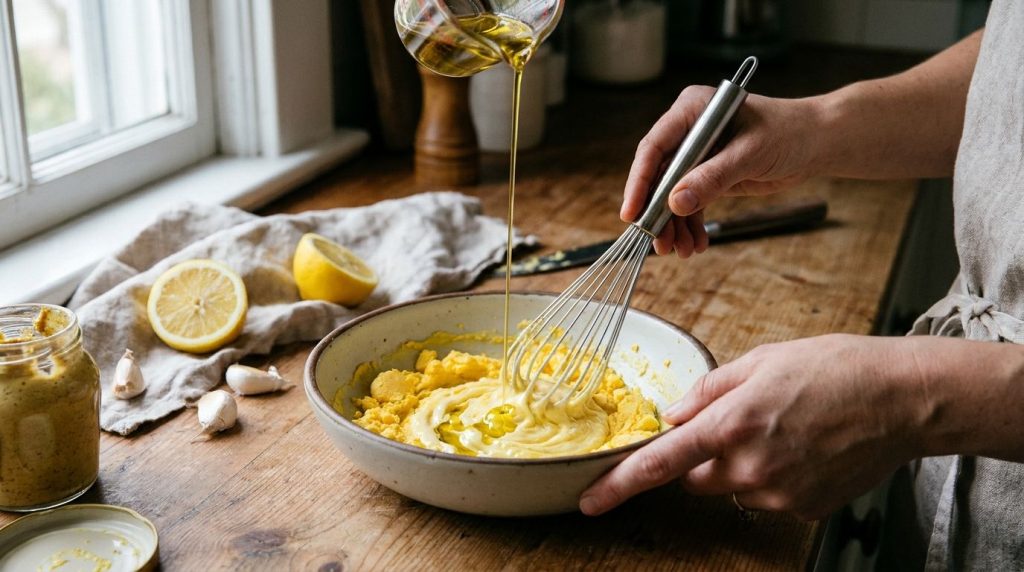
- Add the oil slowly. Add the oil just a few drops at a time while whisking constantly, for about 1 to 2 minutes. The mixture will begin to thicken and look creamy. Once it has thickened, you can add the remaining oil in a thin, steady stream while whisking.
- Check the texture. The finished mayo should be thick, smooth, and spoonable, with a glossy look. If it seems too thick, whisk in 1 teaspoon of water or lemon juice. Taste and add a pinch more salt if needed.
Pro Tips for the Best Results
- Make sure the yolks are completely cool before mashing. Warm yolks can make the mayo loose and greasy.
- Mash the yolks more than you think you need to. The smoother the paste, the smoother the finished mayo.
- Start with just a few drops of oil. This helps the emulsion form before you speed up.
- Use room-temperature mustard and lemon juice for a more even blend.
- If you have a small immersion blender, you can use it for the final whisking step to make the texture even silkier.
Common Mistakes to Avoid
Adding the oil too fast. This is the most common problem. If the mayo looks oily or separated, stop adding oil and whisk the mixture until it comes back together. Then add the rest slowly.
Leaving lumps in the yolks. Lumps do not blend in later. Press the yolks until they are smooth before you add anything else.
Making it too thin. Too much oil or too little yolk can produce a loose sauce. If this happens, mash one more cooked yolk and whisk in the thinned mixture gradually.
Variations and Substitutions
- Herb mayo: Stir in 1 tablespoon finely chopped fresh parsley, chives, or dill.
- Garlic mayo: Add 1 small garlic clove, finely grated, to the yolks before mixing.
- Spicy mayo: Stir in a pinch of cayenne pepper or a few drops of hot sauce.
- Lighter flavor: Use a mild olive oil and half neutral oil for a softer olive note.
Serving Suggestions
Spread this mayo on turkey, chicken, or egg sandwiches, or use it as the creamy base for potato salad, coleslaw, or egg salad. It also makes a simple dip for fries, roasted vegetables, or fresh cucumbers and carrots. Pair it with a light lunch of sandwiches and crisp salad for an easy weekday meal.
Storage and Reheating
Store the mayo in a clean, airtight glass jar in the refrigerator. Because it is homemade and does not contain the stabilizers found in commercial mayonnaise, keep it cold at all times and use it within a few days. Do not leave it out at room temperature for long periods. Mayonnaise does not freeze well, so it is best made fresh in small batches. Do not reheat mayonnaise, since heat will cause it to separate.
Frequently Asked Questions
Can I make this mayo ahead of time?
You can make the eggs ahead of time and keep them refrigerated. Mix the mayo shortly before you plan to use it for the freshest flavor and texture.
Can I freeze boiled egg mayonnaise?
Freezing is not recommended. The emulsion usually separates after thawing and does not return to its original creamy texture.
Why did my mayo turn out runny?
The oil was likely added too quickly, or the yolks were not mashed smooth enough. You can try whisking in one more mashed cooked yolk, or add the oil even more slowly next time.
Can I use raw egg yolks instead?
Yes, many traditional mayonnaise recipes use raw yolks. This recipe uses cooked yolks, which some cooks prefer when they want a gentler starting point. Follow your preferred method and handling guidelines carefully.
What can I use instead of mustard?
You can omit the mustard for a milder flavor. The mayo will still be creamy, but it will taste a little less sharp.
Why does the recipe use only yolks?
The yolks contain the fat and emulsifying qualities that help the oil and liquid blend into a thick sauce. Egg whites are not needed for this version.