Greasy, burnt-on residue on a stovetop can make even a clean kitchen look neglected. The good news is that you do not need harsh chemicals to tackle it. This simple baking soda and green dish soap method uses two everyday household staples to lift grime, cut through grease, and leave a sparkling finish.
What You Need
- Baking soda, about one-quarter cup
- Green dish soap, a small squirt
- Warm water
- A non-scratch sponge or soft cloth
- A dry microfiber cloth for buffing
Step-by-Step Stovetop Cleaning Method
- Make sure the stovetop is completely cool and that all burners are turned off.
- Remove loose crumbs and debris with a dry cloth.
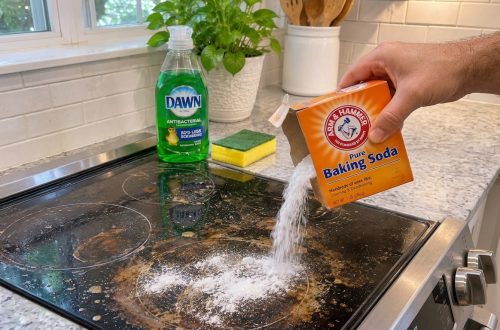
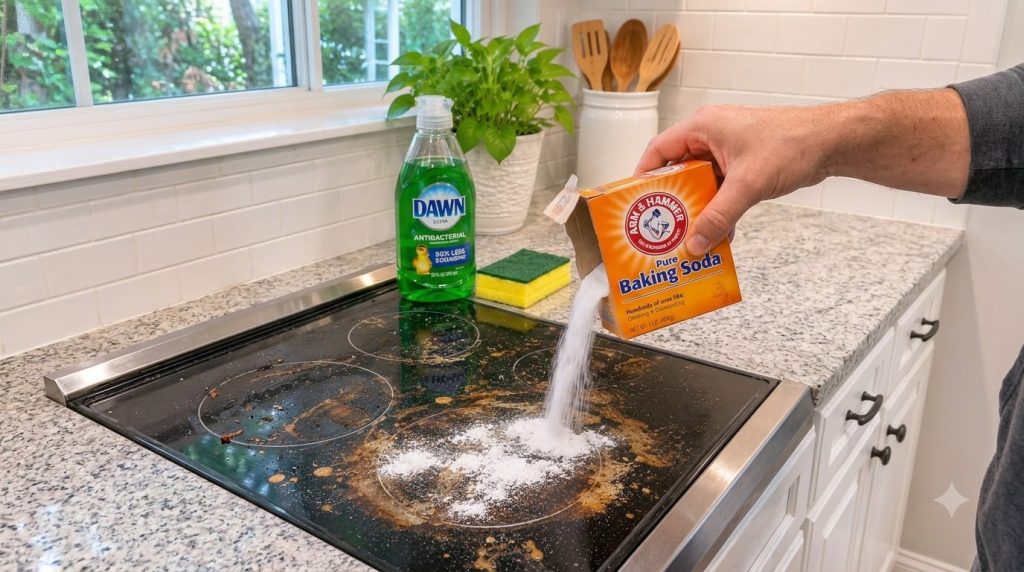
- Sprinkle a generous layer of baking soda over the dirty areas of the stovetop.
- Add a few drops of green dish soap over the baking soda, then dampen the sponge with warm water.
- Gently scrub in small circles, focusing on the most soiled spots. The mixture will form a slightly gritty paste as you work.
- Let the paste sit for 10 to 15 minutes so it can loosen stubborn grease and burnt-on spots.
- Wipe away the paste with a damp cloth, rinsing the cloth often.
- Buff the surface dry with a microfiber cloth to reveal a streak-free shine.
Why This Combination Works
Baking soda is a mild alkaline powder. It helps break down greasy films and neutralizes some odors, while its fine texture provides gentle abrasion that lifts residue without the heavy scratching that coarse scouring powders can cause. Green dish soap is designed to cut through grease, so it helps lift oils that baking soda alone may not fully remove. Together, they form a practical, budget-friendly paste that works well on everyday kitchen messes.
Safety Precautions
- Never clean a hot cooktop. Hot surfaces can cause burns and can cause cleaning products to dry too quickly.
- Check your manufacturer’s care instructions first, especially for glass-ceramic or induction cooktops.
- Avoid aggressive scrubbing pads on glossy glass surfaces, as they can leave fine scratches.
- Rinse thoroughly so no soap residue remains, since leftover film can attract dust and dull the finish.
- Keep baking soda and dish soap away from children and pets, and never mix them with vinegar or other cleaners in the same step.
Tips for Better Results
For heavily caked-on spills, apply a damp cloth over the paste for a few extra minutes before scrubbing. Clean the stovetop regularly, ideally once a week, so grime does not build up into a stubborn layer. Regular light cleaning takes far less effort than a deep scrub after months of neglect.
Have you found a stovetop cleaning trick that works better for your kitchen? Share your go-to method in the comments and help other homeowners get their cooktops sparkling!