Shaving Cream on Your Stovetop? Yes, Really
It sounds odd, but shaving cream and a little blue dish soap are a surprisingly popular combination for cutting through grease on kitchen surfaces. If your stove has baked-on splatters, a dull film, or a general layer of kitchen grime, this simple household hack is worth a try. It uses two common products you may already have, and it costs very little to test.
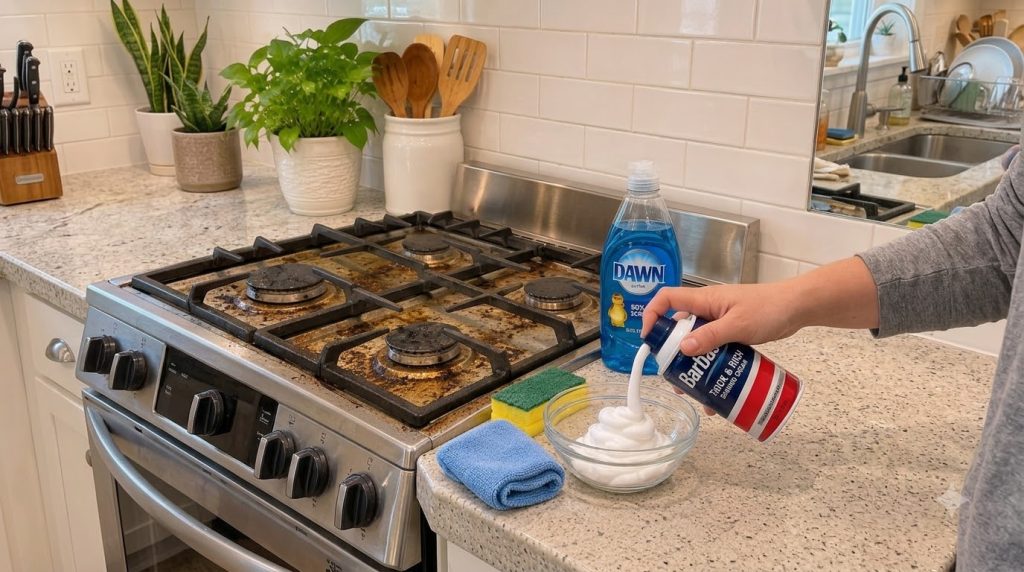
Why This Combination Can Work
Grease is oily, and water alone does little to break it down. Both shaving cream and dish soap contain surfactants, which are ingredients that help lift oil so it can be wiped or rinsed away. Shaving cream also contains moisturizing agents and a thick, foamy texture that helps it cling to vertical and textured surfaces long enough to loosen residue. Dish soap is designed to cut grease from dishes, so it adds a dependable degreasing action to the mix.
What You Need
- Shaving cream (a standard foam or gel product without added glitter or colorants)
- Blue Dawn dish soap or a similar grease-cutting dish soap
- A clear glass bowl for mixing
- A soft sponge
- A blue microfiber cloth
- A dry cloth for buffing
Step-by-Step: How to Clean Your Stove
- Turn off all burners and let the stove cool completely before you begin.
- Squirt a small amount of shaving cream into the glass bowl, then add a few drops of dish soap and mix gently.
- Dip the sponge into the mixture and wipe the stovetop in small sections, working from the back to the front.
- Let the mixture sit on heavily soiled spots for two to three minutes so it can loosen the grease.
- Wipe away the residue with the damp microfiber cloth. Rinse the cloth often to avoid spreading grime.
- Wipe the surface once more with clean water on a cloth to remove any leftover foam or soap film.
- Dry the stove with a dry microfiber cloth. For stainless steel, buff in the direction of the grain to reduce streaks.
Important Safety Tips
- Test the mixture on a small, hidden area first to make sure the finish does not dull or discolor.
- Never spray cleaning mixtures into burner openings, igniters, or electrical controls.
- Do not clean hot grates or burners, because soap can react poorly with heat and may leave residue.
- Avoid abrasive scrubbers on stainless steel, since they can leave fine scratches.
- Keep the kitchen ventilated and rinse the surface thoroughly so no soap film remains.
Tips for Better Results
For very stubborn grease, repeat the process rather than scrubbing harder. Soaking the grates separately in warm soapy water and rinsing them well often works better than cleaning them on the stove. Regular light cleaning after cooking is also easier than dealing with buildup weeks later.
Final Thoughts
This shaving cream and dish soap hack is a low-cost way to refresh a greasy stovetop using items you may already own. Results can vary depending on the finish of your appliance, so always test first and rinse thoroughly. Have you tried this unusual method yet? Tell us in the comments and share how your stove turned out.