When it comes to reproductive health, diet plays a profoundly important role for everyone. For men, the foods you choose daily can significantly impact fertility, influencing everything from sperm quality and count to hormone balance and overall vitality. If you’re looking to support male fertility naturally, making smart, science-backed food choices is an excellent place to start your journey. Let’s explore some essential foods that can fuel male reproductive health and boost your overall well-being!
Understanding the Link Between Diet and Male Fertility
Male fertility is a complex process influenced by numerous factors, including genetics, lifestyle, environment, and crucially, nutrition. The quality, quantity, and motility of sperm, along with hormonal balance, are all highly dependent on a consistent supply of specific vitamins, minerals, antioxidants, and macronutrients. A diet rich in processed foods, unhealthy fats, and sugars can contribute to oxidative stress and inflammation, potentially harming sperm health. Conversely, a diet packed with nutrient-dense whole foods can provide the building blocks necessary for robust reproductive function.
Key Foods to Enhance Male Reproductive Health
Let’s dive into specific foods that have been highlighted for their benefits in supporting male fertility:
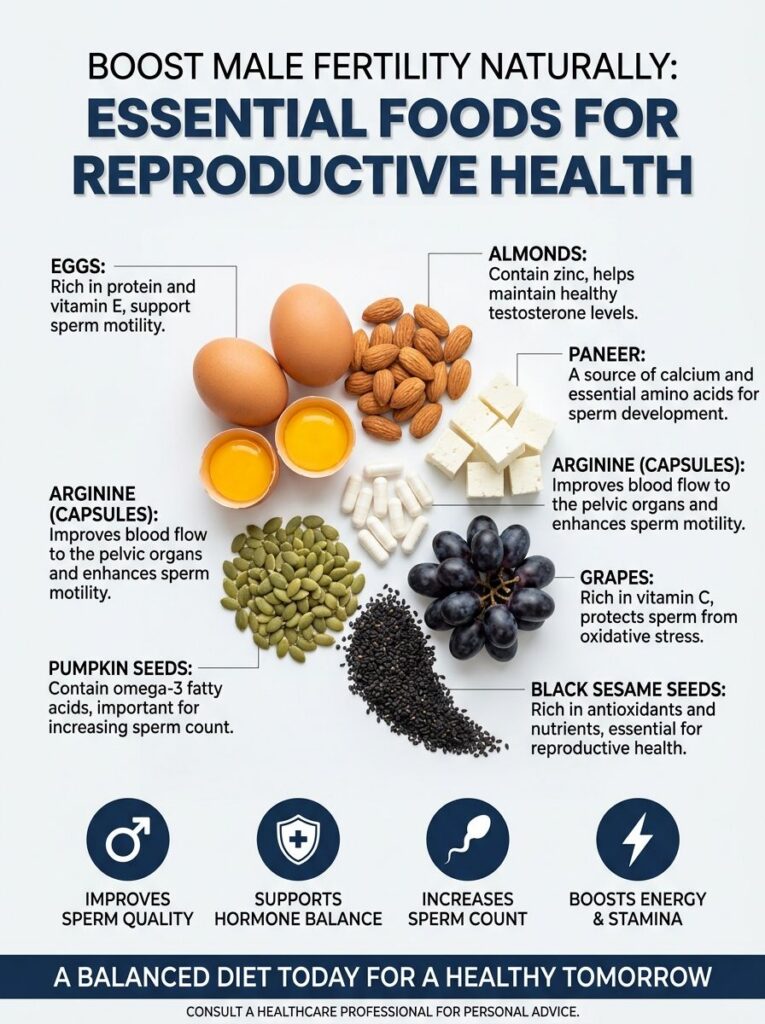
1. Eggs: For Sperm Motility
- Why they help: Eggs are a fantastic source of protein, choline, and Vitamin D. Choline plays a vital role in cell membrane integrity and development, while Vitamin D is increasingly recognized for its importance in male hormone production and overall reproductive health. The rich protein content provides amino acids essential for healthy cell formation, directly contributing to improved sperm motility – the ability of sperm to move efficiently towards an egg.
- How to include them: Enjoy eggs scrambled, boiled, poached, or as part of an omelet.
2. Almonds & Paneer: Supporting Hormone Balance
- Almonds: These crunchy nuts are powerhouses of healthy fats, Vitamin E, and zinc. Vitamin E is a potent antioxidant that protects sperm from damage, while zinc is crucial for testosterone production and sperm development. Maintaining healthy testosterone levels is fundamental for male reproductive health.
- Paneer (Indian Cottage Cheese): A good source of protein and calcium, paneer contributes to overall nutritional balance. While not directly linked to a specific fertility benefit in the same way as some micronutrients, its protein content supports general cellular health, including hormone-producing cells. A balanced intake of macronutrients is key to hormonal equilibrium.
- How to include them: Snack on a handful of almonds daily, add them to your oatmeal or salads. Incorporate paneer into curries, scrambles, or grill it as a protein source.
3. Pumpkin Seeds: Boosting Sperm Count
- Why they help: Pumpkin seeds are incredibly rich in zinc, a mineral absolutely essential for male fertility. Zinc deficiency has been linked to lower testosterone levels and reduced sperm count. These seeds also provide magnesium, antioxidants, and healthy fats, all of which contribute to optimal reproductive function and help increase sperm count.
- How to include them: Sprinkle pumpkin seeds on salads, yogurt, or eat them as a standalone snack.
4. Black Sesame Seeds: Improving Sperm Quality
- Why they help: Black sesame seeds are packed with lignans, antioxidants, and healthy fats. Their high zinc content, similar to pumpkin seeds, is crucial for male reproductive health. The antioxidants help protect sperm from oxidative damage, which can impair sperm quality, while the essential fatty acids contribute to healthy sperm membrane structure. This combination makes them excellent for improving overall sperm quality.
- How to include them: Add black sesame seeds to smoothies, salads, or use them in baked goods.
5. Grapes: Protecting from Oxidative Stress
- Why they help: Grapes, especially red and purple varieties, are rich in powerful antioxidants like resveratrol. Oxidative stress, caused by an imbalance between free radicals and antioxidants in the body, can significantly damage sperm DNA and impair fertility. The antioxidants in grapes help neutralize these free radicals, offering crucial protection to sperm and improving their viability.
- How to include them: Enjoy fresh grapes as a snack, add them to fruit salads, or blend them into smoothies.
6. L-Arginine (and Arginine-Rich Foods): Improving Sperm Quality & Boosting Energy
- Why it helps: L-arginine is an amino acid that plays a vital role in the production of nitric oxide, a compound that helps relax blood vessels and improve blood flow. Enhanced blood flow to the reproductive organs is beneficial for sperm development and overall sexual function. Some studies suggest L-arginine supplementation can improve sperm quality and motility. Additionally, by supporting healthy circulation, it can contribute to increased energy and stamina.
- How to include it: While supplements are available, you can also find L-arginine in foods like lean meats, poultry, fish, dairy products, nuts, and seeds.
A Balanced Diet for a Healthy Tomorrow
Beyond these specific foods, the overarching principle for boosting male fertility naturally is to adopt a balanced, whole-food-based diet. This means prioritizing a wide variety of fruits, vegetables, whole grains, lean proteins, and healthy fats. Minimizing processed foods, sugary drinks, and excessive unhealthy fats will further support your reproductive health goals.
Practical Steps for a Fertility-Friendly Diet
- Eat a Rainbow: Include a diverse range of colorful fruits and vegetables daily for a broad spectrum of antioxidants and nutrients.
- Choose Whole Grains: Opt for brown rice, quinoa, and whole wheat bread over refined grains.
- Lean Protein Sources: Incorporate fish, poultry, beans, and lentils.
- Healthy Fats: Avocados, nuts, seeds, and olive oil are your friends.
- Stay Hydrated: Drink plenty of water throughout the day.
- Limit Processed Foods: Reduce intake of fast food, sugary snacks, and highly processed items.
Remember, diet is a powerful tool in your wellness journey. While nutrition can significantly support male fertility, it’s always wise to consult a healthcare professional for personalized advice, especially if you have specific concerns or underlying health conditions. A balanced approach today paves the way for a healthier tomorrow.