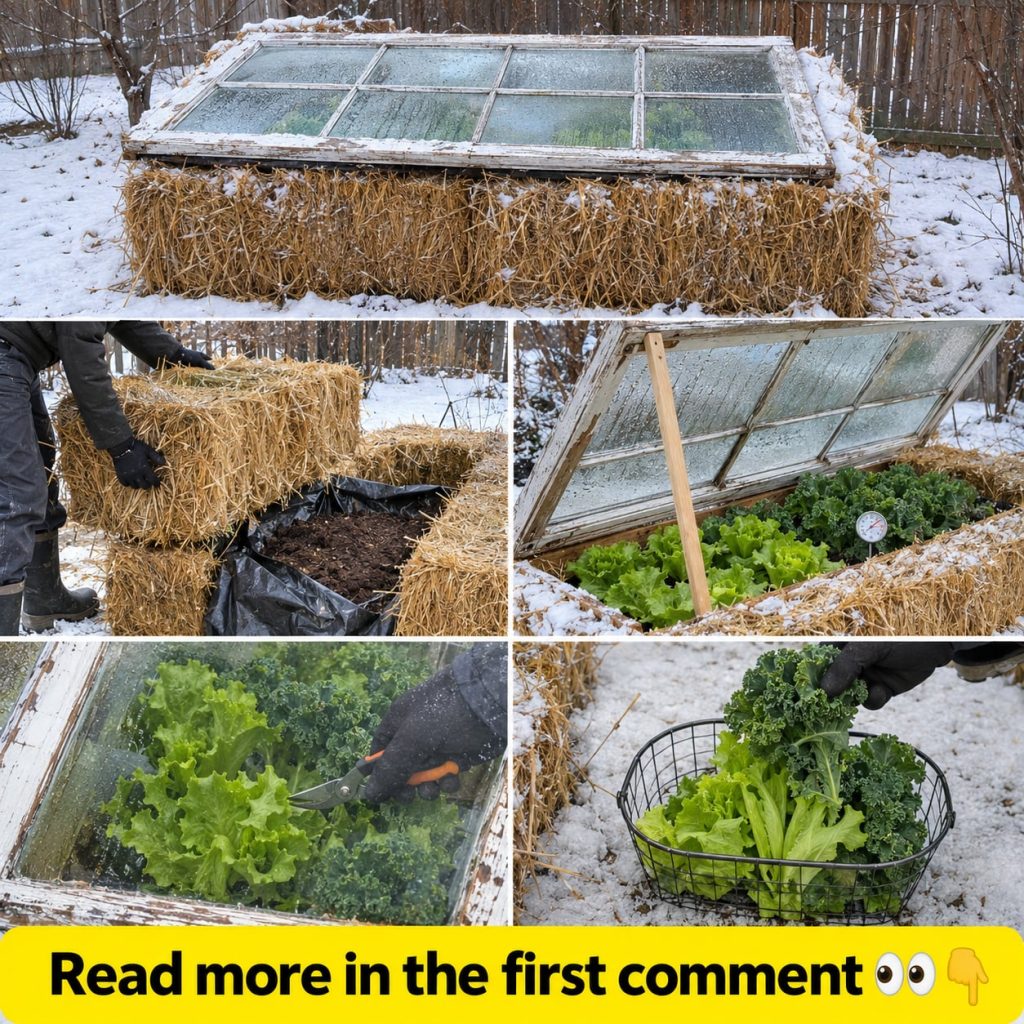
Most gardeners put their beds to bed in November and wait until spring. A straw bale cold frame changes that routine. With a few bales and a couple of old windows, you can keep fresh spinach, kale, and salad greens coming through cold weather, even when snow covers the rest of the yard.
What It Is
A straw bale cold frame is a small, insulated growing box. The bales form the walls, and a sloped lid made from glass or clear panels lets sunlight in while trapping warmth. Straw breaks down slowly, holds heat well, and costs far less than lumber or purpose-built greenhouse kits. Once the frame is finished, it works as a simple season extender for cold-hardy crops.
Ingredients and Materials
- 4 to 6 straw bales (not hay, which contains weed seeds)
- 2 to 3 old windows or clear polycarbonate panels, about 3 ft by 4 ft each
- 4 untreated wooden stakes, roughly 3 ft long
- Exterior screws or galvanized nails
- A few bricks or cinder blocks for weight
- A basic thermometer with a max/min display
- Compost and a bag of potting mix for the bed
Approximate Measurements
A common setup is a bed about 3 ft wide and 6 ft long. Place bales end to end around the perimeter so the interior measures roughly 3 ft by 6 ft. The back bales should sit slightly higher than the front, around 2 ft tall at the back and 16 inches at the front, so the windows slope toward the sun. Leave the bed interior at about 12 inches deep for root room.
Formula and Recipe for the Growing Bed
Mix a simple soil blend for the bed: 2 parts garden soil, 1 part compost, and 1 part coarse sand or perlite. This gives drainage and enough nutrients for slow winter growth. Water the blend lightly before planting so it is moist, not soggy.
Step-by-Step Method
- Choose a flat, sunny spot that receives at least six hours of direct light in winter. Clear the ground and lay down a sheet of cardboard to block weeds.
- Set the bales in a rectangle. Compress them firmly and stack a second row on the north side for extra height and insulation.
- Push the stakes into the ground at the corners and along the back, then fasten them to the bales with long screws or wire.
- Lay the windows across the top, with the highest edge at the back. Fix them down with brackets or weight them with bricks so they do not blow off in wind.
- Fill the interior with your soil mix, leaving the bed level and about 8 inches below the top of the bales.
- Install the thermometer inside the frame, out of direct contact with the glass.
Here Is the Part Most People Skip
Wait a few days after building before planting. Let the bales settle and the soil warm slightly. Sudden temperature swings in a new frame can stress seedlings that have not yet established roots.
Best Crops to Grow
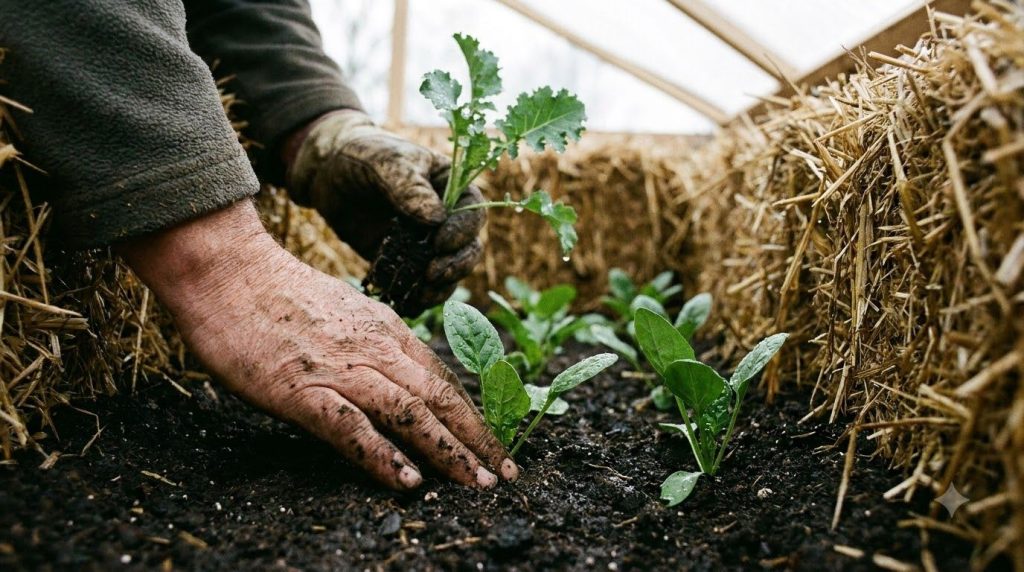
Choose cold-hardy plants that tolerate low light and freezing nights. Good options include spinach, kale, arugula, mache, miner’s lettuce, and loose-leaf lettuce. Sow seeds in late summer or early fall so plants reach a usable size before the coldest weeks.
How to Use the Frame
Open the windows on sunny days when the inside temperature rises above about 60 degrees Fahrenheit, then close them before the afternoon cools. Harvest outer leaves first and leave the center of each plant to keep producing. Water in the morning so foliage dries before night.
How Often to Check It
Check the frame every day during cold snaps and twice a day when temperatures swing sharply. Water only when the top inch of soil feels dry. Winter growth is slow, so overwatering is a common problem.
Fresh vs Dried Straw and Other Options
| Option | Best For | Lifespan | Cost |
|---|---|---|---|
| Straw bales | Insulated walls, low cost | One to two seasons | Low |
| Wood frame with windows | Durable, reusable | Five years or more | Medium |
| Polycarbonate panels | Lighter lid, strong light | Five to ten years | Medium |
Straw bales are the cheapest walls, but they compress and rot over time. Replace them each season or rebuild with fresh bales in fall.
How to Choose Your Materials
Buy straw, not hay, to avoid weed seeds. Choose windows with intact glass and no lead paint. If you are unsure about old glazing, use clear polycarbonate instead. Look for untreated lumber for stakes so no chemicals leach into the bed.
Storage Tips for Your Harvest
Pick greens in the morning when they are firm and cool. Rinse, dry thoroughly, and refrigerate in a breathable container or bag with a paper towel. Most cold-season greens keep for about five to seven days this way.
Practical Tips
- Add a layer of straw or old blankets over the windows on the coldest nights.
- Rotate crops between seasons to reduce soil-borne problems.
- Keep a notebook with temperatures and harvest dates to plan next winter.
Quick Tip
Place a dark, water-filled container inside the frame. It absorbs sunlight during the day and releases warmth at night, smoothing out temperature swings.
Common Mistakes
- Using hay instead of straw, which brings weed seeds into the bed.
- Leaving windows closed on sunny days, which can overheat and scorch young leaves.
- Overwatering in cold weather, which encourages rot.
- Building in shade, which blocks the light plants need during short winter days.
- Ignoring wind, which can lift lids and crack glass.
Cautions and Who Should Avoid This Setup
Cold frames are not suitable for areas with heavy snow loads that could collapse a flimsy lid, so check local conditions first. Wash hands after handling straw and soil. If you have allergies to grasses or mold, wear a dust mask when moving bales. Do not eat greens that show signs of mold, slime, or insect damage.
Quick Summary
- Best preparation: Straw bale walls, sloped window lid, and a compost-rich soil mix.
- Best use case: Growing cold-hardy greens through winter.
- When to use: Sow in late summer or early fall, open windows on sunny days.
- Storage: Refrigerate harvested greens in a breathable container for up to a week.
- What to avoid: Hay, overwatering, and shaded sites.
FAQ
Can I use hay instead of straw?
No. Hay usually contains seeds that sprout inside the frame. Straw is the better choice.
How long does a straw bale frame last?
Expect one to two seasons before the bales compress or rot. Replace them as needed.
Can I reuse the soil?
Yes, but refresh it with compost each season and avoid replanting the same crop family in the same spot.
What greens grow best in winter?
Spinach, kale, arugula, mache, and loose-leaf lettuce handle cold well.
Should I water in winter?
Water lightly and only when the top inch of soil is dry. Growth slows in cold weather.
Can I use this frame for seedlings in early spring?
Yes. The same setup works well for starting hardy transplants before the outdoor season.
When should I avoid this method?
Avoid it in areas with extreme snow loads or if your site gets little winter sun.
You may also like: Read more about soil preparation for raised beds.
Continue with: see the full guide to winter greens planting calendars.
Final Thoughts
A straw bale cold frame is one of the simplest ways to extend your harvest into winter. With salvaged windows, a few bales, and a bit of attention on sunny days, you can keep fresh greens on the table while the rest of the garden rests.