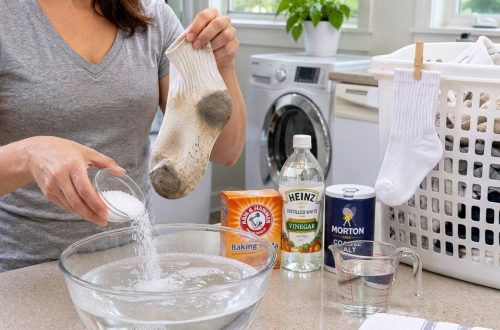
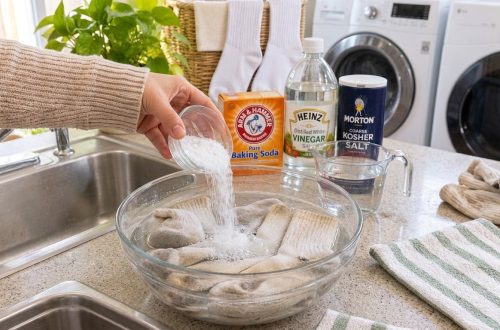
White socks get dingy faster than almost anything else in the laundry. Gray heel marks, dull toes, and that yellowish tint can make a good pair look worn out long before the fabric is actually done. Before you toss them, try this simple kitchen cabinet soak. It is gentle on the fabric, uses ingredients you probably already have, and can bring back a noticeably brighter look without hard scrubbing.
What You’ll Need
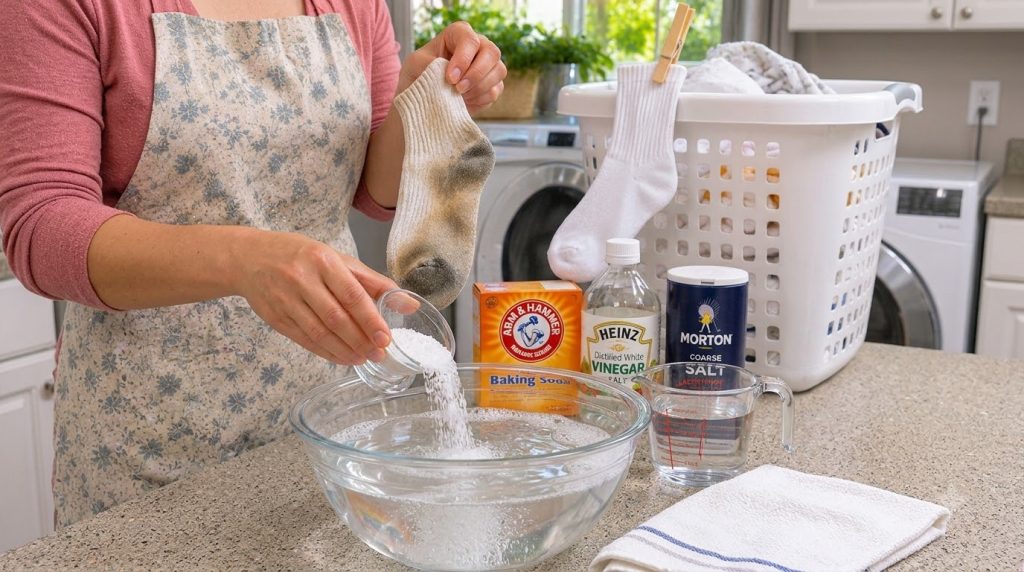
Ingredients and Supplies
- About 1/2 cup baking soda for a basin of warm water
- 1/4 cup plain white vinegar for a final rinse
- Warm water, enough to fully cover the socks
- Optional: 1 tablespoon salt for extra stubborn spots
Tools
- A large bowl, basin, or clean sink
- A measuring cup and spoon
- A washing machine or hand-washing setup
- Clean towel for drying
Why This DIY Can Be Useful
Baking soda is mildly alkaline and works well as a gentle soaking agent. It helps loosen everyday grime and body oils that cling to cotton fibers, which is often why socks look gray even after a normal wash. White vinegar is slightly acidic and works well as a rinse, helping remove leftover residue from detergent and soap so the fabric looks fresher. Salt is a mild abrasive that can help with surface dirt, but it is best used sparingly, since it can be harsh on delicate fabrics.
How to Make It
- Fill a large basin or clean sink with warm water. Warm water loosens dirt better than cold water, but avoid very hot water if the socks have elastic or synthetic blends.
- Add about 1/2 cup of baking soda and stir until it is mostly dissolved. Use a little less for a small load.
- If you are using salt, stir in about 1 tablespoon now. Do not add more than that, since too much salt can roughen the fibers.
- Keep vinegar separate for now. Do not mix it into the baking soda solution, because the two neutralize each other and you lose the benefit of both.
- Prepare a second basin with cool water and 1/4 cup of white vinegar for the rinse stage.
How to Use It
- Submerge the socks completely in the baking soda solution. Gently press them down so every part is wet.
- Let them soak for 30 minutes to 1 hour. For heavily soiled socks, you can leave them for up to 2 hours, checking the color as you go.
- Lightly rub any stubborn areas, such as the heels and toes, between your fingers. Avoid harsh scrubbing, which can stretch or thin the knit.
- Move the socks to the vinegar rinse and swish them for a minute or two.
- Wash the socks in your washing machine on a normal cycle with your usual detergent, or hand-wash them in cool water and rinse well.
- Air dry flat or hang them. Avoid high heat, which can set any remaining discoloration.
What to Expect
This method works best on everyday grime, light yellowing, and dull whites. Results depend on how old the socks are, how often they have been washed in hot water, and whether they have been exposed to oils or sweat for a long time. Some socks will look noticeably brighter after one round, while very old or deeply stained pairs may need a second soak. It is a refresh, not a guaranteed full restoration.
Helpful Tips
- Sort your socks so only white or light-colored pairs go into the soak.
- Pretreat heel and toe stains by dabbing a little baking soda paste directly on them before soaking.
- Use cool water for the vinegar rinse to help remove residue without setting odors.
- Wash socks in a mesh laundry bag to reduce tangling and friction.
Important Notes and Safety
- Do not mix baking soda and vinegar in the same container. They cancel each other out and waste your effort.
- Never combine this method with bleach or other chemical cleaners. Mixing cleaning products can release harmful fumes.
- Patch test on an inconspicuous area first if the socks contain wool, silk, spandex, or are decorative with prints or trims.
- Rinse your hands after handling the solution, and keep the baking soda and vinegar stored separately and out of reach of children.
- Check the care label before using any household soak, especially on specialty fabrics.