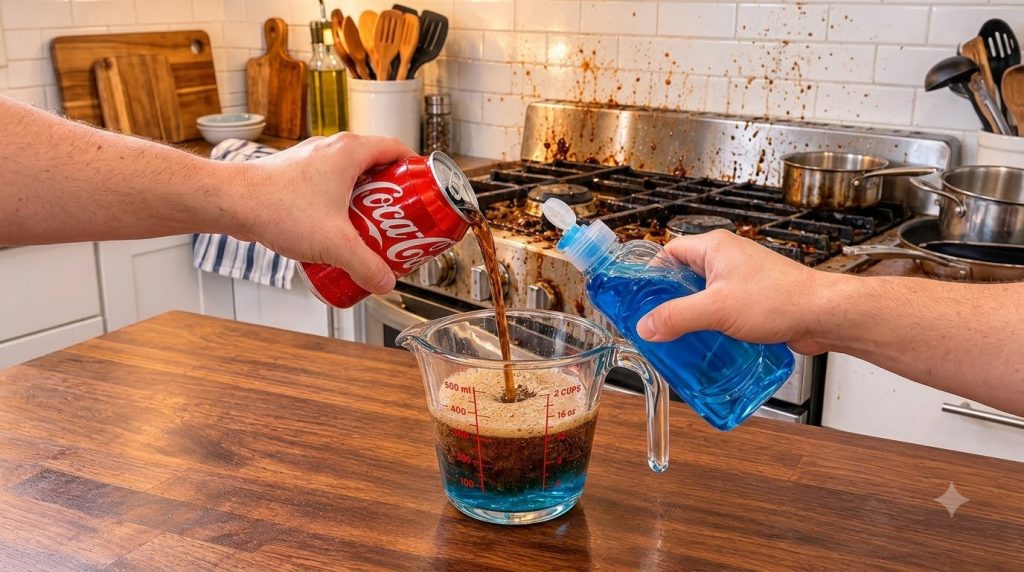
Unconventional cleaning hacks often spread quickly online, and this one is no exception. A photo of cola and blue dish soap being poured into a glass cup suggests a simple mixture that could cut through the grease and burnt-on messes that build up on a kitchen stove. But does this combination actually work, and is it safe for your cooktop? Let’s take a closer look.
Why People Try Coca-Cola on Stovetops
Cola contains phosphoric acid and carbonation, which some people believe can loosen stuck-on food and grime. The sugar and acidity may help soften residue that has dried on a surface for a while. Dish soap, on the other hand, is designed to break down grease, which is the main component of most stovetop buildup. Combining the two seems logical on paper, and the fizzing action looks impressive in photos and videos.
What the Mixture Can and Cannot Do
Cola can help loosen light, dried residue, but it does not work magically. Its sugar content can leave a sticky film if it is not rinsed away completely, and that film can attract dust and new grime. Stainless steel also shows streaks easily, so any leftover sugar or soap can make the surface look dull. Dish soap alone is effective on everyday grease, and it is far less likely to leave a sticky finish.
- Cola may loosen light, dried spills, but it can leave sugary residue behind.
- Dish soap is effective at cutting grease on most cooktop surfaces.
- Rinsing and drying thoroughly is essential after any cleaning mixture.
- Heavy, baked-on messages usually require more targeted methods.
Safer and Proven Stovetop Cleaning Methods
If you want a spotless stove without experimenting with sugary drinks, several reliable options work well for most kitchens:
- Warm water and dish soap: Apply a few drops of dish soap to a damp cloth and wipe the surface in the direction of the grain on stainless steel.
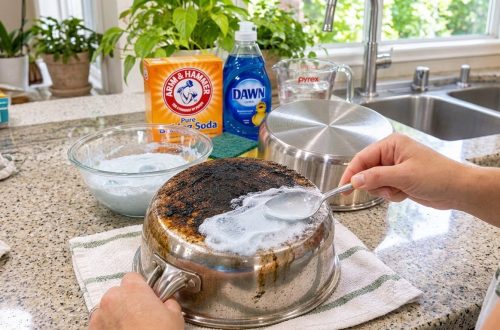
- Baking soda paste: Mix baking soda with a little water, apply it to stubborn spots, let it sit for about 10 minutes, then gently scrub and wipe clean.
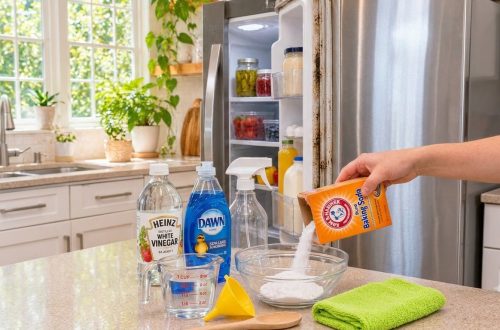
- White vinegar solution: Spray equal parts vinegar and water on greasy areas, wait a few minutes, and wipe with a microfiber cloth to remove residue and shine the surface.
- Plastic scraper for burnt bits: Use a plastic scraper on cooled surfaces to lift crusted food without scratching the finish.
Tips for Keeping Your Stove Clean Longer
Regular maintenance matters more than dramatic one-time fixes. Wiping up spills while the stove is still slightly warm, but not hot, prevents grease from hardening. Placing a splatter guard over pans can also reduce the amount of mess that lands on the surface. A quick wipe-down at the end of each day can save you a lot of scrubbing later.
Final Thoughts
The cola and dish soap trick is an interesting experiment, but it is not the most reliable or cleanest solution for your stovetop. Dish soap, baking soda, and vinegar are safer, easier to rinse, and more predictable on most surfaces. Before trying any unusual cleaning method, always test it on a small hidden area and check your appliance manufacturer’s guidelines. Have you tried any unusual cleaning tricks in your kitchen? Share your experience in the comments below!