Few things ruin a good night’s sleep faster than discovering bed bugs in your mattress. The good news is that a careful, step-by-step clean-up can make a real difference. This guide walks you through a simple home routine that combines hot laundry, steam, vacuuming, encasing, and a light dusting of food-grade diatomaceous earth to help you reclaim your bedroom.
It is important to be realistic. Home methods can reduce bed bug numbers and make your sleeping area far less inviting, but a heavy or persistent infestation often needs a licensed pest control professional. This guide is written for beginners who want to act quickly and safely.
Why This Clean-Up Works
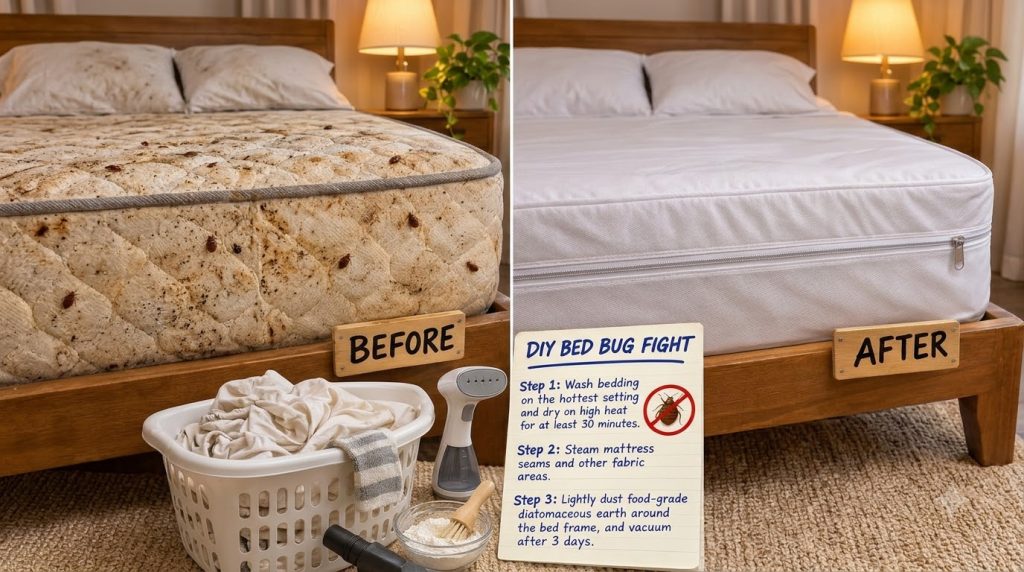
Bed bugs hide in seams, folds, tufts, and the cracks of bed frames, so a surface wipe is rarely enough. This routine targets each hiding place in turn. Hot laundry handles bedding, steam reaches into fabric folds, vacuuming removes bugs and eggs from crevices, and an encasement traps anything left inside the mattress.
Ingredients and Materials
- All bedding, including sheets, pillowcases, blankets, and mattress pad
- Large sealable plastic bags or a heavy-duty trash bag
- Food-grade diatomaceous earth, about 1 cup (optional, for the bed frame area only)
- A zippered bed bug mattress encasement sized for your mattress
Equipment Needed
- Washing machine and dryer
- Handheld garment steamer
- Vacuum cleaner with a crevice tool and brush attachment
- Stiff brush or old toothbrush
- Dust mask (N95 or similar) and gloves
- Small paintbrush or soft brush for applying powder
Step-by-Step Instructions
-
Strip and bag the bedding
Remove all sheets, pillowcases, blankets, and mattress pads. Place them directly into a sealed plastic bag so bugs do not fall onto the floor as you carry them. Keep the bag closed until you reach the washer. Time: about 10 minutes.
-
Wash and dry on high heat
Wash all fabrics in the hottest water safe for each item. Then dry everything on high heat for at least 30 minutes. Heat is the key here, so check that the dryer actually reaches a high setting. Expected result: washed and dried bedding that is ready to return to a clean bed. Time: 1 to 2 hours.
-
Steam seams and fabric areas
Use a handheld steamer to work slowly along mattress seams, tufts, piping, the box spring edges, and the bed frame joints. Move the steamer slowly so the steam penetrates rather than just passing over the surface. Let the mattress dry completely before you add bedding. Test on a small hidden area first if your mattress has delicate fabric. Time: about 20 to 30 minutes.
-
Vacuum every hiding place
Use the crevice tool on seams, folds, the headboard, the bed frame, and the floor along the baseboards near the bed. Use the brush attachment on the top and sides of the mattress. Immediately empty the canister or change the bag outside, then seal the debris in a plastic bag. Time: about 20 minutes.
-
Encase the mattress
Fit a zippered bed bug encasement over the mattress and close it fully. The encasement traps any remaining bugs inside and stops new ones from getting in. Many manufacturers recommend keeping the encasement on for a year or longer, so check the label for guidance. Time: about 10 minutes.
-
Lightly dust around the bed frame
Wearing a dust mask and gloves, apply a very thin layer of food-grade diatomaceous earth around the bed frame legs, along the floor near the bed, and in cracks where bugs may travel. Do not put powder on bedding or the mattress top. Leave it undisturbed for 3 days, then vacuum it up and dispose of the debris in a sealed bag. Diatomaceous earth works only when it is dry, so keep it away from moisture.
Best Uses and Surface Notes
This routine suits mattresses, box springs, bed frames, and upholstered headboards. Steam is best for seams and fabric, while diatomaceous earth should stay on the floor and frame edges. Avoid steaming electronics, painted surfaces that may not tolerate heat, and delicate silk or leather. Always test on a hidden area first.
Safety Notes
- Wear a dust mask when handling diatomaceous earth, because fine dust can irritate the lungs.
- Use food-grade diatomaceous earth only, and keep it away from children and pets.
- Never use bleach, ammonia, or other household chemicals together in the same space or on the mattress.
- Do not spray chemical pesticides on bedding or mattresses unless the label specifically allows that use.
- Keep the room ventilated while steaming and vacuuming.
- Use caution with the steamer and hot dryer to avoid burns.
Expert Tips
- Check the mattress seams and bed frame with a flashlight before you start, so you know where to focus.
- Inspect and clean luggage, nightstands, and nearby furniture, since bugs can spread.
- Repeat the vacuuming and steaming after a few days to catch any survivors.
- Keep clutter off the floor near the bed to reduce hiding spots.
- Seal bags of bedding until they are washed to avoid moving bugs around the home.
- Choose an encasement that is rated for bed bugs and fits your mattress snugly.
Storage and Maintenance
Store clean bedding in sealed containers or drawers until you use it. Keep the encasement on the mattress and check the zipper seams periodically for tears. Dispose of used diatomaceous earth and vacuum bags in sealed plastic bags outside your home.
Frequently Asked Questions
Will this guide remove every bed bug?
No home method can guarantee complete removal. This routine can significantly reduce bugs and help you monitor the problem, but severe infestations often need professional treatment.
How long should I dry the bedding?
Dry bedding on high heat for at least 30 minutes, or longer if items are still damp.
Is diatomaceous earth safe around pets?
Food-grade diatomaceous earth is generally low risk, but it can irritate the eyes and lungs. Keep pets away while dusting and vacuum thoroughly afterward.
Can I skip the diatomaceous earth?
Yes. Washing, steaming, vacuuming, and encasing are the core steps. Diatomaceous earth is an optional extra for the bed frame area.
How often should I repeat the steps?
Repeat vacuuming and steaming every few days for about two weeks, then check the mattress regularly for signs of activity.
Can I use this on a couch or other furniture?
Yes, the vacuuming and steaming steps can work on upholstered furniture, but test steam on a hidden area first and avoid soaking fabric.
Conclusion
A clean mattress and fresh bedding can make your bedroom feel calm and restful again. By washing on high heat, steaming seams, vacuuming every crevice, encasing your mattress, and lightly dusting around the frame, you tackle bed bugs from several angles. Work carefully, stay safe, and call a professional if the problem continues. Here is to peaceful nights and a fresh, comfortable sleeping space!